About the Project
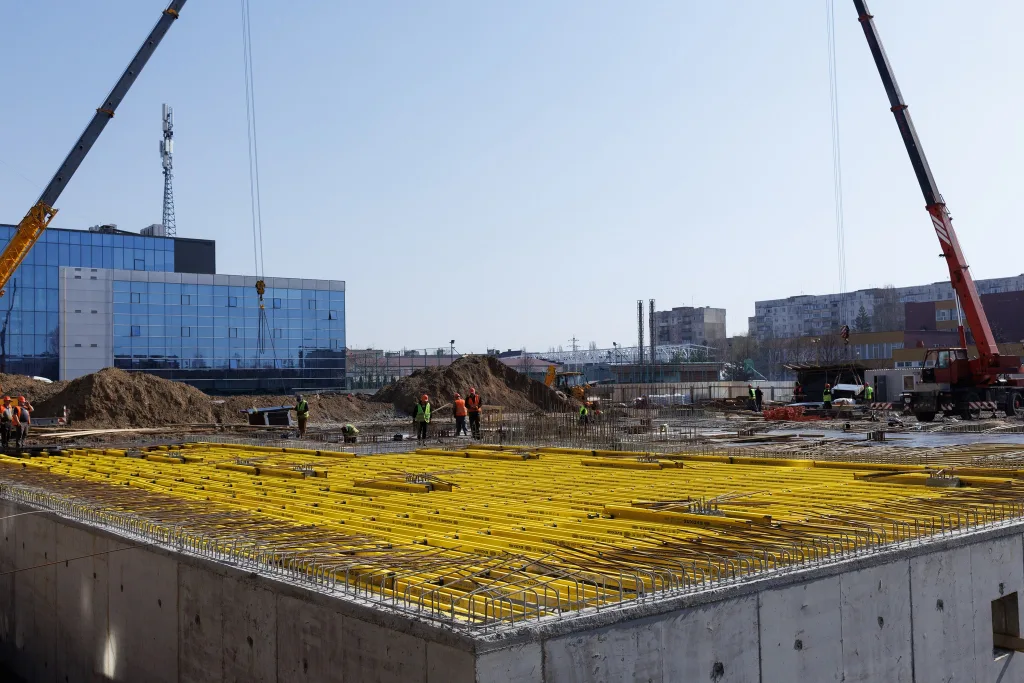
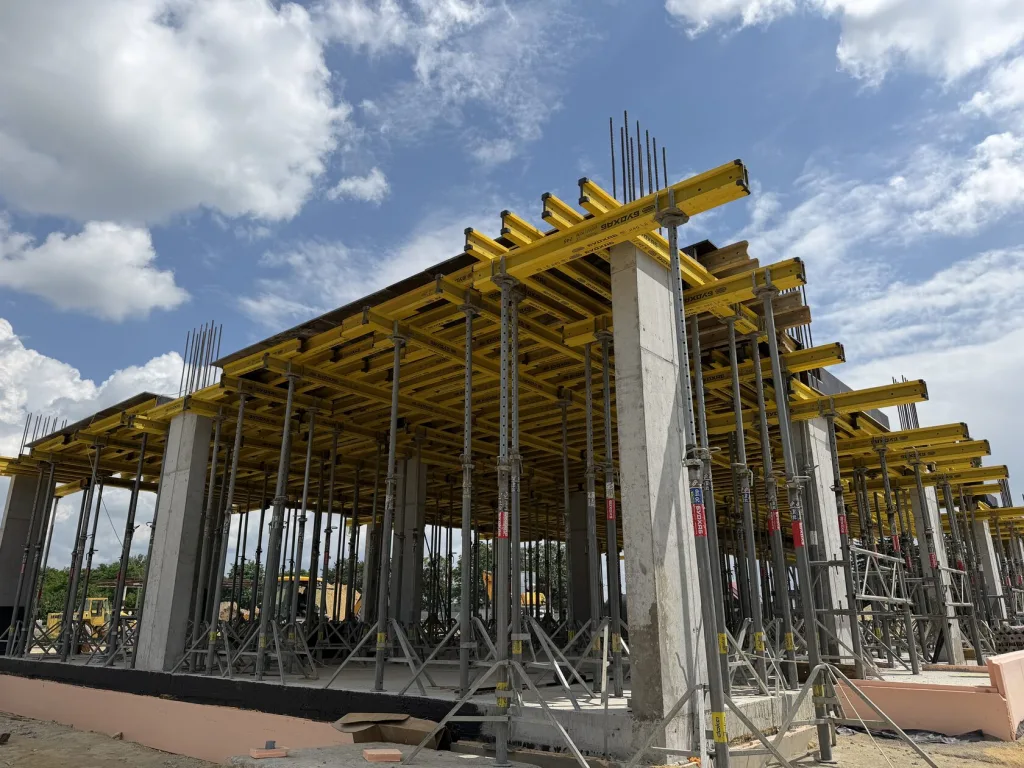
The client company, which operates in the agricultural sector, has planned the construction of a warehouse complex in the city of Zboriv, Ternopil Oblast, for the storage of finished products and fertilizers.
According to the design, the floor-to-ceiling height of one of the buildings in the complex decreased from 8.7 m to 6 m and then to 4.5 m.
- Project type: warehouse complex
- Location: Zboriv, Ternopil Oblast
- Number of columns: 12
- Completion time: 2 weeks
Customer Inquiry
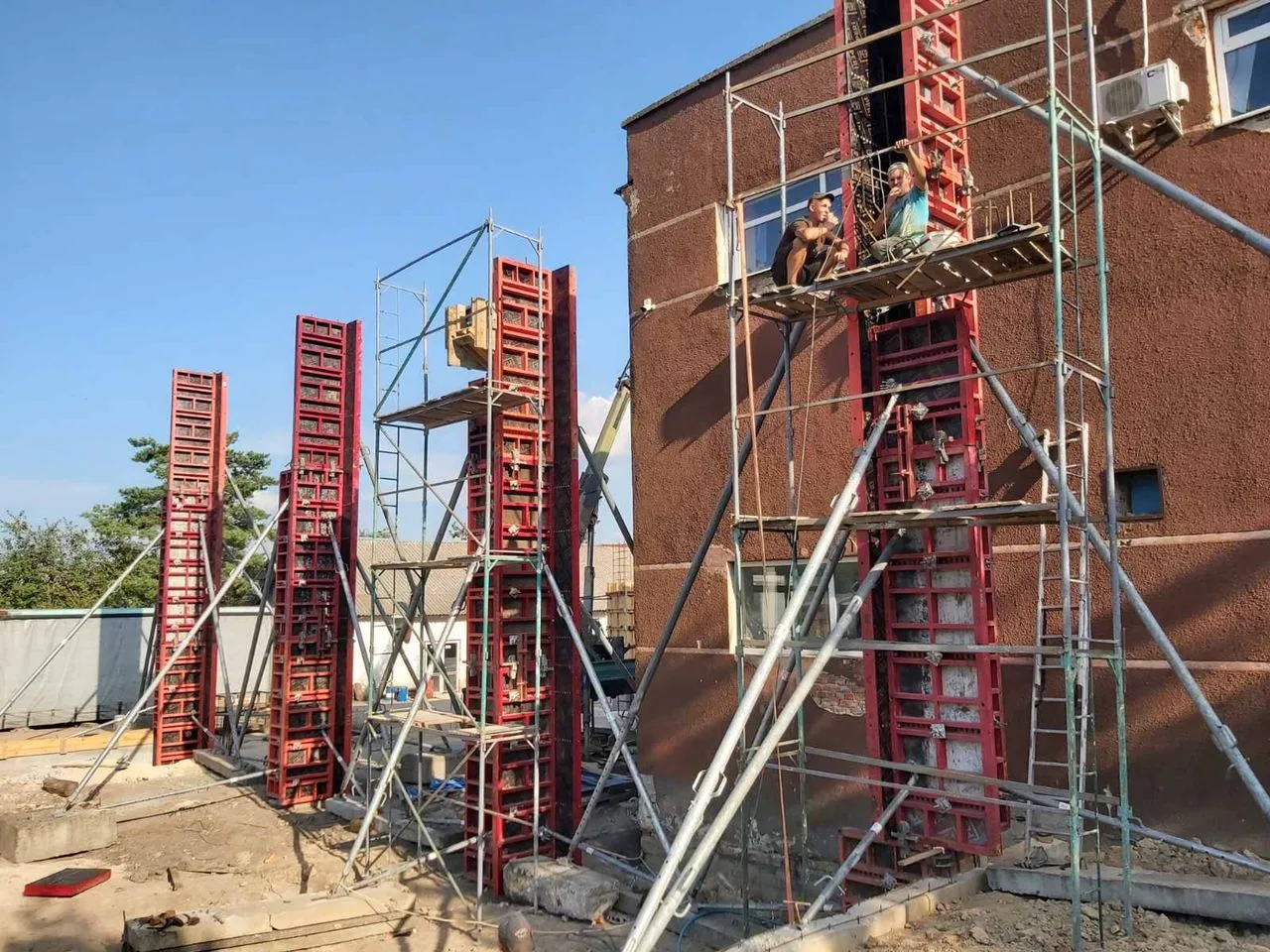
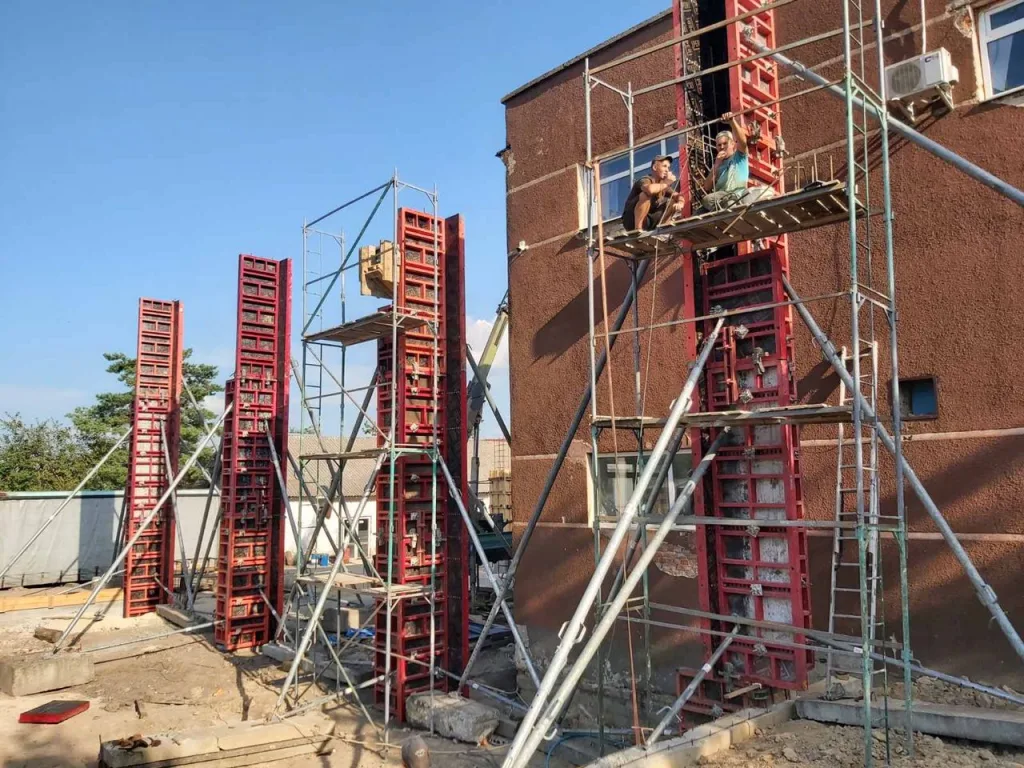
The contractor performing the monolithic work had no prior experience pouring 8.7-meter-high columns. Therefore, the contractor sought a partner who could not only provide the necessary equipment but also advise on the correct formwork layout and pouring sequence—so as to avoid the formation of a cold joint along the entire height of the column.
Challenges
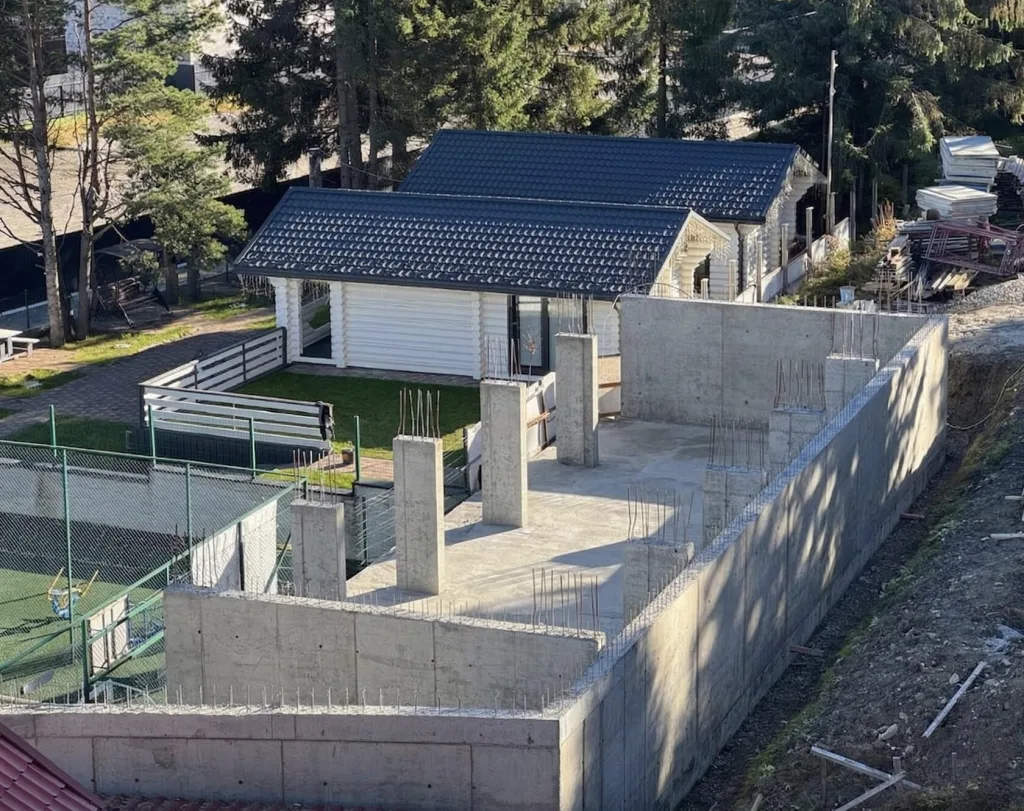
Strict technical supervision requirements for pouring 8.7-meter-high support columns in a single pour without forming cold joints. The situation was complicated by the lack of a solid foundation (rough screed or sub-concrete) at the site. An additional challenge was the contractor’s lack of experience in carrying out such high-rise monolithic work, which necessitated the development of a customized step-by-step construction plan for building up the sections and providing the project with enhanced engineering support.
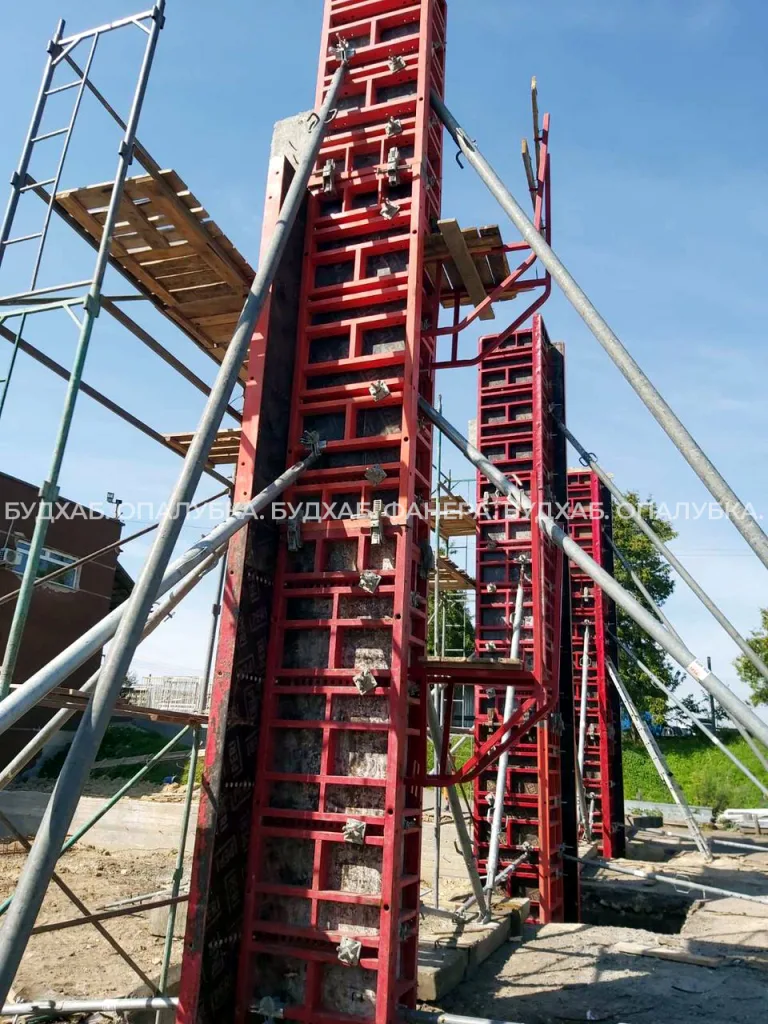
- Maximum column height: 8.7 m
- The minimum height of the columns is: 4.5 m
- The total height of the formwork is: 9.3 m
- Number of sets: 3
Our Solutions
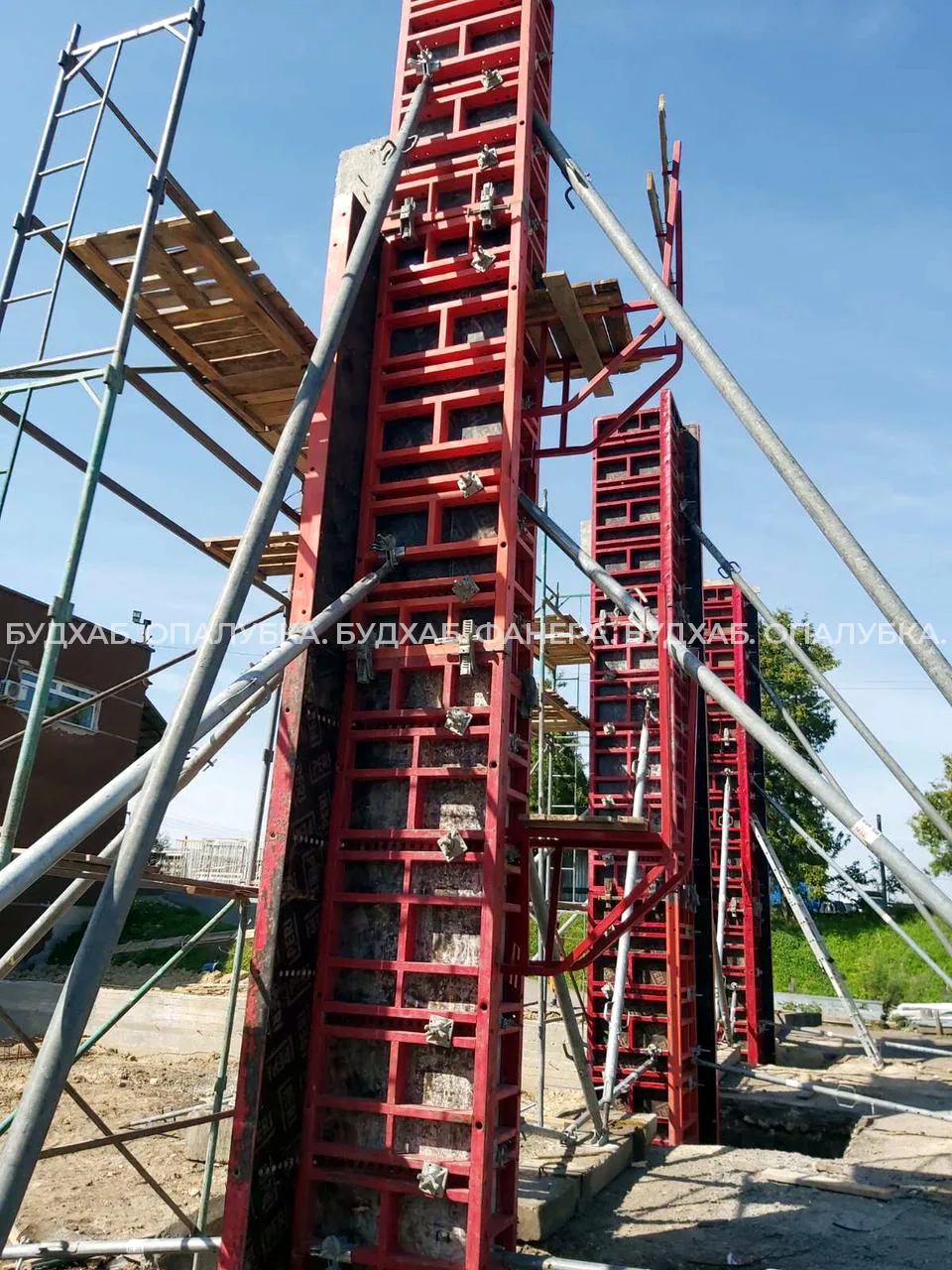
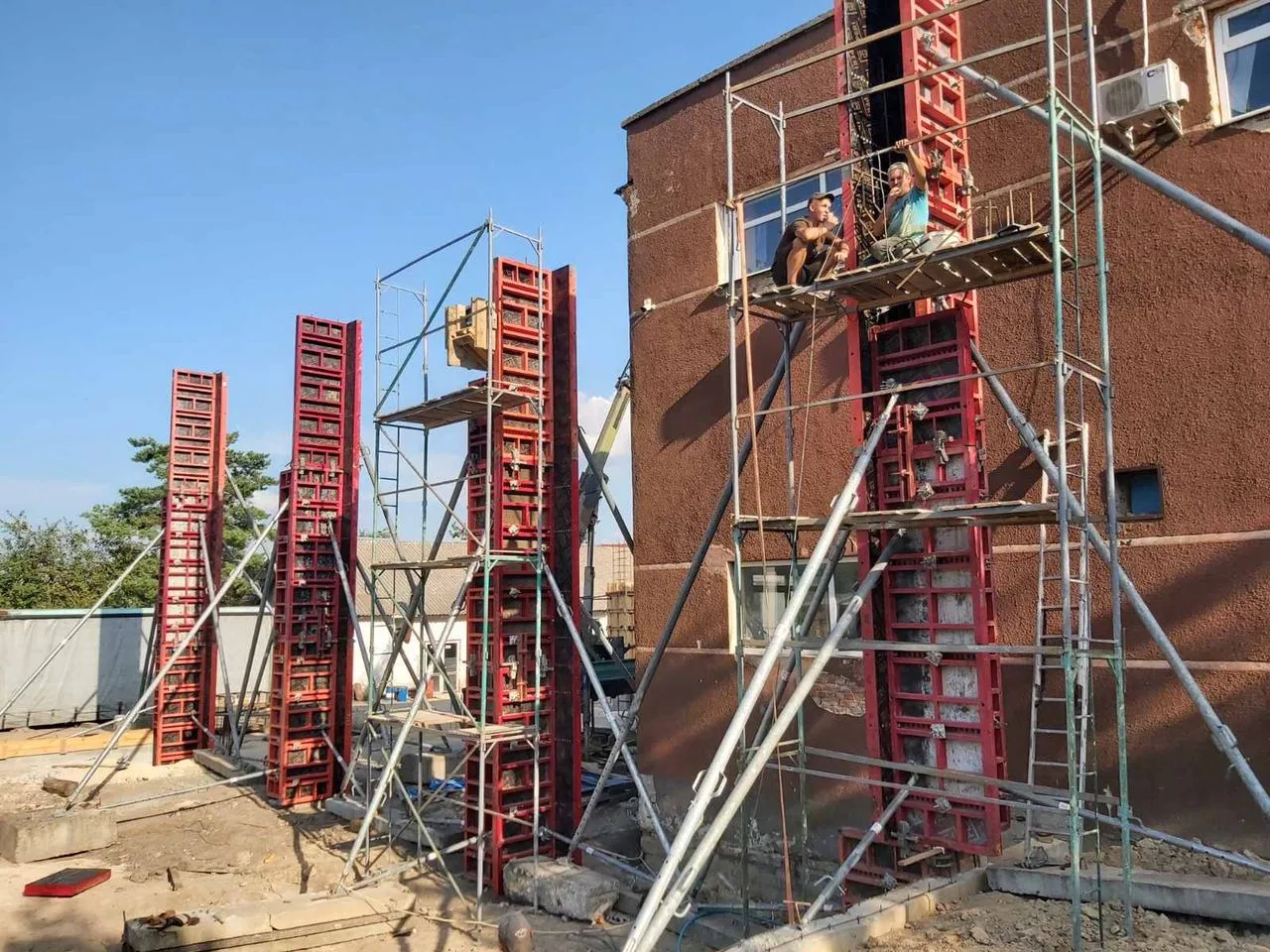
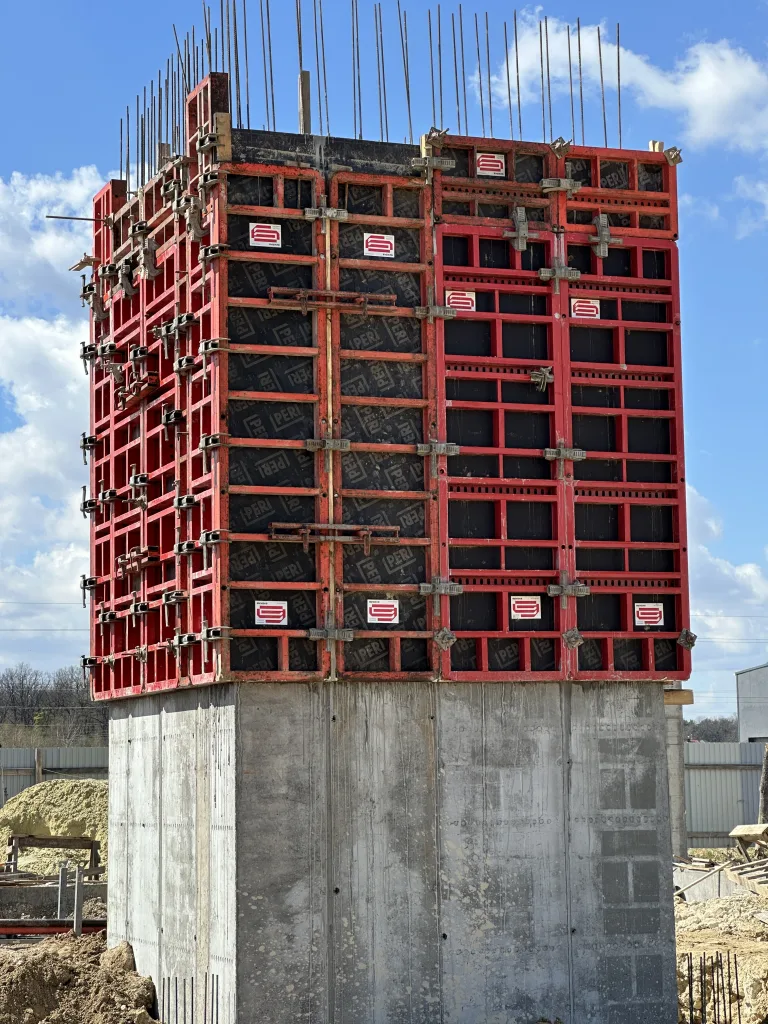
To pour 8.7-meter-high columns without a cold joint, the engineering department designed a special sequence for formwork assembly and pouring. First, two sides of the column formwork were installed to the full height of 9.3 meters. The other two sides were erected in stages: the first section—to a height of 4.5 m—was poured with the first concrete pour; immediately afterward, the next 3-meter-high section was erected and poured with the second concrete pour; the structure was completed with a 1.8-meter-high insert and the final pour. This approach ensured continuous concrete pouring without any production downtime.
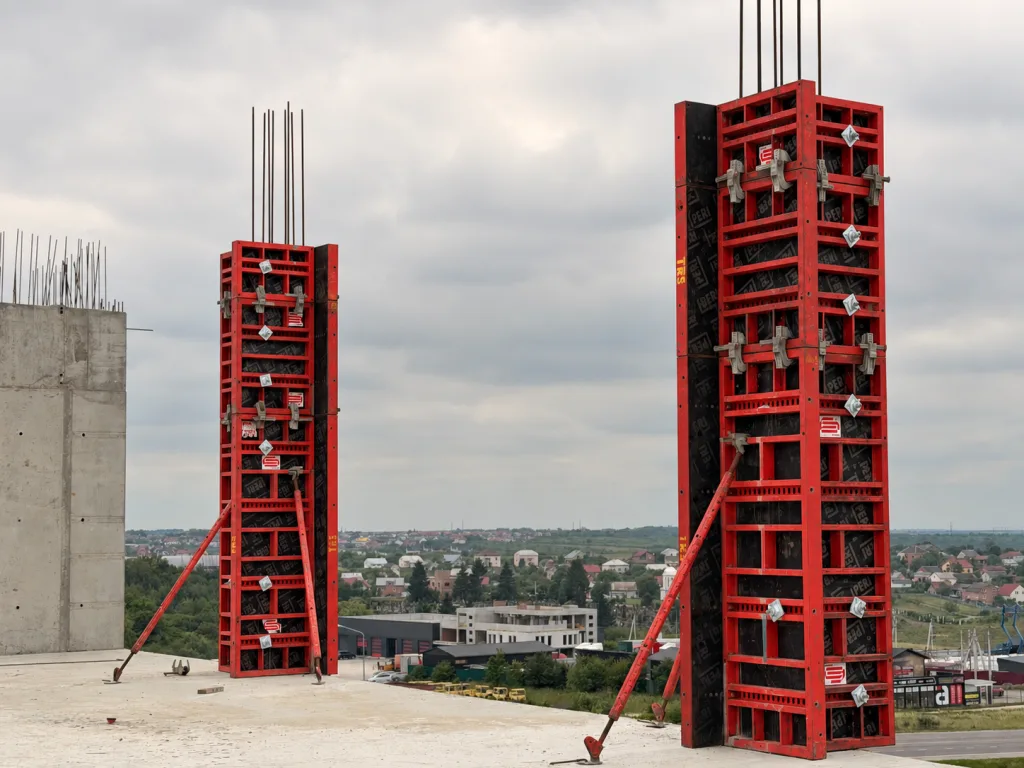
Since there was no concrete subbase or rough screed at the site, the formwork was braced with plumbing struts anchored to the road slabs and foundation blocks—this ensured the necessary stability of the structure throughout the entire pouring height.
Budhub supplied the site with three sets of column formwork. Thanks to a well-thought-out rotation schedule, this equipment was sufficient to pour all 12 columns sequentially, and the entire scope of work was completed in just 2 weeks.
Used equipment
The Budhub team equipped the site with vertical formwork that was selected to accommodate the non-standard height of the columns and the phased pouring schedule.
- Vertical formwork: 3 sets of columns, formwork panels 2.7 m / 3.3 m / 1.2 m / 0.6 m high
Result
Thanks to the planned phased pouring schedule and the efficient rotation of three sets, all 12 monolithic columns, up to 8.7 m high, were poured without any cold joints—in full compliance with the technical supervision requirements. The entire scope of work was completed in two weeks. The client is fully satisfied with the quality of the work performed. The project confirmed that even a contractor with no experience in pouring high-rise columns can successfully carry out a complex task provided there is proper engineering support.