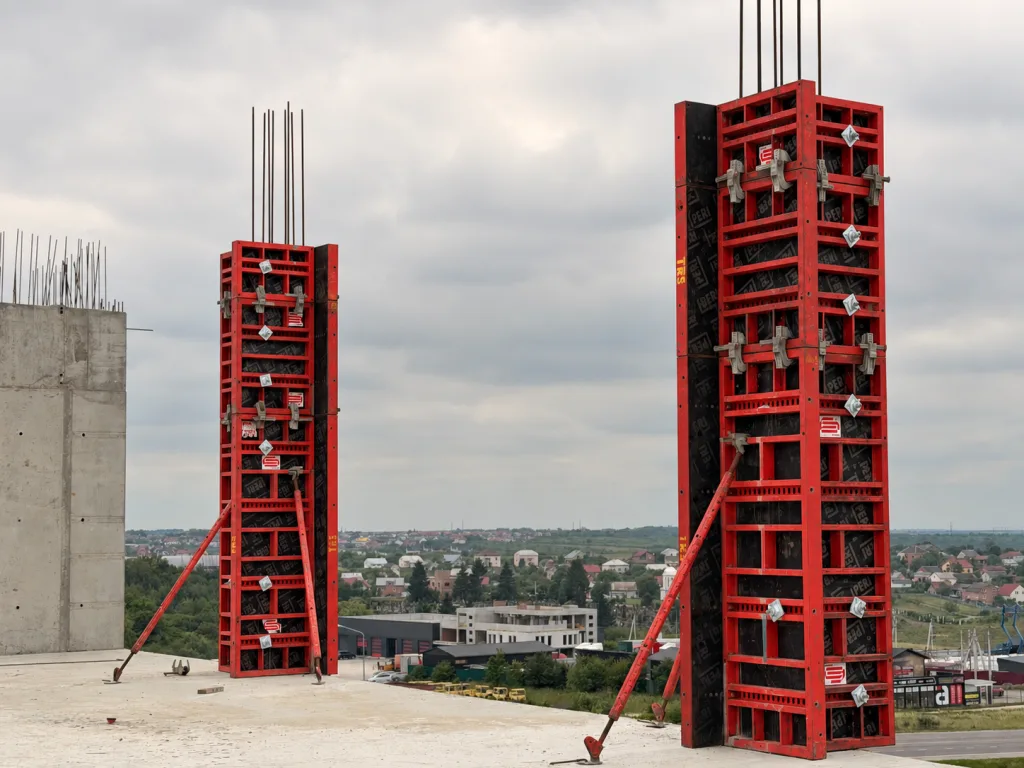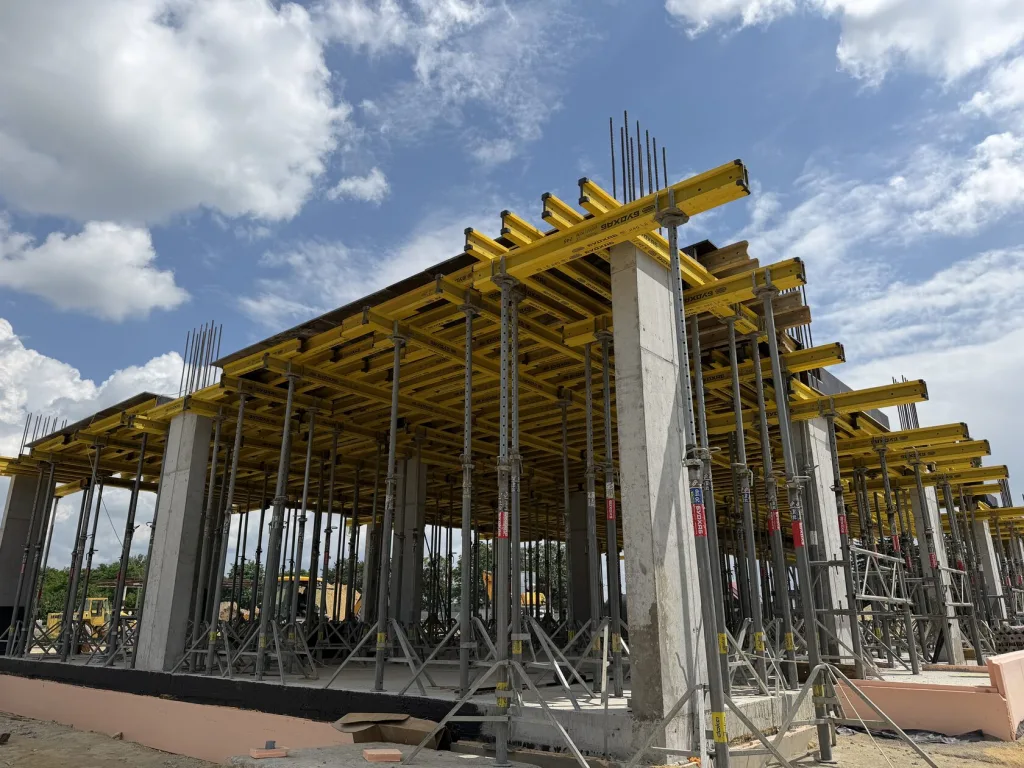
Having been in the market for over five years, we have noticed a pattern: construction companies that purchase formwork for their own fleet use it for a significantly shorter period than companies that specialize in formwork rental.
On average, formwork purchased by a construction company is used for 2–4 years, after which most of the equipment becomes unusable. And more often than not, the most expensive components—formwork panels and props—are the ones that become unusable. By comparison, the same equipment in a rental equipment fleet can be used for 6–10 years or even longer. At the same time, the number of discarded components is 2–3 times lower.
There are several reasons why the equipment lifespan may be significantly shorter than expected:
1) lack of regular cleaning;
2) lack of regular maintenance and equipment repair;
3) improper storage and equipment transport.
In this case, regular formwork cleaning is of the utmost importance. That is why we are launching a series of articles on how to extend the service life of formwork, starting with this topic.

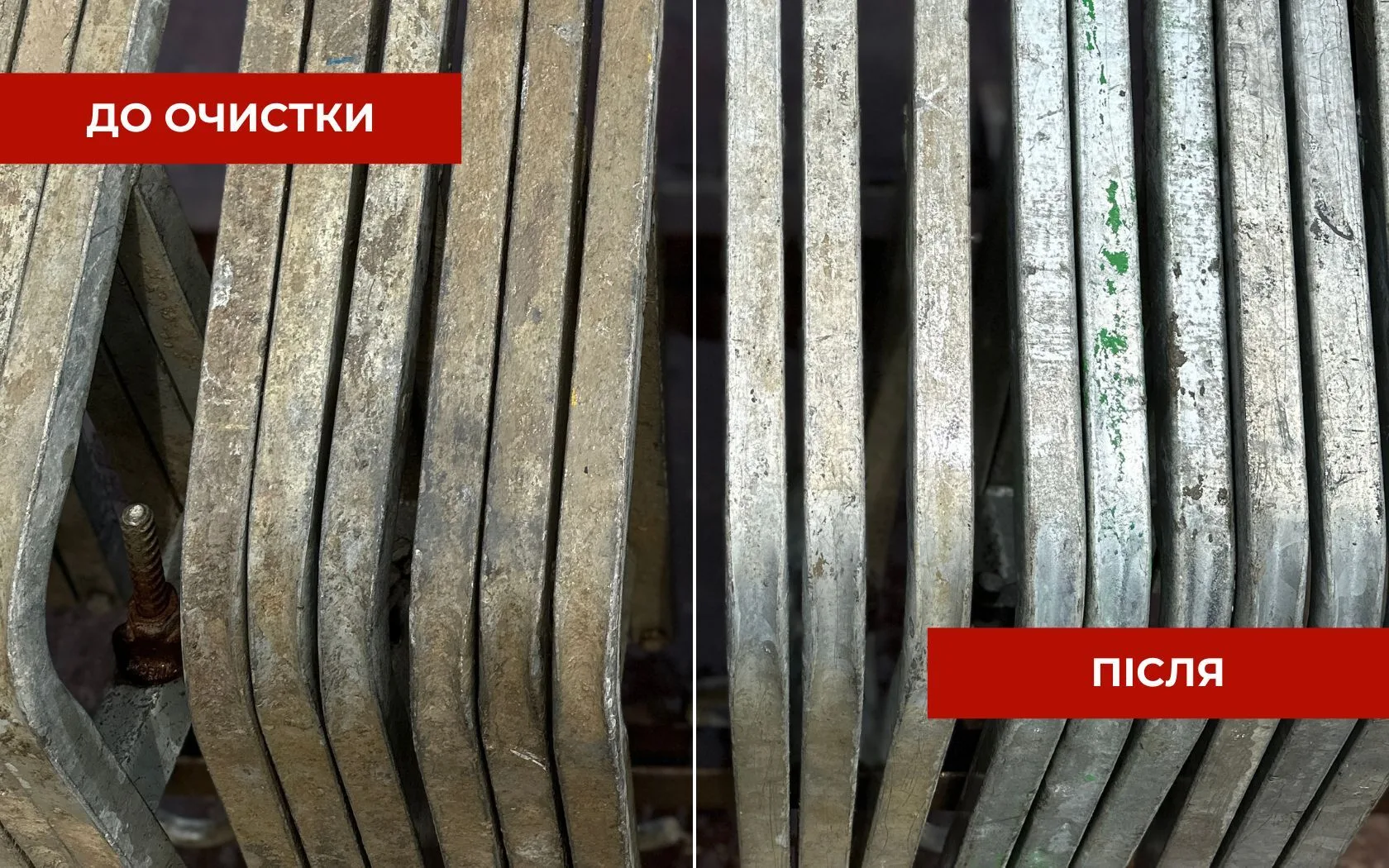
When should the formwork be cleaned?
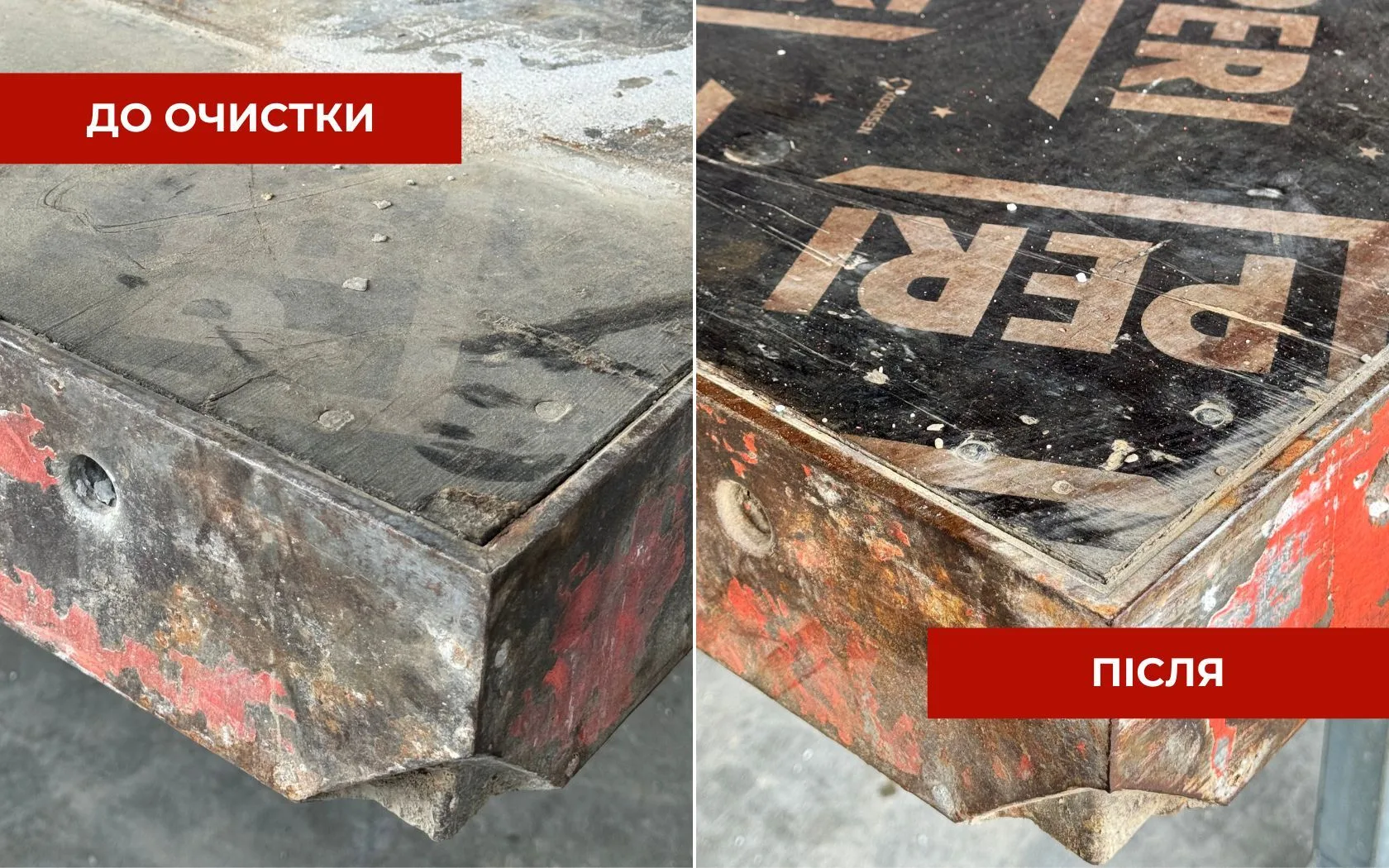
We can divide the regular formwork cleaning into two stages: interim cleaning on-site after each concrete pour, and a complete cleaning of the formwork assembly, which is carried out after all concrete work is completed, before moving to a new site.
What is interim formwork cleaning on a construction site?
The main purpose of intermediate cleaning is to wash away fresh concrete residue from the elements, clean them with tools where necessary, and prepare them for the next pour in a way that is quick yet ensures the high quality of the subsequent poured structures.
The basic rules for cleaning between pours are as follows:
- panels — clean the edges and plywood, reapply a coat of grease;
- Uprights — clean the threads, tie nut, and inner tube;
- Tripods and other hinged components — clean the joints;
- beams — trim the outer edges;
- Film faced plywood — sanding the edges.
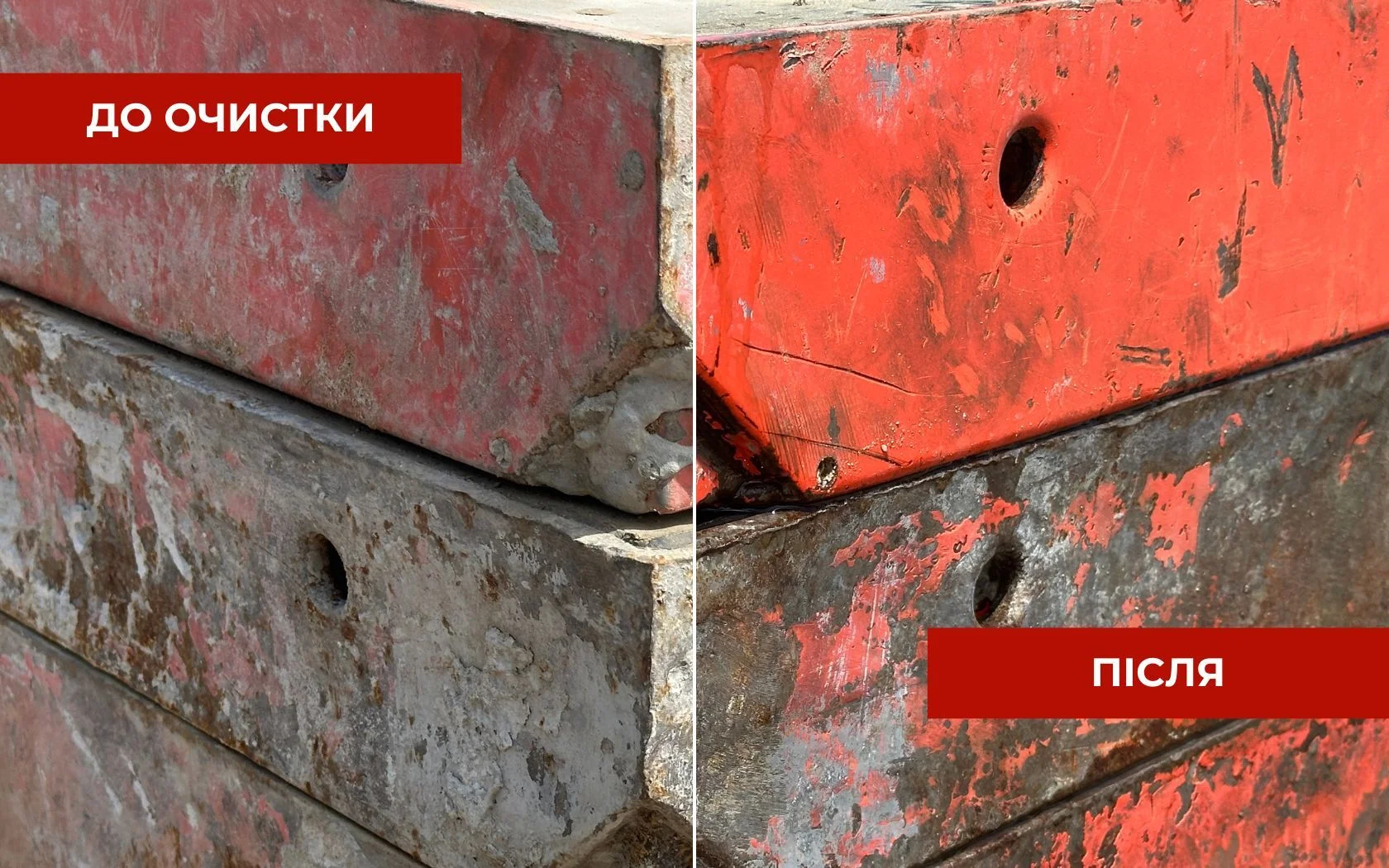
We emphasize the importance of washing off and cleaning fresh concrete, as this can be done quite easily with readily available materials. If concrete remains on the formwork elements, it becomes more difficult to clean off after just a few days, and after a year of use without cleaning, it becomes nearly impossible. In addition, when cleaning old concrete, you are 100% certain to damage the coating on the formwork elements, regardless of whether it is zinc, paint, or lamination (on plywood). Elements with damaged coatings are prone to rapid corrosion, rust, and become ineffective for use within just a few months.
Of the cleaning tools you have on hand, a pressure washer is the most effective; using a garden hose is less convenient; and the simplest method is to wash with a regular bucket of water.
You can clean individual elements using a putty knife, a wire brush, and an angle grinder. We’ll go into more detail about this later.
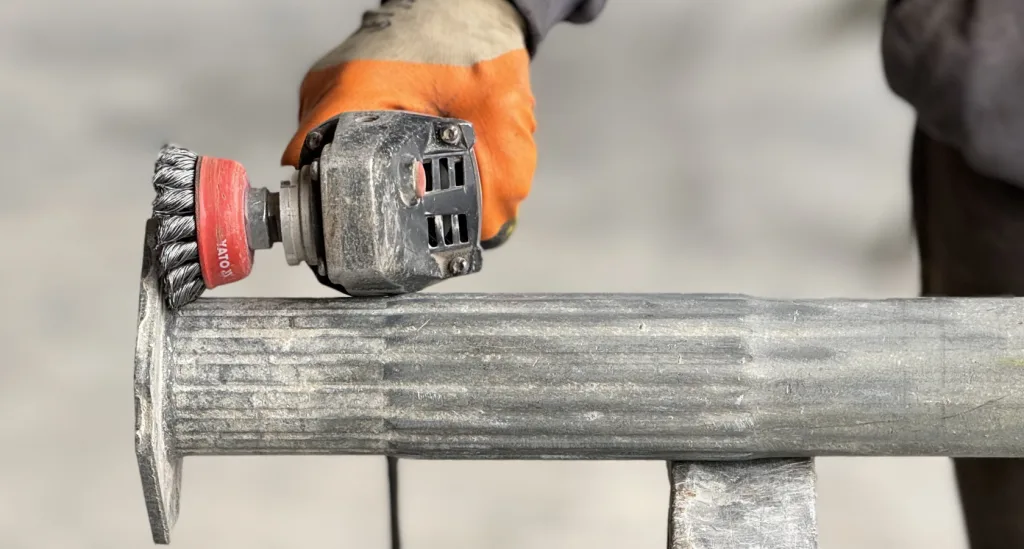
How do you perform formwork cleaning during the construction process?
Panels. The ends and plywood surfaces of formwork panels require intermediate surface cleaning. Be sure to clean concrete slurry from the panel ends, as concrete residue on the ends prevents the panels from fitting tightly together in future assemblies and leads to significant leakage of concrete slurry during subsequent pours. For example, after removing the formwork, you may notice unevenness on the corners or walls—so-called “cavities” measuring 5–10 cm—formed due to such seepage. Instead of plastering and additional work to level the concrete surface, it is more effective to clean the formwork panels and pour concrete into clean formwork.
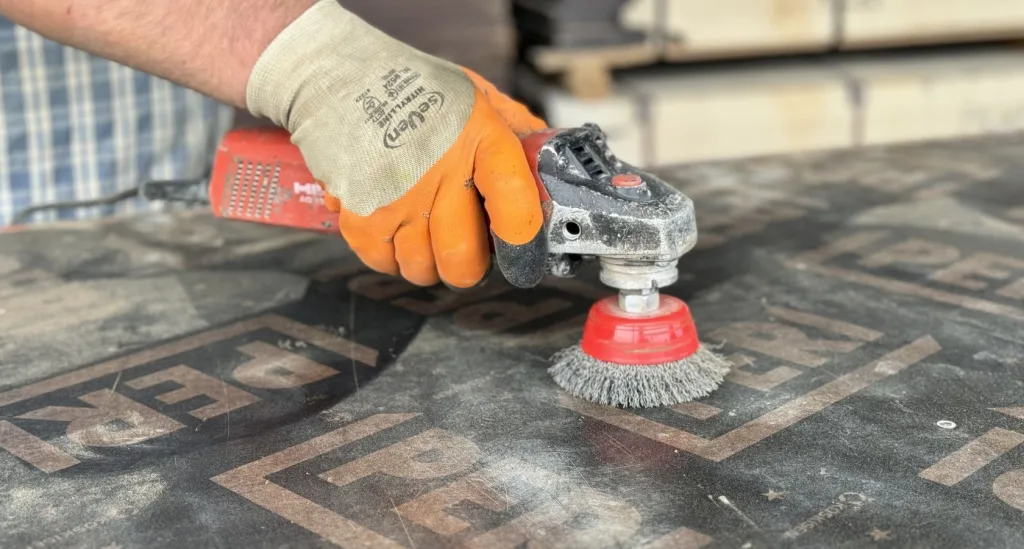
You can clean the edges with water if the concrete is fresh, or—for older concrete—using a putty knife or an angle grinder with a soft wire brush attachment, taking care not to damage the paint or zinc coating.
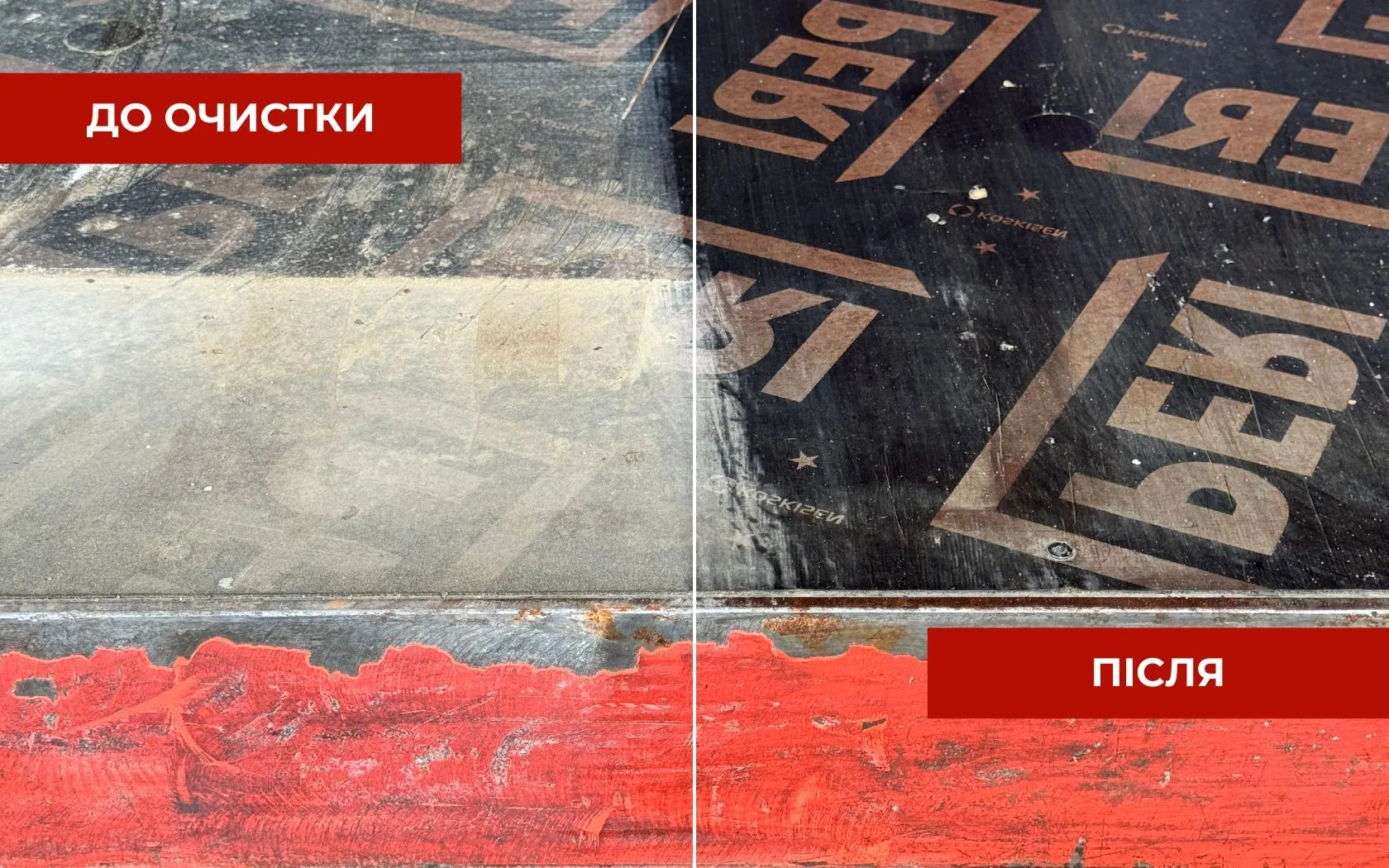
Construction plywood on formwork requires perhaps the most meticulous care on a construction site. The service life of construction plywood is typically up to three times longer if you regularly clean and lubricate it with a high-quality lubricant. For example, a single sheet of plywood on a formwork panel can be used for up to 200 pouring cycles of concrete, which is equivalent to 2 to 4 years, or 50 floors for column formwork. By comparison, without cleaning and lubrication, plywood on formwork panels can become severely damaged and unusable in just a few months. If no lubricants are used at all when operating the equipment, it will be practically impossible to remove the concrete from the plywood without significant damage to the surface. Consequently, this results in significant damage to the laminate and the need to replace the plywood with new plywood. And that’s about 25% of the total cost of the formwork panel!
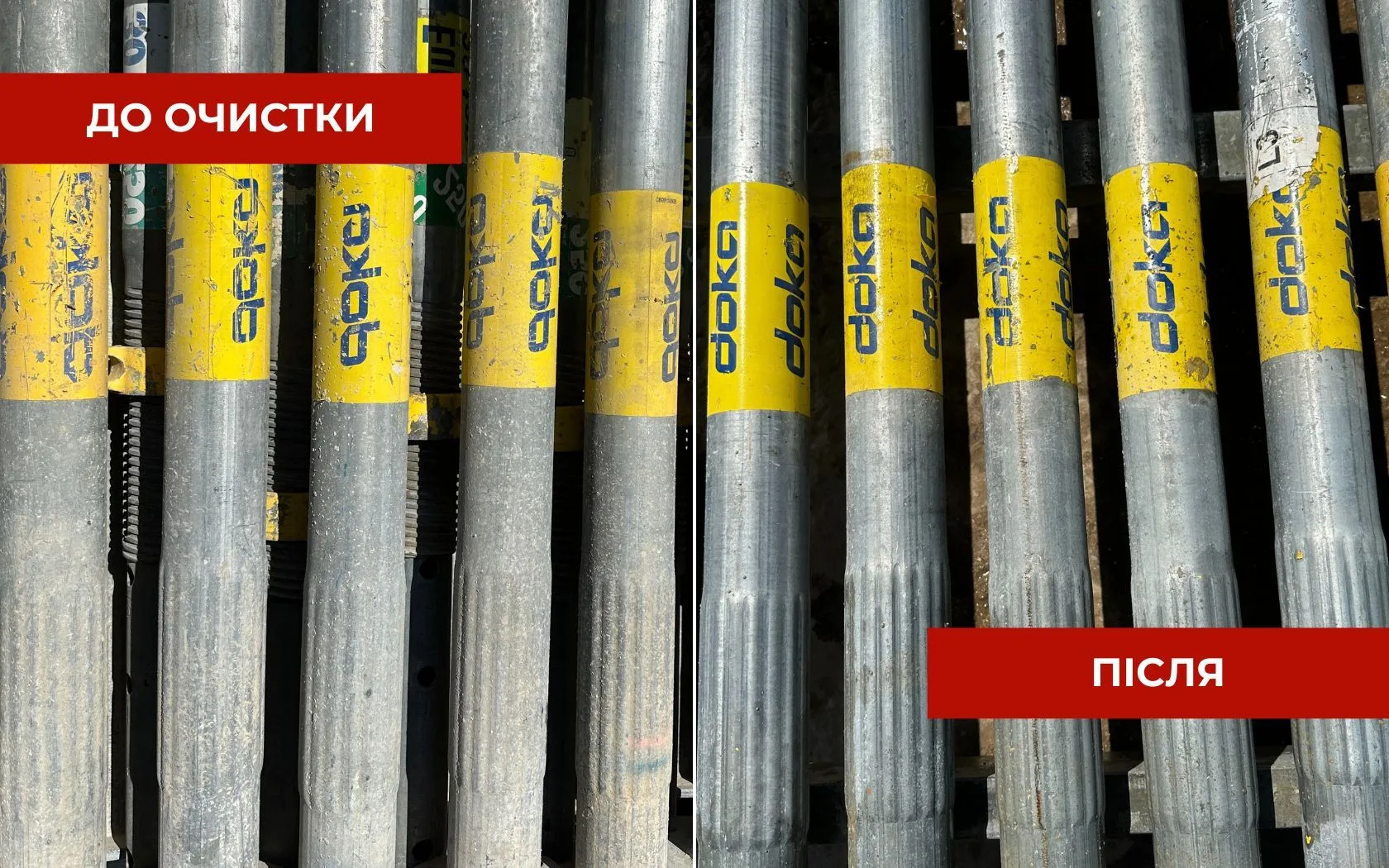
Formwork props. The most “vulnerable” parts of formwork props are the moving components that can become “seized” when exposed to concrete slurry—namely, the threads, tie nuts, and inner pipes. Continued use of such props becomes inconvenient and even dangerous. Additionally, workers often use a hammer to drive the pipe in or knock it out, causing the pipe itself and the base to deform, rendering the prop unusable.
You can also clean the racks using water, a soft wire brush, or a scraper.
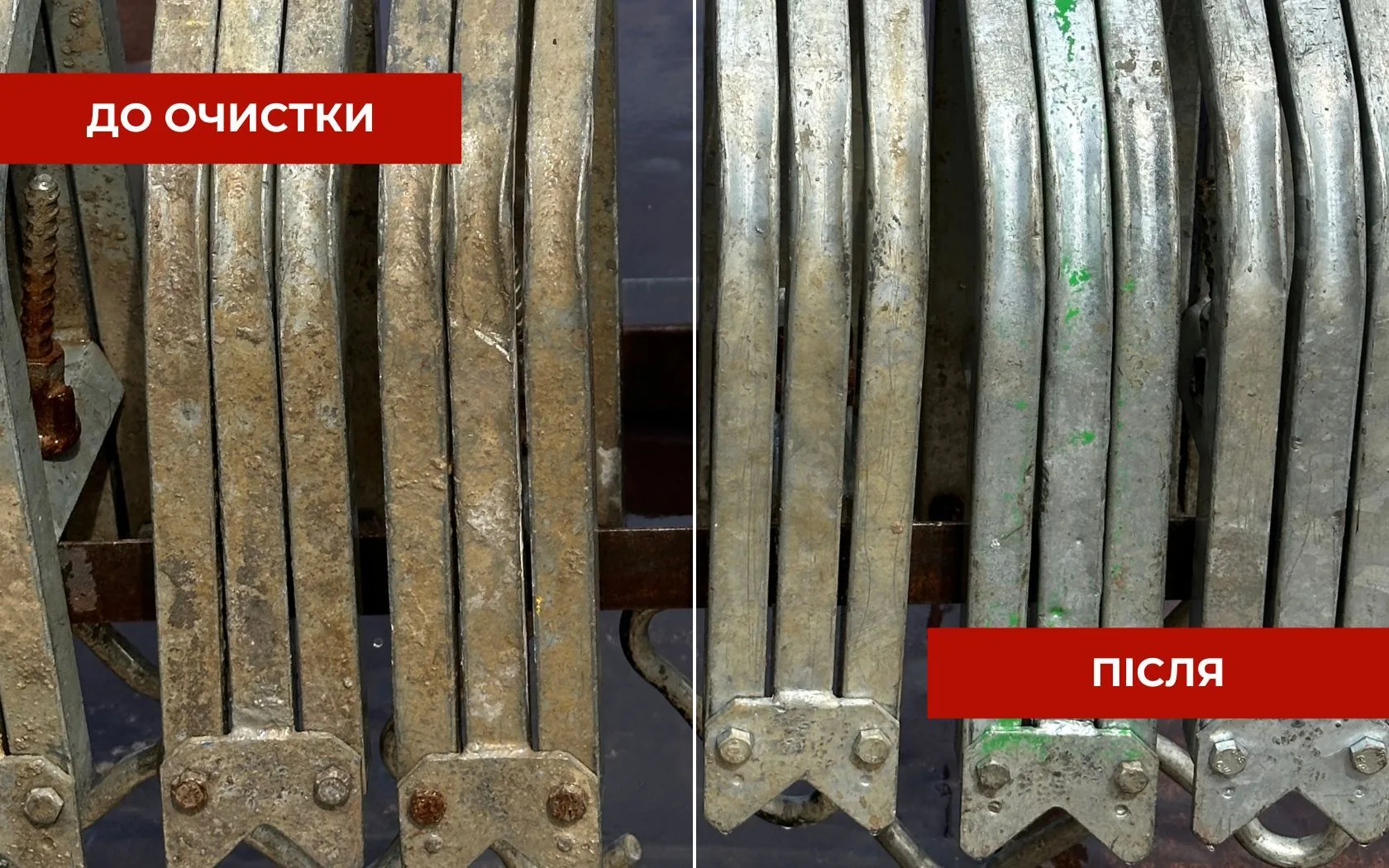
Tripods and other hinged components face the same problem—concrete getting into the moving parts, which prevents them from folding or bending. Using this equipment causes inconvenience and increases the time required for installing and removing the floor slab. Therefore, we recommend cleaning all moving joints in the same way—with water and a soft wire brush.
Beams. Cleaning has less of an impact on the service life of formwork beams than on other components; therefore, the main purpose of cleaning beams is to ensure there are no height differences when the formwork is set up in its design position. For example, if there are 2–3 mm of concrete buildup on the edges of the beams, you will not be able to set up a level floor slab, since the standard beam height of 200 mm will be altered.
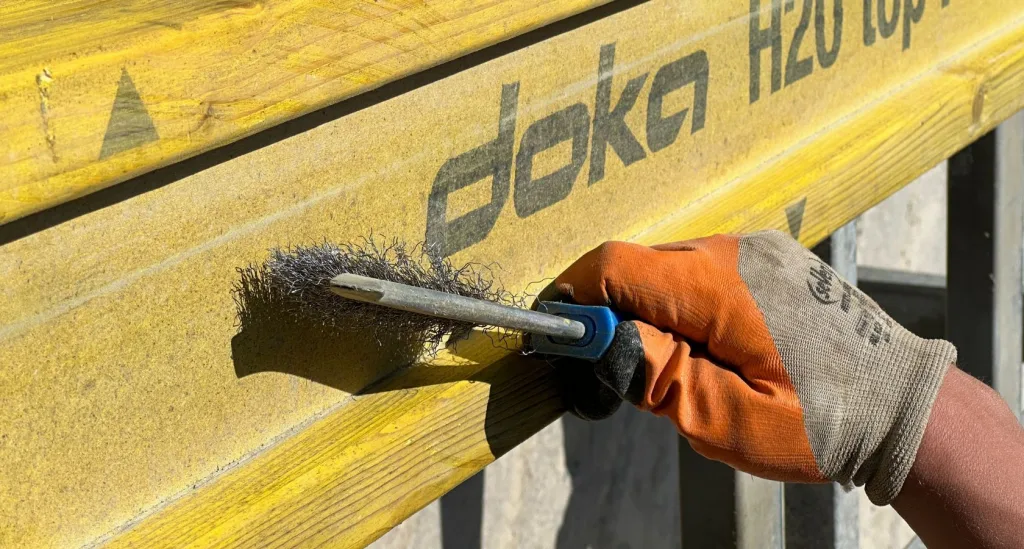
Therefore, we recommend cleaning the beam shelves with a wire brush as needed.
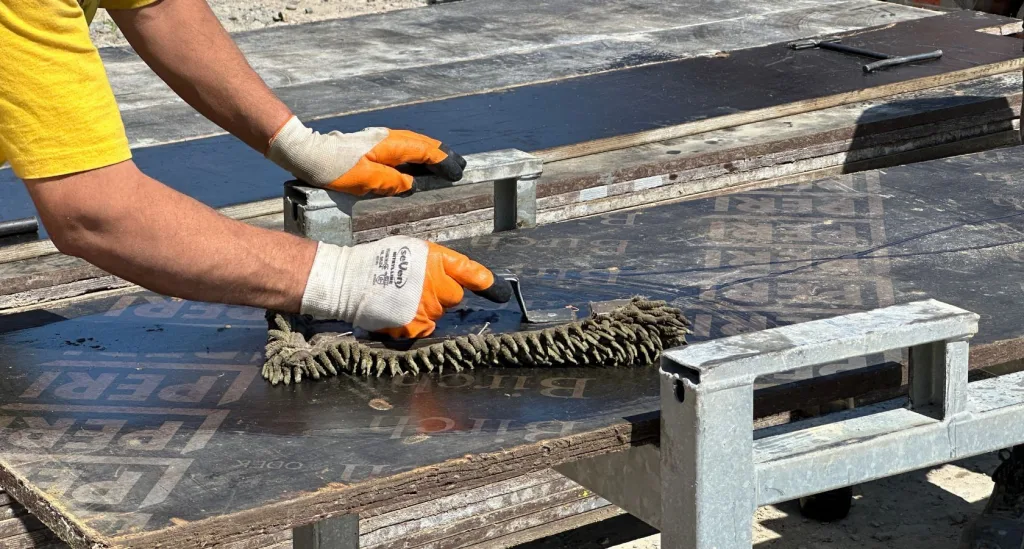
Film faced plywood used for floor decks requires the edges to be cleaned of concrete before each new pour. Concrete buildup on the edges of the plywood leads to excessive seepage of concrete slurry during subsequent pours and, as a result, contamination not only of the film faced plywood but also of the studs, beams, and tripods. To quickly clean the edges, you can stack the plywood in bundles and use a putty knife and wire brush to scrape off the concrete.
To extend the service life of plywood panels and film faced plywood used for horizontal formwork, it is important to use a special, high-quality formwork oil. This formwork oil is water-based only. When applied with a spray gun, it creates a very thin protective layer, several microns thick. The oil consumption is 1 liter per 30–50 m² of plywood.
Unfortunately, we often encounter the use of cheap formwork oil not intended for formwork, which is a petroleum-based product. Such formwork oil leaves greasy dark stains on finished concrete structures and can later cause problems during finishing work. In addition, it does not provide adequate protection for the plywood against concrete.
Cheap grease is thick; it can only be applied to the plywood with a roller, so its consumption is tens of times higher: 1 liter per 3–5 m².
Formwork cleaning after completion of the concrete work
Once the concrete work is complete, we recommend thoroughly performing formwork cleaning on all formwork components, inspecting the formwork for defects and damage, and, if necessary, performing repairs, welding, and other work.
A full cleaning involves following the same procedures as an interim cleaning, with additional work performed.
The basic rules for a thorough cleaning are as follows:
- Panels – clean the ends and the plywood on both sides, reapply a coat of grease, clean the corners between the ribs and all hard-to-reach areas (for example, between the rib and the plywood), and clear all openings of concrete;
- All components of the vertical formwork must be completely cleaned of concrete;
- Poles – clean the threads, tie nut, inner tube, and outer tube;
- Tripods and other hinged components – clean all surfaces;
- beams – clean all surfaces;
- Film faced plywood – clean the edges and surfaces.
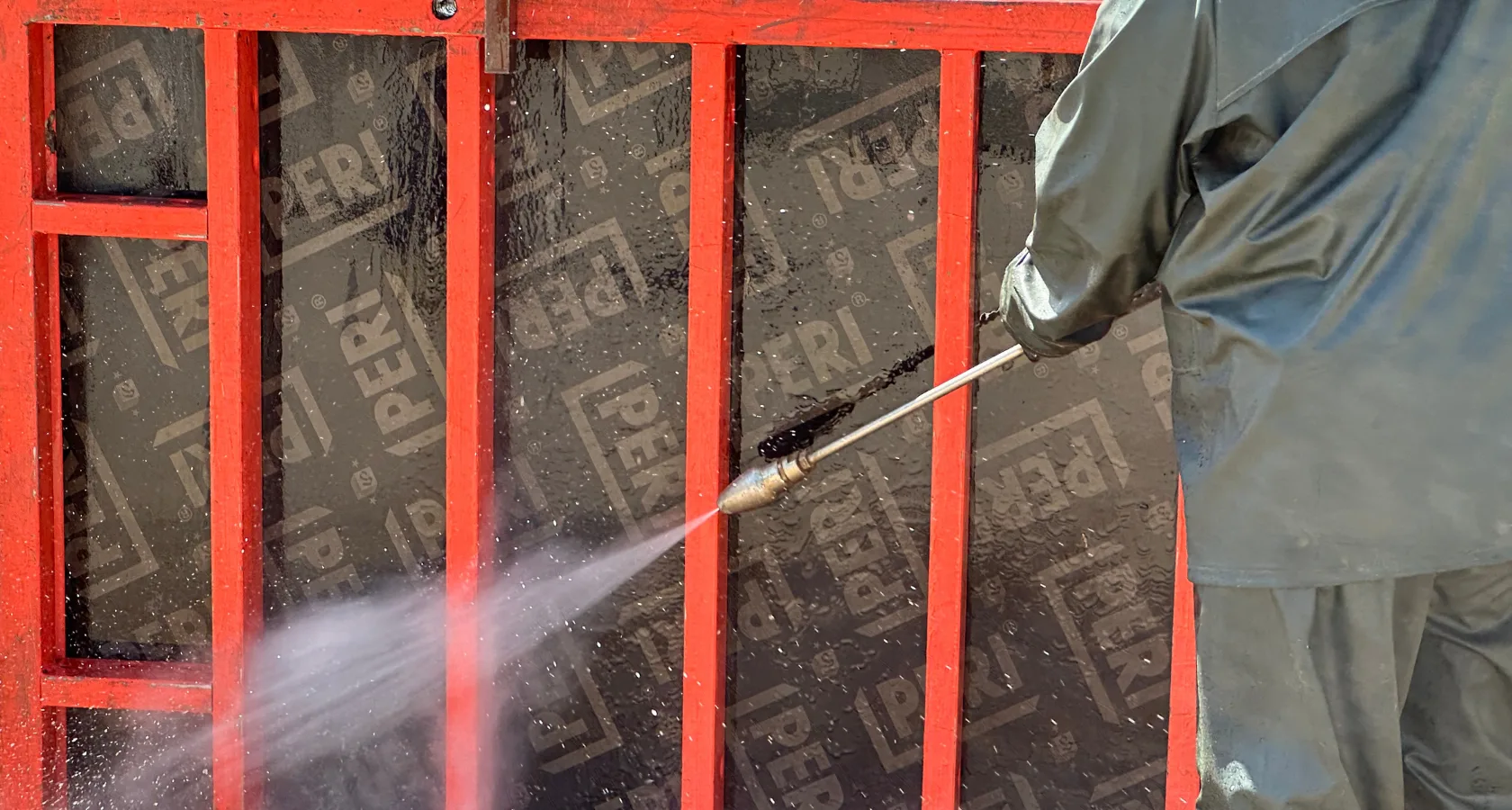
For this type of cleaning, it is essential to use a high-pressure washer, preferably an industrial model (500 bar), which will effectively remove both fresh and hardened concrete. We also use hand tools.
We use a pressure washer to clean: framed formwork panels, tie nuts, tie rods, locks, formwork props, and tripods.
We recommend placing tie nuts, bolts, locks, and other small parts in containers or mesh bags whenever possible to securely hold them in place, as loose small parts can cause injury when exposed to high water pressure.
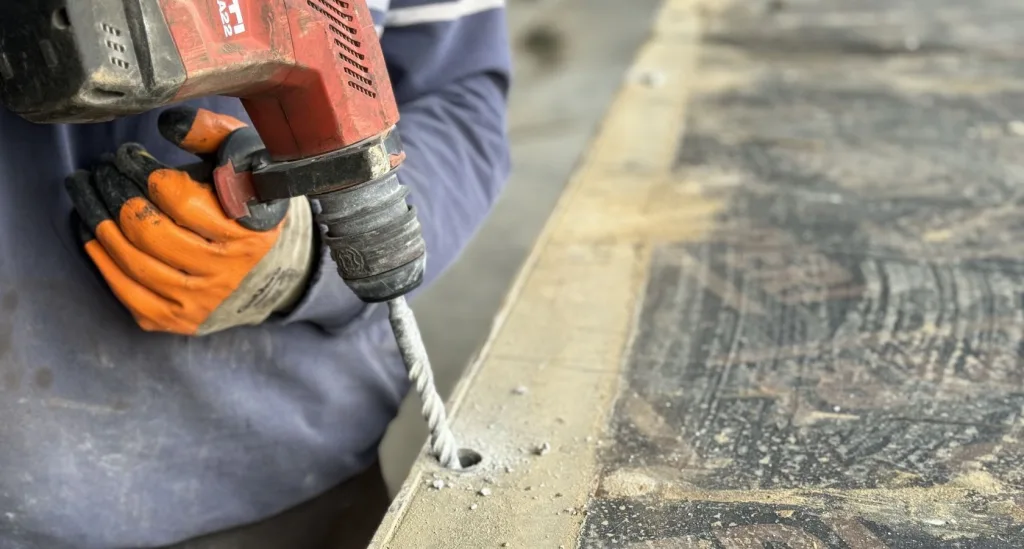
We clear all the holes in the panels caused by concrete dust using a hammer drill with a 16–18 mm drill bit.
Use an angle grinder to clean the corners between the ribs and hard-to-reach areas in the panels, as well as to remove light dirt from tie nuts, locks, and other metal components.
Use a putty knife and a wire brush to clean the timber formwork beams and the film faced plywood, taking care not to damage the laminate.
Is it effective to use construction chemicals for formwork cleaning?
There are currently quite a few manufacturers of construction chemicals on the market offering products for cleaning concrete surfaces. In our search for more effective ways to clean equipment, we purchased several such products in different price ranges and conducted experiments cleaning zinc components—tie nuts and bolts.
After immersing the components in the solutions, we were pleasantly surprised to find that the concrete had indeed dissolved completely and the equipment looked brand new. However, within just one day, all the components were covered in rust and corrosion. Further experiments involving changes in the solution ratios and immersion times yielded the same results.
At this time, we have not found any chemical agents capable of dissolving concrete without damaging the zinc coating; therefore, we cannot recommend this cleaning method.
Let us know if you’ve had a positive experience using cleaning chemicals for construction!
In summary
We hope this article serves as a helpful guide on how to clean your formwork and extend its service life in your own fleet.
If you want to maintain your formwork properly but don’t want to handle the logistics yourself, we offer maintenance services for your equipment—including thorough cleaning after use, restoration, and equipment repair.
For consultation and a cost estimate, please call
+380 98 800 22 88.