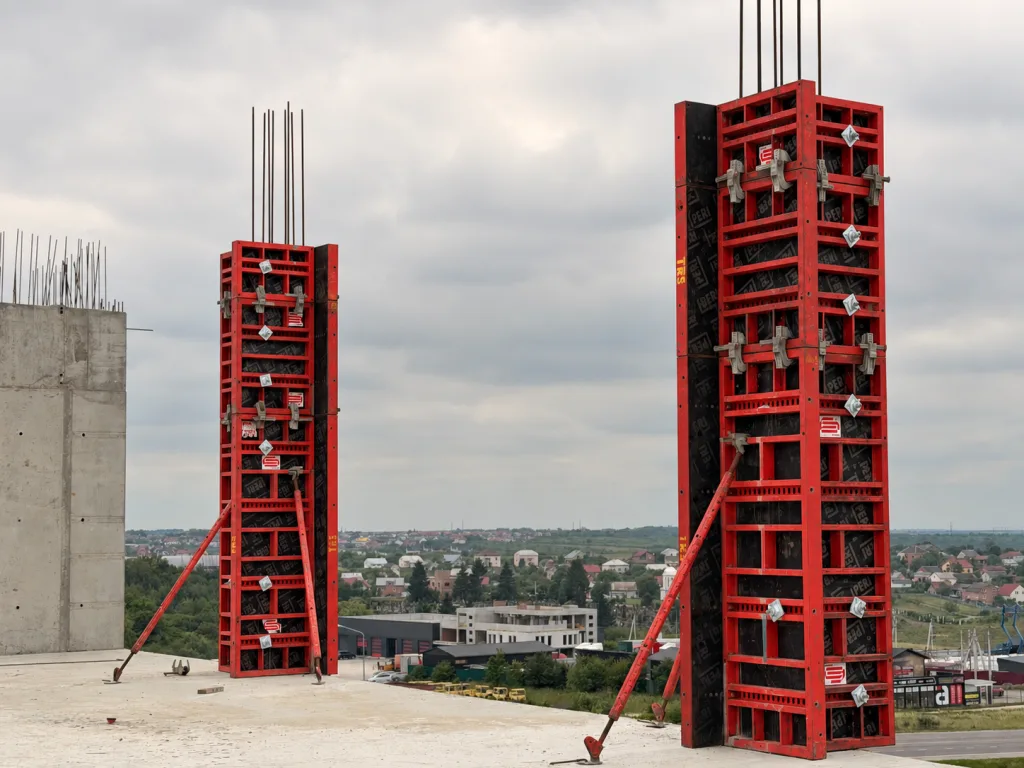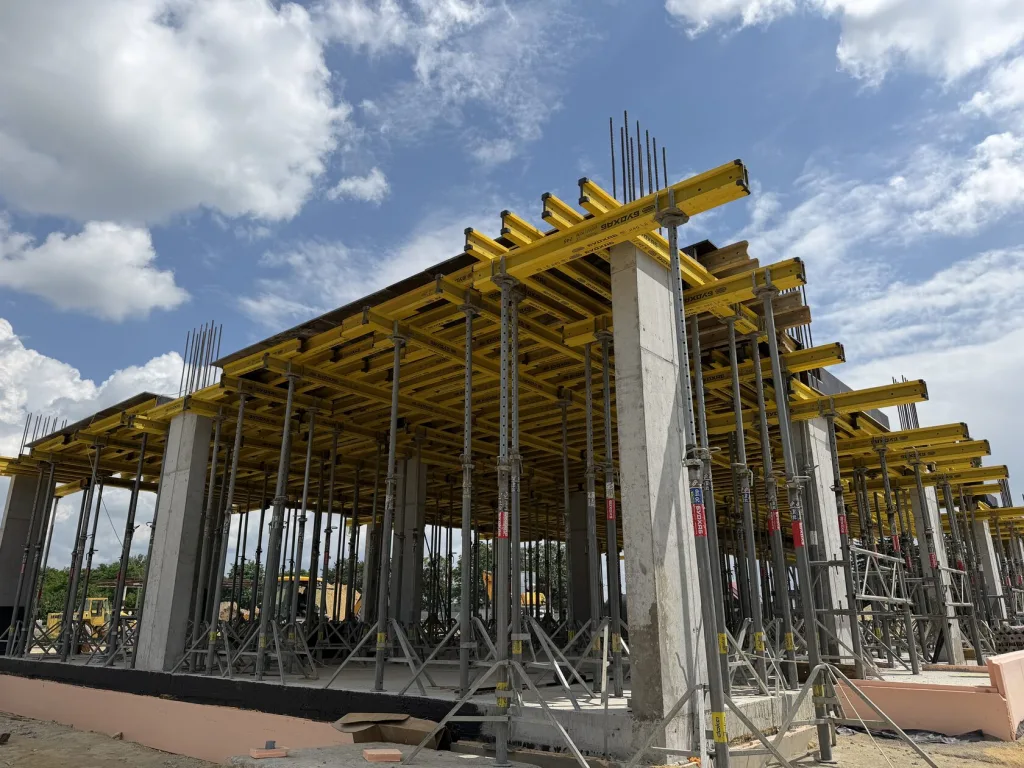
Formwork for elevator shafts is one of the most challenging aspects of cast-in-place construction. The challenge lies not in pouring the concrete, but in how to properly and safely remove the formwork from the inner perimeter once the concrete has gained sufficient strength.
An elevator shaft is a closed concrete structure with inner and outer wall surfaces. During the pouring process, the concrete exerts pressure on the formwork from all sides, causing the inner formwork to become effectively “trapped” within the structure after the pour. Without special formwork removal solutions, dismantling it becomes a complex procedure: the load on the crane increases, there is a risk of damaging the panels, and time is lost on-site.
That is why, in professional construction, the issue of formwork removal for elevator shafts has long since moved beyond temporary or makeshift solutions. Modern formwork systems allow the inner formwork to be removed in a controlled manner, without dismantling, with a minimum of manual labor, and with predictable results on every floor.
In this article, we will examine the various methods of formwork removal used in practice, how they differ from one another, and how to choose the best option for a specific project.
Specifics of concrete pouring for elevator shafts
When pouring concrete for elevator shafts, the main challenge arises not during the alignment of the formwork panels, but during formwork removal. After removing the tie rods and unscrewing the fasteners, the outer formwork can be gradually pulled away from the concrete using standard techniques, but the inner formwork remains clamped on all sides after concreting due to the pressure of the concrete along the closed perimeter, which complicates its removal.
In the confined space of elevator shafts, especially when working with heavy-duty formwork, these factors become critical: the system is massive, with large metal panels, and any overload during formwork stripping poses a danger to people and equipment. Additionally, productivity must be considered—in multi-story buildings, elevator shafts are repeated from floor to floor, so the formwork removal method directly affects the pace of work, crane time, and overall costs.
There are several ways to remove internal formwork after concrete placement. Some of them are simpler in design but take longer to complete, while others rely on specialized solutions and can significantly speed up the process. Let’s take a look at them below.
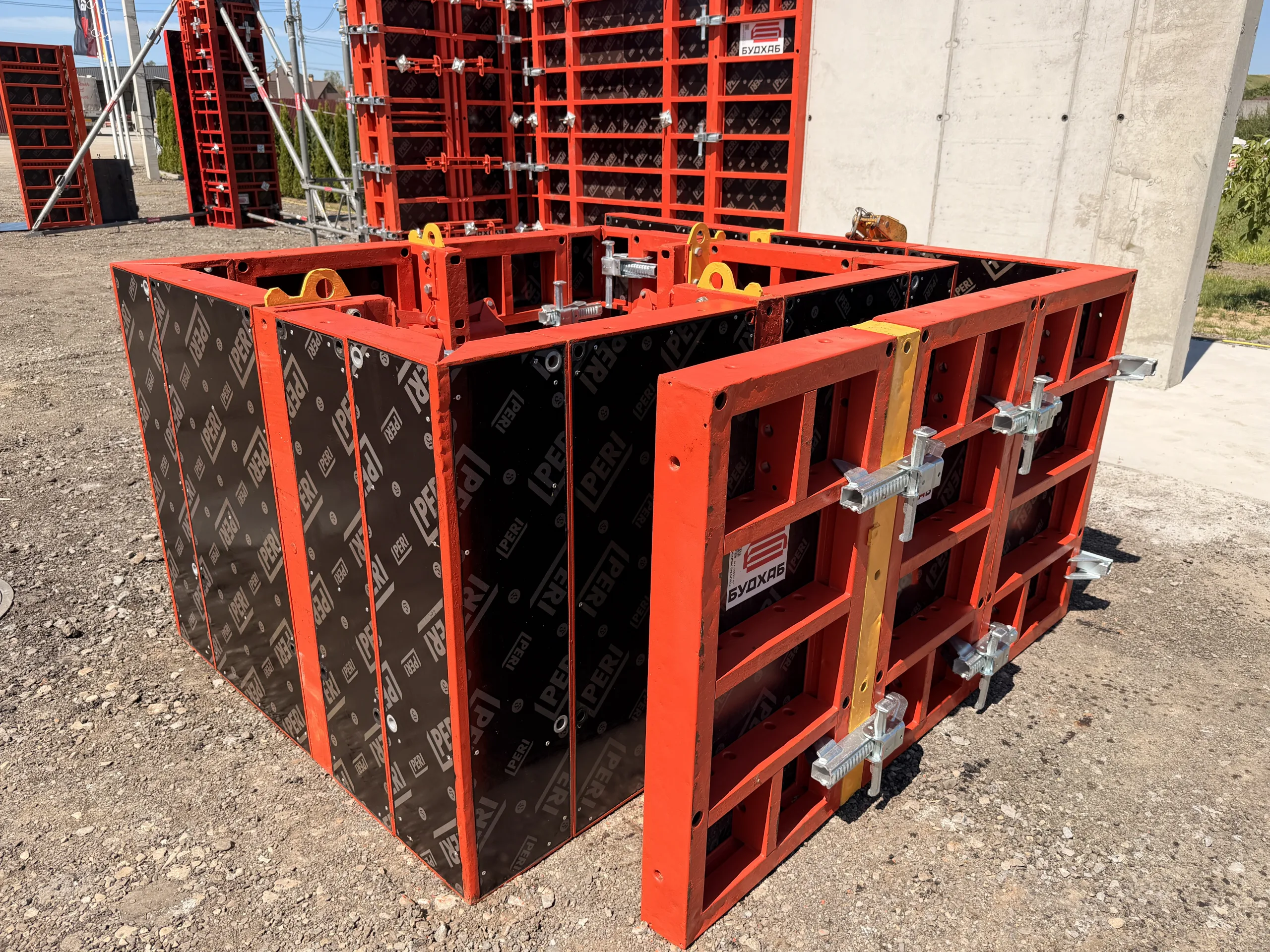
TSE Shaft Element (PERI TRIO)
Design and Operating Principle of the TSE Shaft Element (PERI TRIO)
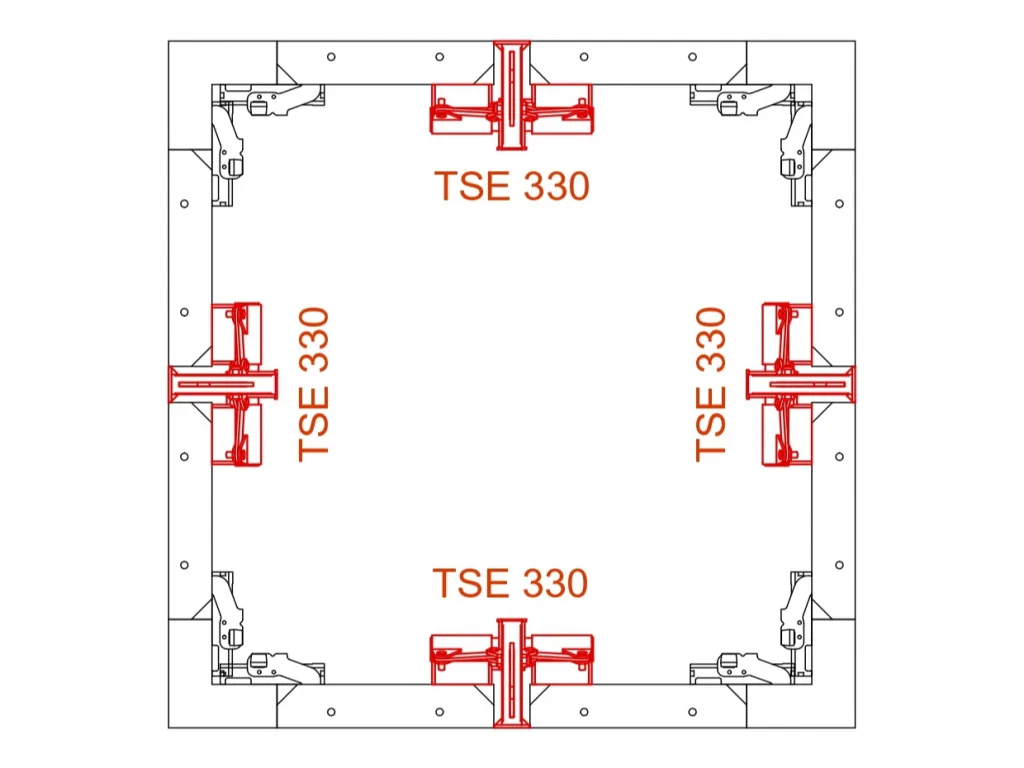
The TSE formwork panel is installed not at the corners, but in the middle of the inner formwork walls. Inside the element is a compression mechanism: after concreting, it shrinks by 3 cm. This causes the formwork to separate from the concrete along the entire perimeter, allowing the shaft to be released effortlessly.
These components are installed on each interior wall of the shaft—four per closed loop. The components are equipped with lifting loops, which allow a crane to lift the structure as a single unit.
The elements must be the same height as the panels (2.70, 3.30, 4.50, or 1.20 m) and can be stacked to increase the height—for example, 3.30 + 1.20 = 4.50 m.
Advantages:
The system allows the formwork to be removed in a single crane lift without disassembly, minimizes manual labor and dismantling time, ensures high precision and repeatability of geometry, and has a long service life while operating reliably even on high-rise structures.
TSE components are particularly effective where there is a need to repeatedly reposition the formwork between floors. They significantly save crane time and man-hours when working with formwork.
Disadvantages:
It requires qualified personnel who understand how the mechanism works, and it also involves a significant initial cost.
The formwork for elevator shafts is increasingly being removed using special TSE shaft elements. This solution has long proven itself to be convenient, fast, and reliable compared to dismantling the formwork piece by piece.
TSE systems allow you to treat the shaft as a single unit: without unnecessary operations, with minimal manual labor, and with precise process control. That is why it makes sense to have such systems in operation—whether as part of your own fleet or leased for a specific project.
The Budhub team provides access to these solutions in a convenient format, including product selection, consultation, and on-site support. This allows you to use modern formwork systems without any complications and achieve consistent results at every stage of construction.
You can watch a detailed video tutorial on how to work with TSE inserts on our YouTube channel: PERI TRIO Formwork — Step-by-Step Removal of TSE Inserts.
Based on our experience working with elevator shafts, our team most often prefers to use TSE shaft elements from the PERI TRIO system. This solution has repeatedly proven itself on projects with repetitive floor plans and shafts of varying heights, where process stability and predictable results are crucial.
We therefore recommend TSE to our customers for several reasons. First, the components have a long service life and are designed to withstand multiple cycles without losing their shape. Second, they can be stacked vertically, which is especially important for shafts of non-standard or variable sizes—the elements operate synchronously as a single unit.
It is worth noting the high-quality German components and PERI mechanisms, which ensure reliable performance without any “surprises” during formwork removal.
Another advantage is its ease of use: after a brief introduction to how it works and minimal training, the system can be easily implemented on-site.
In addition, all standard heights for the components—ranging from 1.20 to 3.30 meters—are always in stock, allowing you to quickly assemble solutions without delays.
That is precisely why TSE is not a complicated or risky solution, but rather a tool for saving time, reducing crane operations, and minimizing manual labor—one that works well in mass construction.
Global manufacturers, including PERI and Doka, have developed special components that allow for the safe removal of interior formwork from elevator shafts without the risk of damaging the formwork panels or overloading the crane. Such systems allow the structure to be stripped in a single motion—without dismantling or knocking out the inserts.
Formwork angle (Doka Framax / PERI TRIO MR)
Design and operating principle of formwork corners
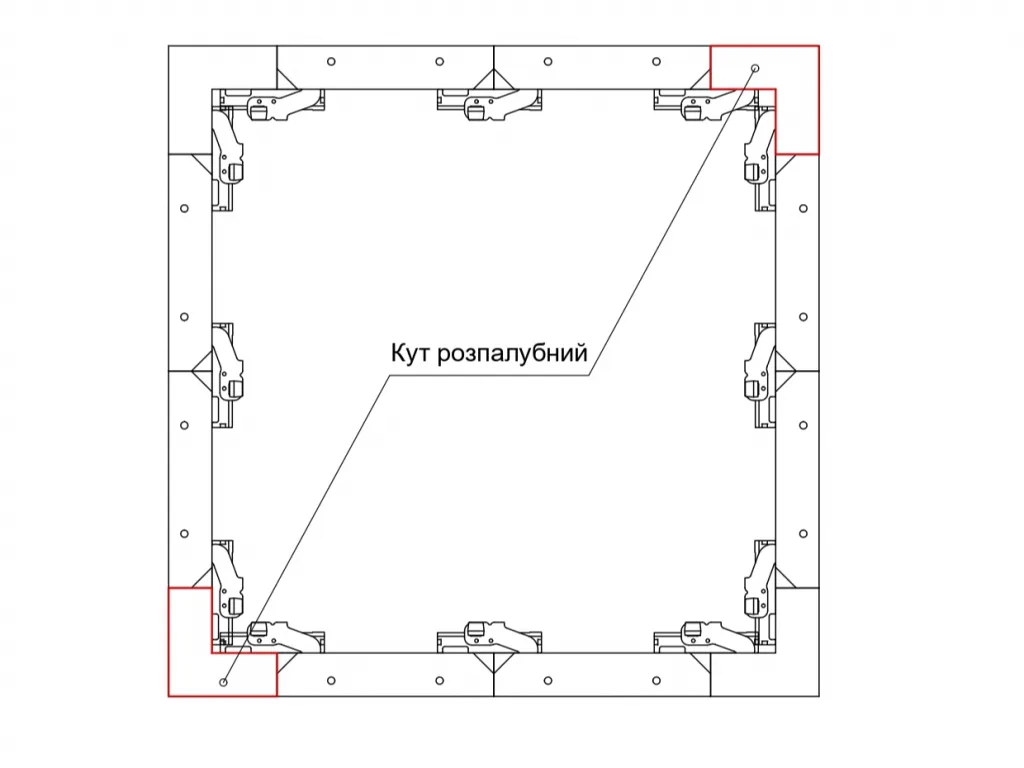
A formwork corner is a special component installed at the inside corners of an elevator shaft. It consists of two movable parts measuring 30 x 30 cm, connected by a spindle mechanism. During formwork removal, the technician turns a tie nut, the spindle moves the corner pieces apart, and they move away from the concrete surface by a few centimeters. The formwork separates, and the shaft can be removed effortlessly.
Typically, two formwork corners are installed diagonally. They can be extended in height by connecting them together. The basic PERI TRIO system does not include a formwork corner—it is used in the TRIO MR version.
Advantages:
Formwork removal is quick and damage-free thanks to a simple and reliable mechanism that requires no special tools, and also reduces the number of manual operations and the risk of overloading the crane.
Disadvantages:
The initial cost of original European components exceeds 100,000 UAH per unit. Lower-priced alternatives have a limited service life and tend to fail sooner.
Unlike TSE components, formwork corners require fewer panels: a single solid panel can be placed between the corners, whereas when using TSE, the shaft consists of a greater number of components and fasteners.
Formwork corners are widely used in residential construction projects where floor heights are standard—2.8–3.0 m—and the geometry of the shafts does not require vertical alignment. They allow for quick relocation of the formwork from floor to floor without additional equipment.
PERI Distance Strip LA
Design and Operating Principle of the LA Remote Insert
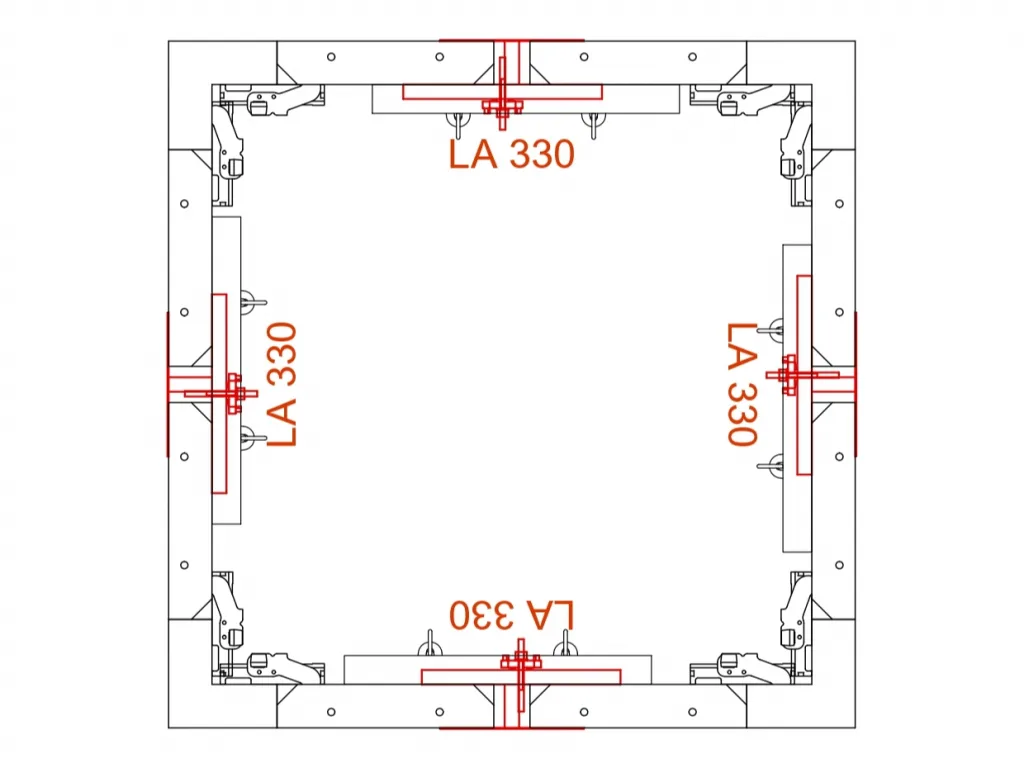
LA inserts are installed on each of the four sides of the inner formwork perimeter. After concrete placement, they are removed, allowing the formwork panels to be dismantled.
Advantages:
Relatively low cost and easy to disassemble.
Disadvantages:
When removed, they leave an imprint on the concrete surface, which, however, is not an issue for elevator shafts. The inner part of the formwork is divided into four sections, so complete formwork stripping requires several crane lifts. For high-rise or large-scale projects, this method is less efficient than using specialized formwork elements.
In simpler cases, the inner formwork of the shaft is removed using wooden beams that are installed between the formwork panels along the perimeter. After the concrete has hardened, the beams are removed, and the resulting gaps allow the inner formwork to be dismantled in stages.
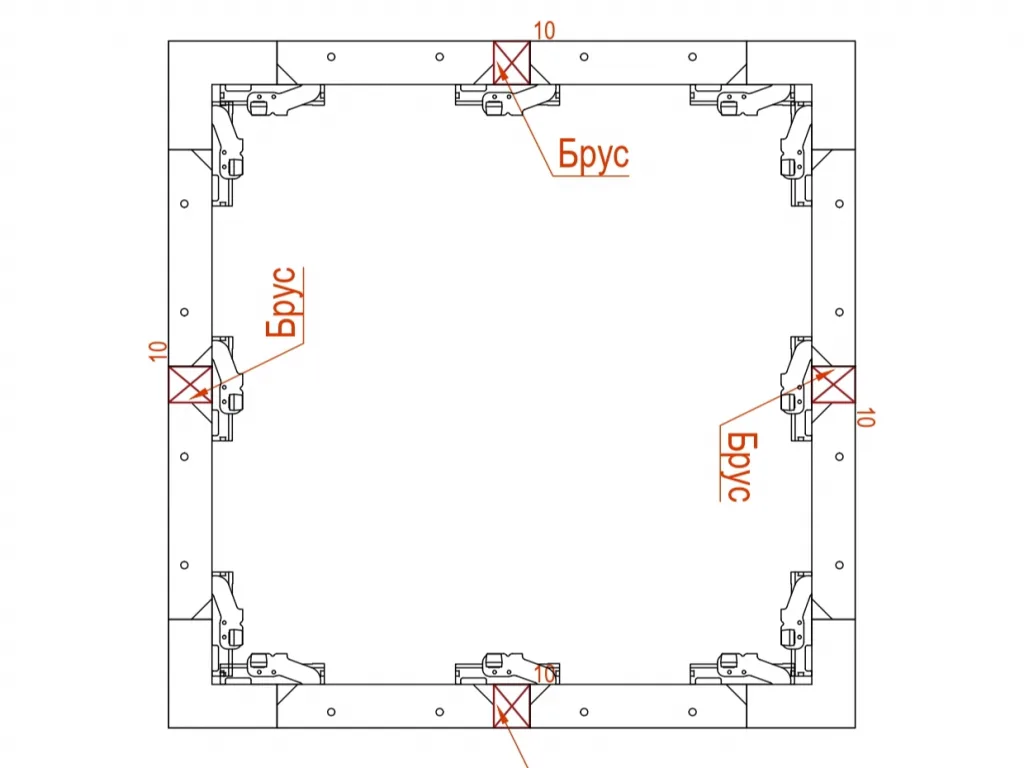
This method does not require any special equipment and is suitable for small projects or one-time jobs where there is no need to use professional formwork removal systems.
At the same time, it is important to note that the timber is also encased in concrete, and the shaft itself is dismantled into separate sections. This increases the number of crane lifts and the time required for dismantling, so the method is not well-suited for mass-production or high-rise construction.
Conclusions
In this article, we examined why the concrete pouring of elevator shafts requires a special approach and what factors complicate the work of construction workers during the formwork removal process.
The choice of each solution—whether TSE formwork panels, formwork corners, spacers, or wooden beams—always depends on the scale of the project, the number of identical floors, the available equipment, and the budget.
If needed, Budhub’s specialists are ready to advise you on selecting the most effective formwork technology for your specific project and to provide training or on-site supervision to ensure the work is carried out properly.
If you still have questions or need advice, please feel free to contact us—we’re always available:
+38 098 800 22 88