During concrete pouring, the mixture comes into direct contact with the film faced plywood, so its quality affects the geometric accuracy of the structures and the costs of subsequent cycles. This is precisely why the choice of plywood for formwork is often a subject of debate—especially when it comes to Chinese film faced plywood.
In this article, we’ll debunk the main myths about Chinese film faced plywood, explain when it’s a suitable choice for formwork, and highlight what to look for when making your selection to avoid mistakes right from the purchasing stage.
Film faced Chinese plywood in formwork: what you need to know
The perception of Chinese plywood as “disposable” did not arise because of the country of origin, but rather due to the widespread use of the cheapest options without any quality control. In reality, China produces plywood of various grades—ranging from low-grade materials to durable, reusable products.
The Chinese market is vast and offers everything from Chinese plywood that falls apart after just three uses to materials that perform consistently and reliably. The difference between them is significant, but many buyers don’t notice it, since the sheets may look identical on the outside.
And here it’s important to take a broader view. Global manufacturers of machinery, automobiles, and electronics—Apple, Samsung, Microsoft, Google, Tesla—are building factories in China. Not because it’s “cheap,” but because they’ve long been able to ensure the appropriate level of quality to meet specific standards. The same applies to plywood: if the manufacturer adheres to the technology, controls the drying, pressing, and structure of the veneer, then the country of origin ceases to be a determining factor.
Single-press plywood is indeed not capable of withstanding heavy loads, but double-press plywood from trusted manufacturers can withstand up to 15 pouring cycles, meet current needs, and perform reliably.
Therefore, the notion that “Chinese = bad” reflects experiences with the lowest-end segment rather than the actual state of the market. It makes more sense to ask a different question:
What kind of plywood are you buying, and what are you planning to use it for?
When is Chinese film faced plywood the best choice?
And although Chinese film faced plywood is often mistakenly viewed as a “disposable” material, its suitability should be determined not by its country of origin, but by the conditions of use: the type of structure, service life requirements, number of cycles, and the expected outcome at the site.
There are projects where it doesn’t make sense to overpay for plywood with a lifespan of 20 cycles, and there are structures where Chinese materials fully meet the needs—both technically and economically. The key is to determine whether such materials are suitable for the specific conditions and requirements of the project.
Film faced plywood is available on the market in several varieties, which differ in construction, service life, and intended use.
The most common:
- Chinese plywood grade A (double-pressed) — can withstand up to 15 cycles when used properly
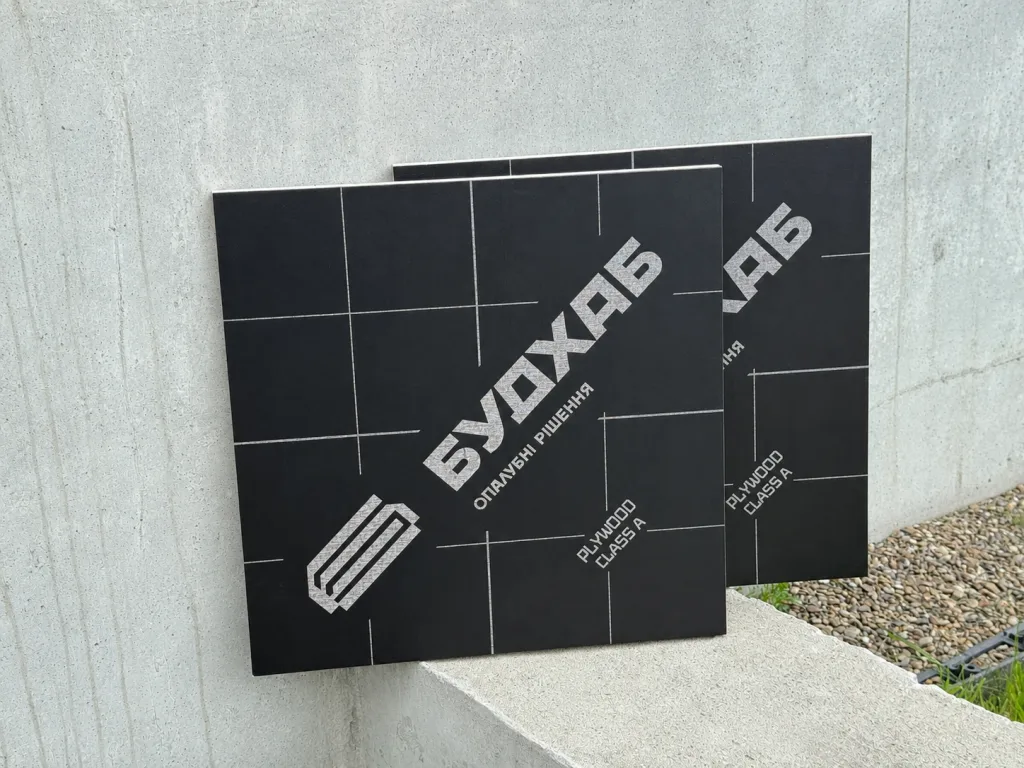
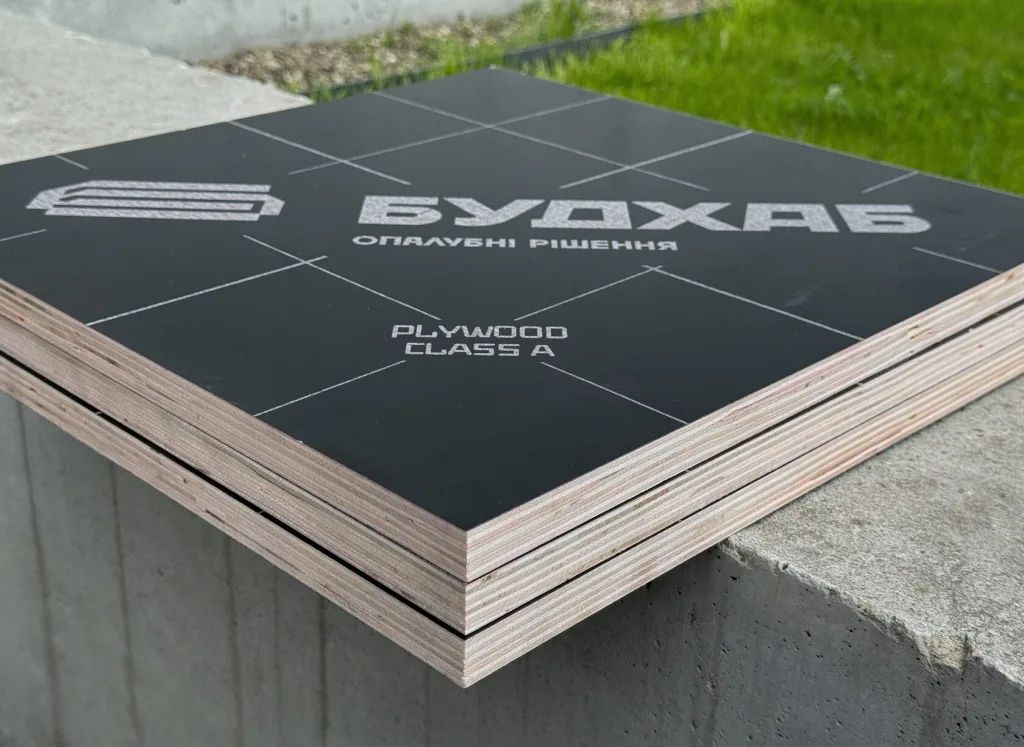
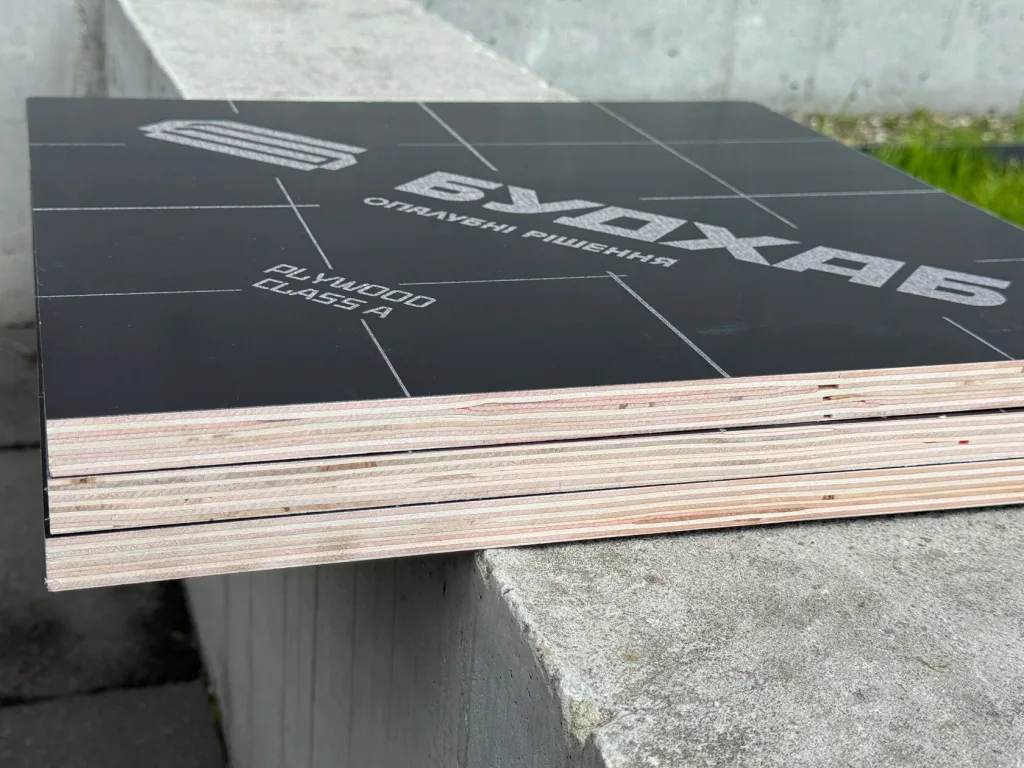
- Chinese plywood grade B (single-press) — lasts up to 12 cycles; ideal for trimming, one-time pours, and structures that do not require a long service life
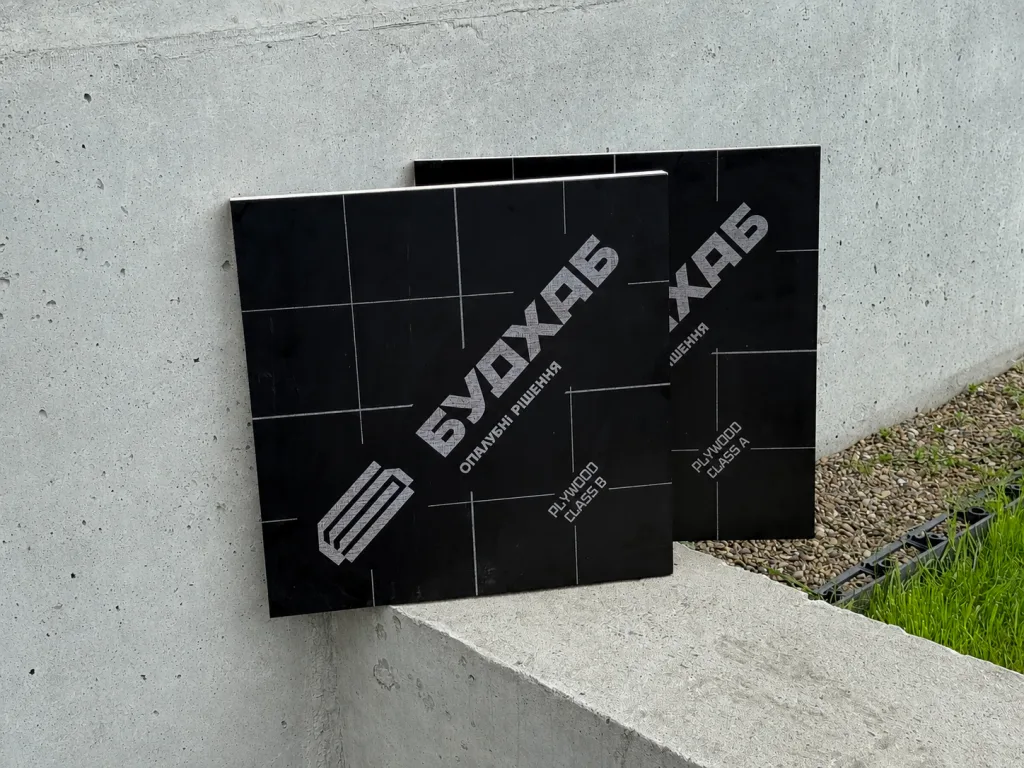
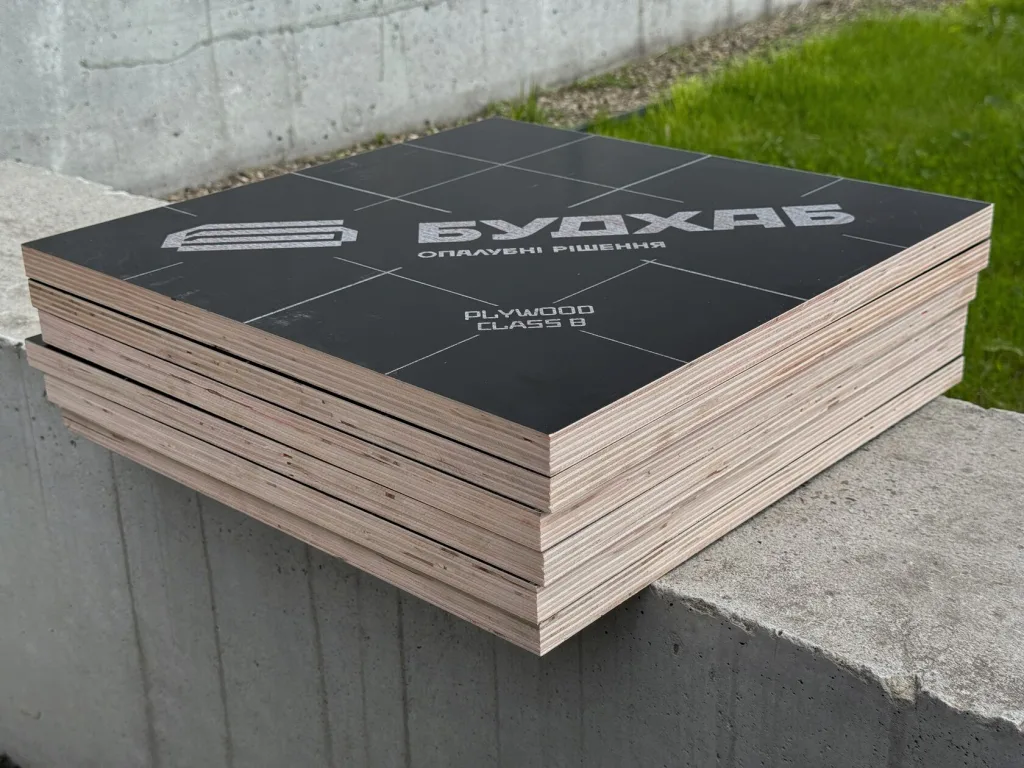
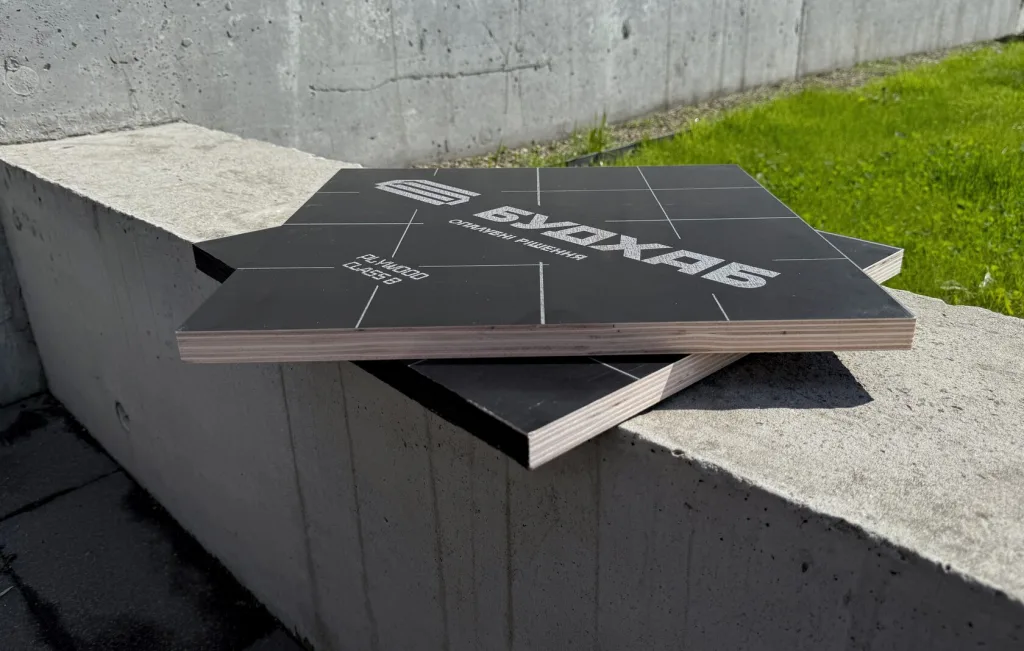
The lower price is not because it is an “inferior product,” but because Chinese factories operate on a large scale and offer a range of quality levels. For applications where premium concrete surface quality or long-term durability is not required, the cost savings do not affect the plywood’s load-bearing capacity.
That is why Chinese film faced plywood is ideal for structures where the primary goal is to withstand the pressure of the concrete mix, rather than to ensure a perfect concrete surface. Specifically, it is used for:
- foundation and ancillary work
- interior walls and partitions
- floors that have undergone a small number of cycles
- areas where the plywood will need to be cut to fit the shape
- work where the result isn’t just for show
In such situations, it operates consistently, smoothly, and predictably, especially when the customer follows the basic maintenance and cleaning guidelines.
We discuss this in detail in the article “How to Extend the Plywood Lifespan at Your Construction Site: Simple Rules to Increase Its Lifespan.”
Chinese film faced plywood is a practical choice for large areas and repetitive patterns, where it won’t warp and is designed to last for dozens of cycles. It is most often chosen for:
- agricultural and industrial facilities (chicken coops, warehouses, farms)
- long spans in floor slabs, where the main focus should be on beams and columns
- facilities with a large volume of single-use fillings
- large-scale slabs, where it is important to ensure stable and predictable formwork performance over a large area
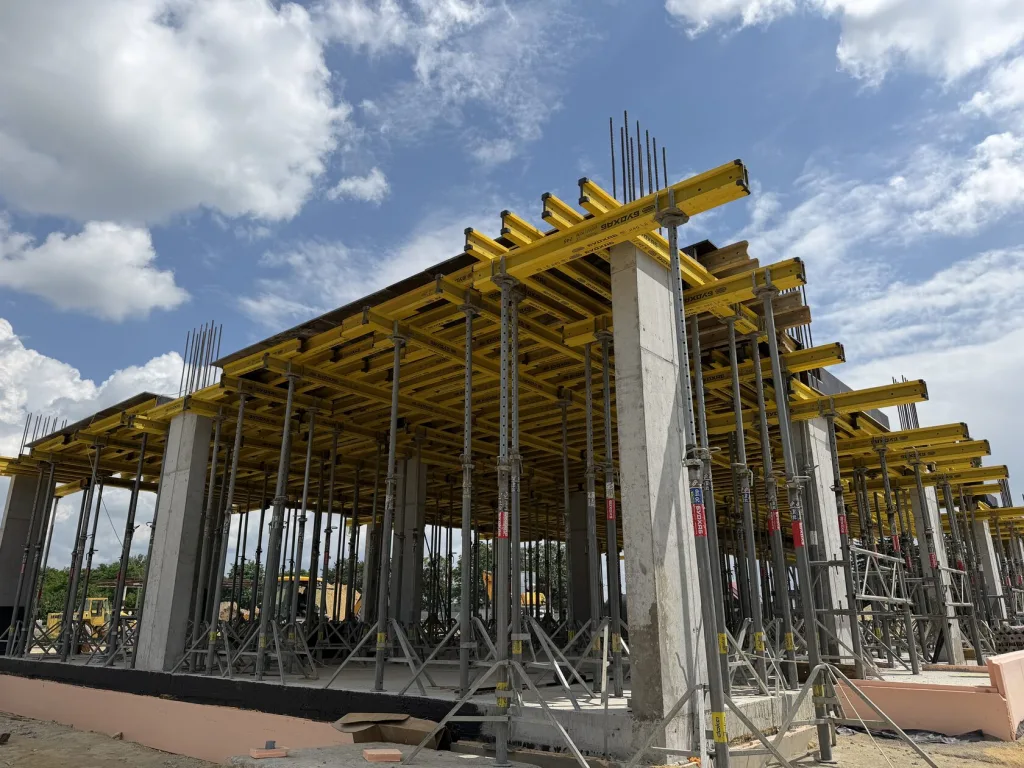
In practice, Budhub Chinese film faced plywood has repeatedly proven its effectiveness on various types of projects — specifically on the floors of a private home in Vynnyky and in the service areas of a car repair shop in Vynnyky, as well as on silo pits in the Ternopil region.
How to choose Chinese film faced plywood for formwork?
To avoid buying plywood at random, it’s best to look for specific technical characteristics of the material. In practice, it is Chinese plywood that is most often subject to substitution: low-grade or recycled material with a minimal plywood lifespan is sold under the guise of “high-quality” plywood.
Therefore, when making a selection, it is important to focus on the actual manufacturing process, the consistency of the batch specifications, and how the plywood performs under load during the concrete pouring process—rather than on the country of origin. Below, we will examine the key characteristics that distinguish high-quality material from that of critically low quality.
Pressing type
This is the main factor affecting the service life. If the pressing type is not specified or the seller cannot identify it, this is a sign of a low-quality product.
Actual Thickness: For Chinese film faced plywood, the actual sheet thickness is often 19.2–19.6 mm, rather than the 21 mm stated in the specifications. This is important because a thinner sheet = greater deflection, and therefore a higher risk of unevenness on the concrete surface.
Be sure to check with a caliper, not just by eye.
Lamination (film thickness)
- 120 g/m² — standard lamination for the budget segment
- 220 g/m² — denser, with better abrasion resistance (ideal for repairing panels and extending the life of the board)
The film does not determine the strength of the plywood, but it significantly affects its wear resistance.
Veneer quality and number of layers
The layers should be:
- equal
- without large cavities
- with a minimal proportion of low-quality poplar veneer
Numerous internal voids cause the plywood to break down quickly under the pressure of the concrete mix, even if the slab is double-pressed.
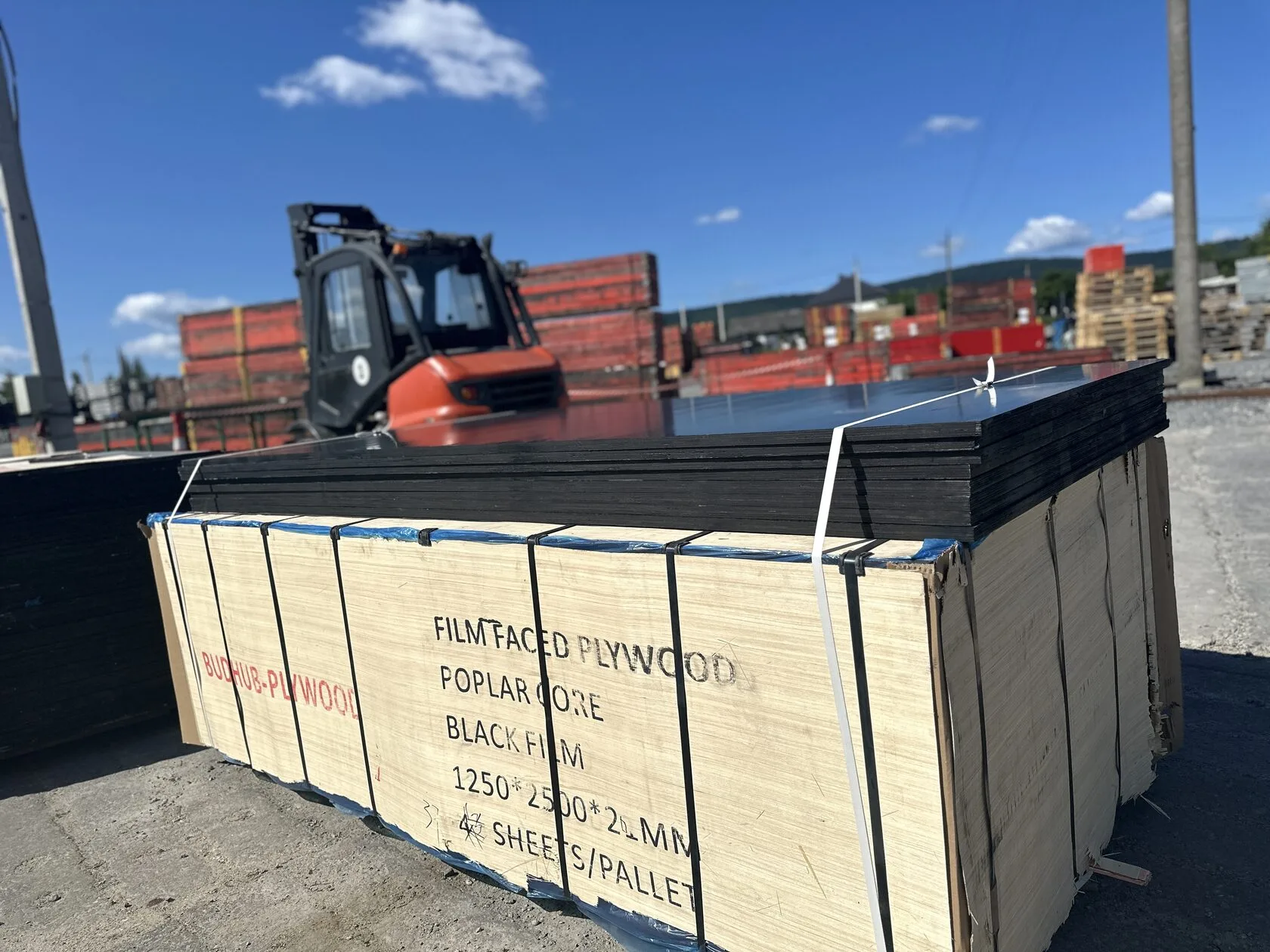
Stack Geometry: For 21 mm plywood, a high-quality stack contains 43 sheets (≈92–94 cm in height). If a bundle contains 45 sheets but its height remains the same, this means that each sheet is thinner than the stated thickness, and therefore the plywood has lower strength.
This is checked before the package is even opened.
Painting the Ends
The ends must be evenly coated with paint. If they are not properly protected, the material will quickly absorb moisture and may lose its rigidity after the first pour.
Presence of labeling and manufacturer
A quality manufacturer always prioritizes:
- labeling
- QR code/stamp
- identification mark
The absence of labeling is most often a sign of the lowest-priced segment or “no-name” products.
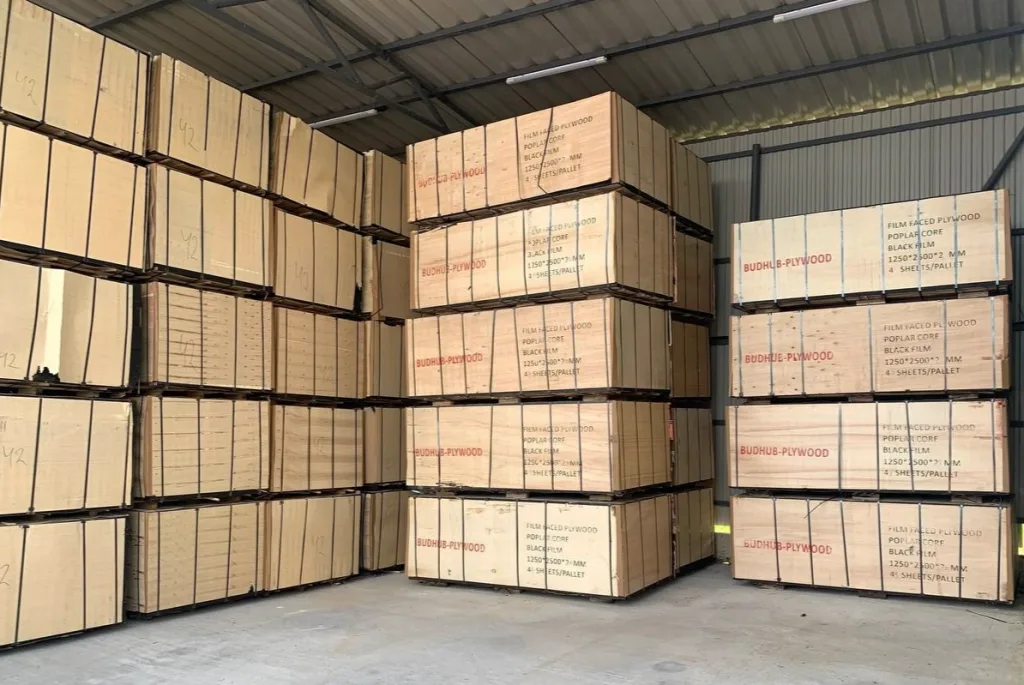
Checklist: “How to Check the Quality of Chinese Film Faced Plywood?”
Based on our own experience and feedback from customers, we at Budhub have put together a practical checklist that allows you to assess the quality of film faced plywood before starting work.
Visual inspection of the surface
- The surface is smooth, without ripples or unevenness
- no dark spots (a sign of internal voids)
- The lamination is uniform, with no cracks or delamination
- There is no strong chemical odor from the glue
- The ends are smooth, with no chips or open cavities
Checking the thickness and structure of the slab
- The actual thickness meets the standard (at least 19.2–19.6 mm for a “21 mm” panel)
- The number of layers is uniform, with no “thin” inner layers
- The edge shows no voids upon inspection
- a pack containing the appropriate number of sheets (approx. 43 sheets for 21 mm)
Test for the durability and consistent performance of the hob
- When pressed lightly in the center, the deflection is minimal
- The sound produced when tapping is uniform (with no dull spots indicating cavities)
- The slab does not deform under light loads
Assessment of bond quality:
the edges do not delaminate when pressed;
the film adheres firmly to the surface and does not peel off;
there are no “bubbles” or air pockets under the laminate
Additional factors to check:
the material has factory markings or a manufacturer’s stamp; the basic documentation is available (batch number, specifications, manufacturer’s data)
the glue’s odor is not overly pungent (a sign of high-quality composition)
the color and texture of the panels in the batch are uniform (no mixed batches)
Just a few simple steps—and you’ll know exactly what the quality of the material is.
In this article, we’ve examined the key myths surrounding Chinese film faced plywood, highlighted the situations in which it performs effectively, and explained which technical characteristics to look for when making a selection.
Budhub’s experience with Chinese film faced plywood is based not on theory, but on practical application across dozens of projects. We work exclusively with manufacturers whose plywood demonstrates consistent quality in use, a predictable service life, and meets the specified characteristics. That is why our equipment fleet includes Chinese film faced plywood under our own brand, which has already been tested by numerous clients on actual construction sites.
We hope this information has helped you better understand the factors that affect the plywood lifespan and avoid common risks when selecting and using plywood.
If you still have questions or need advice, please feel free to contact us—we’re always here to help:
+38 098 800 22 88