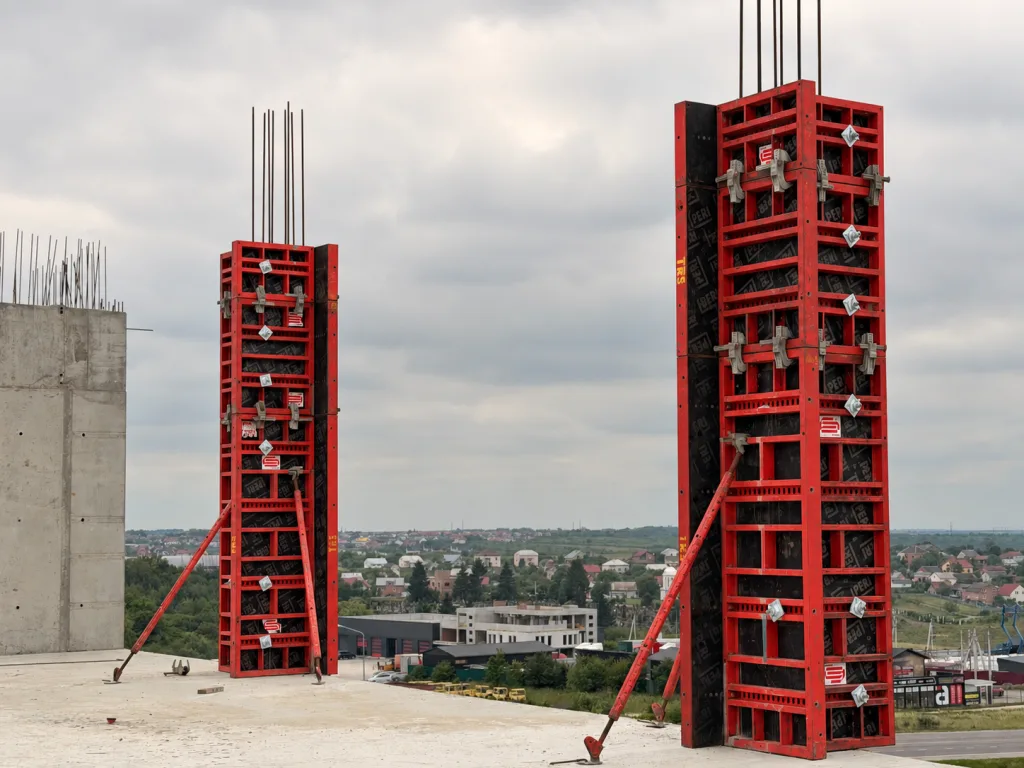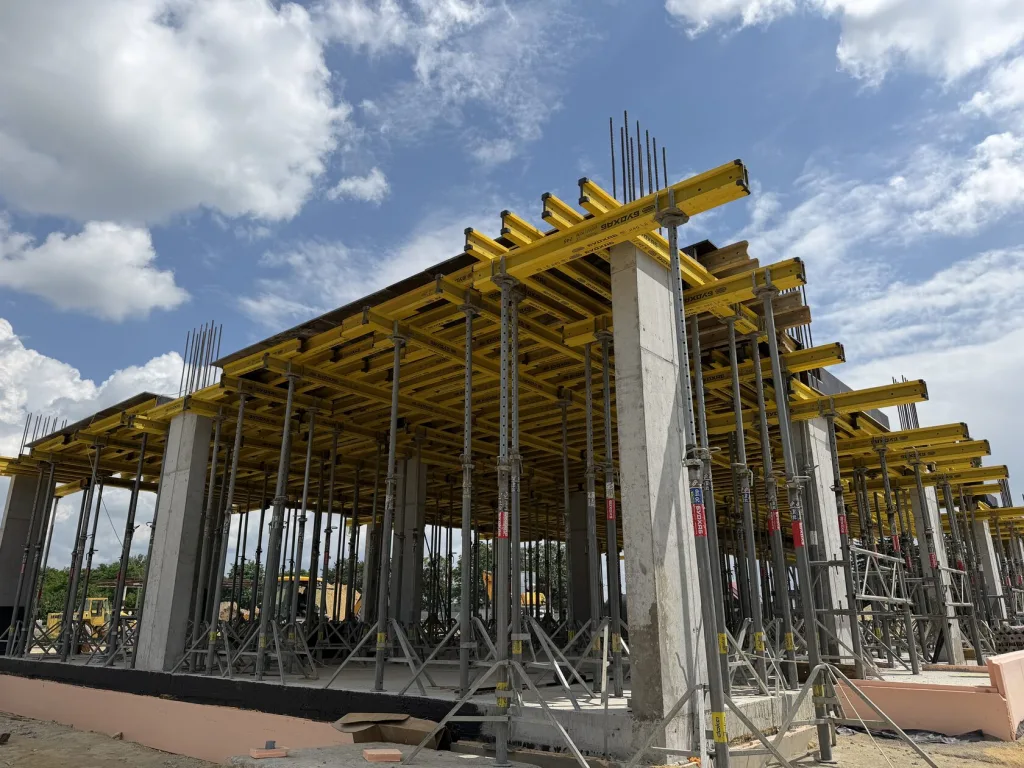
We are wrapping up our series of reviews of global leaders in cast-in-place construction and moving on to another leading European manufacturer—the Spanish company ULMA. Unlike competitors with highly specialized product lines, this formwork has won over contractors with its versatility, which allows even the most complex structures to be assembled from a single basic set of components.
ULMA Formwork: History, Development, and Key Advantages of the Spanish Manufacturer
ULMA is a Spanish manufacturer of formwork, construction scaffolding, shoring systems, and engineering solutions for cast-in-place construction. ULMA equipment is used for the construction of walls, columns, floors, bridges, tunnels, and industrial and commercial structures, where precise calculations, component compatibility, and consistent concrete quality are essential.
The history of ULMA Construction began in 1961 in Oñati, Spain. Starting out as a small manufacturing cooperative, the company focused primarily on developing equipment that would simplify and speed up concrete work as much as possible.
Today, ULMA has offices in more than 80 countries. Its product line includes equipment for various stages of cast-in-place construction. The main technical features of the systems are:
- Interchangeability of components. Fasteners (clamps, anchors, bolts) are standardized. They can be used for formwork assembly for wall formwork as well as in floor systems or construction scaffolding.
- Classification by load capacity. Heavy-duty steel systems (e.g., ORMA) can withstand concrete pressure of up to 80 kN/m² and are designed for crane installation. For sites without lifting equipment, lightweight steel and aluminum series designed for manual assembly (COMAIN, CC-4) are available.
- Standardized connection joints. Locks that are secured with a hammer strike are used to fasten wall panels. In spatial scaffolding, wedge-type fasteners are used, while in floor systems, an early formwork removal mechanism (Drophead) is employed.
ULMA’s Most Well-Known Formwork Systems
The ULMA equipment line is designed with maximum compatibility in mind. From building massive dams to lightweight cottages—there’s an optimal solution for every task that integrates easily with the brand’s other systems.
ULMA ORMA Heavy-Duty Wall Formwork
ULMA ORMA is a heavy-duty steel frame formwork system for walls and column formwork. It can be considered a direct competitor to the PERI TRIO and Doka Framax systems. ORMA is designed for large-scale projects where structures are subjected to extreme pressure from concrete mix, and the pace of work requires the movement of large, assembled panels using a crane.
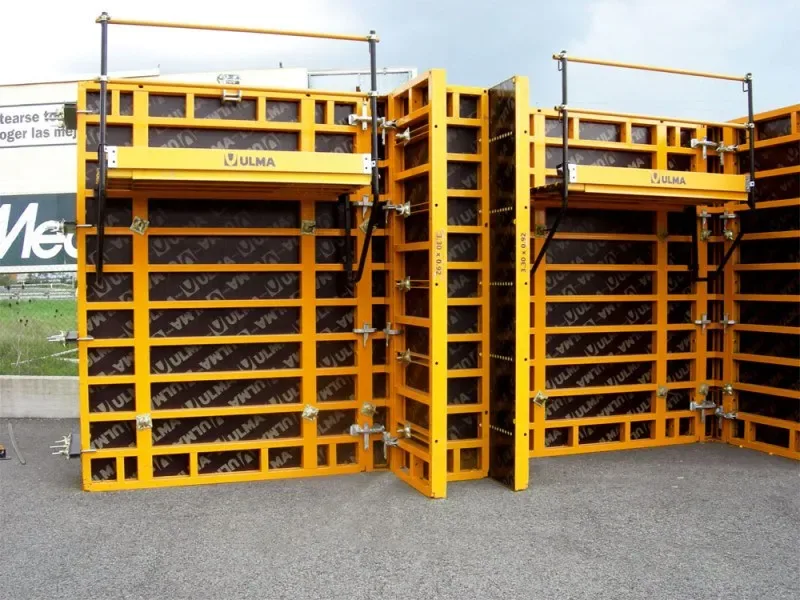
Features of the ULMA ORMA formwork system:
- High load-bearing capacity. The reinforced steel frame can withstand fresh concrete pressure of up to 80 kN/m², allowing high walls to be poured in a single pour without the risk of formwork deformation.
- Efficient panel joining. The system’s main advantage is the proprietary ORMA lock. It consists of two parts and allows you to join the panels, align them in a single plane, and provide the joint with the necessary rigidity—all with a single hammer strike.
- Durable frame coating. The profile is protected by a high-quality polymer or zinc coating, which extends the metal's service life and makes it easier to clean after formwork removal.
- Versatility. Using universal panels, you can easily form columns, right angles, wall ends, and even T-shaped cross-sections without the need for specialized components.
Where ULMA ORMA formwork systems are used: high-rise residential complexes, industrial buildings, massive retaining walls, shopping centers, and infrastructure projects.
ULMA PRIMO (Ulma Primo) Universal Frame Formwork
ULMA PRIMO is a mid-range system characterized by a balance between weight and strength. It occupies a niche between heavy-duty and lightweight systems, making it suitable for standard civil construction projects.
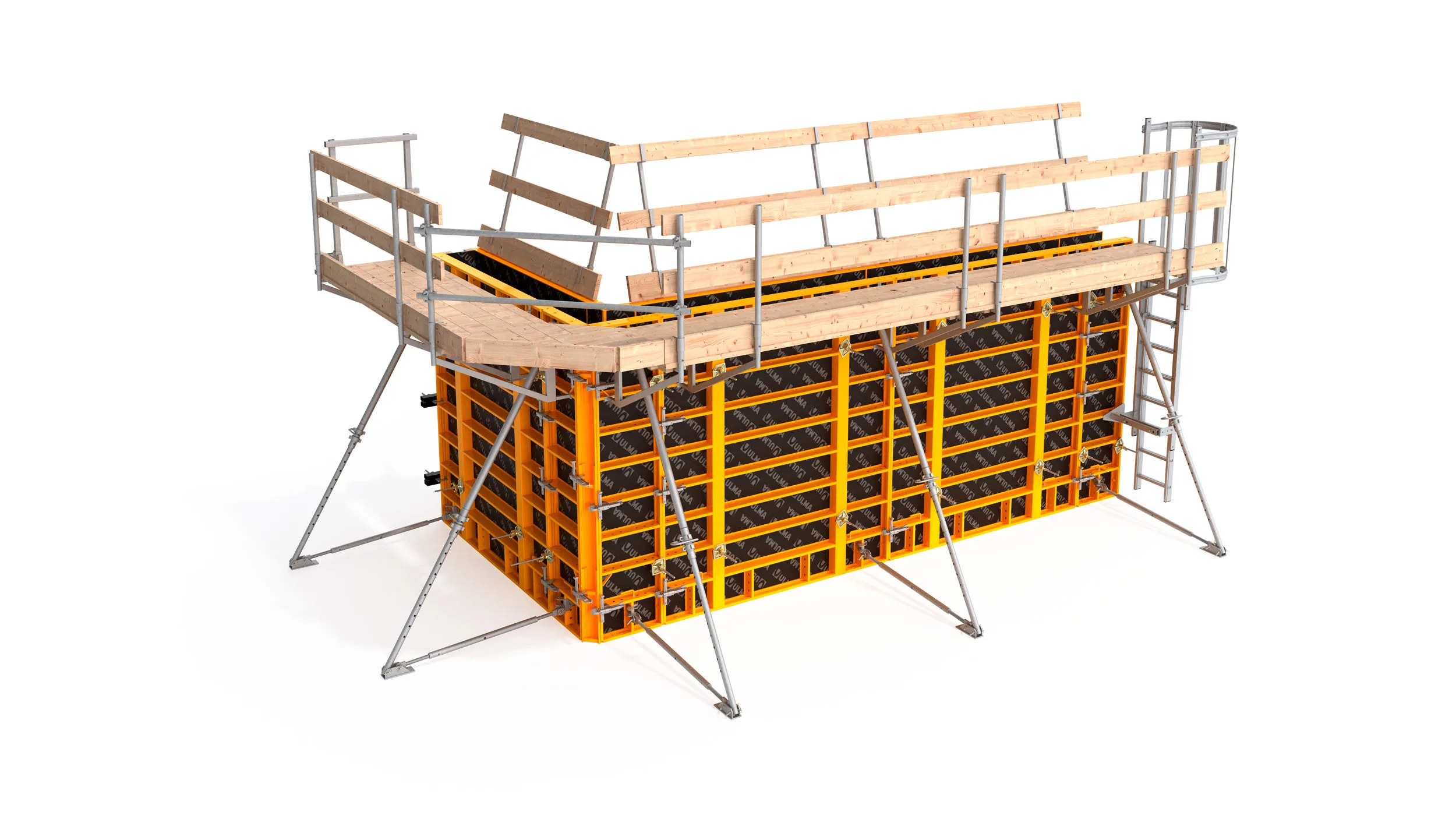
Features of the ULMA PRIMO formwork system:
- A balance of weight and strength. The system is designed to withstand concrete pressures of up to 60 kN/m². The formwork panels are strong enough to be moved by crane in large sections, while smaller panels can be installed by hand.
- Optimized modular grid. The standard panel heights (1.50 m, 2.70 m, 3.30 m) are ideal for typical floors in residential buildings, reducing the need for extensions.
- Ease of use. Just like in the previous system, this one features universal locks, making the assembly process intuitive even for teams with limited experience.
Where are ULMA PRIMO formwork systems used? In comfort-class residential complexes, underground parking garages, strip foundations for high-rise buildings, and standard walls and columns.
ULMA COMAIN (Ulma Comain) Lightweight Manual Formwork
ULMA COMAIN is a lightweight formwork system designed for manual assembly. It is directly comparable to the PERI DOMINO and Doka Frami systems. It was developed specifically for projects where the use of heavy crane equipment is impossible or economically unfeasible.
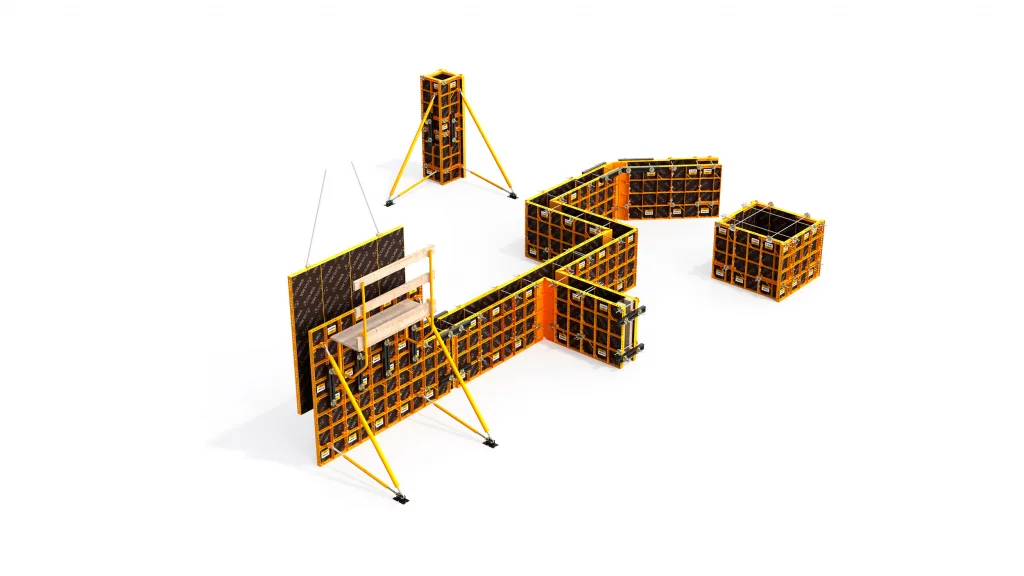
Features of the ULMA COMAIN formwork system:
- The allowable concrete pressure is up to 40 kN/m². The system is suitable for pouring concrete for walls, foundations, basements, and low-rise vertical structures subject to moderate loads.
- No need for a crane. Because the panels are lightweight (the frame is made of high-strength, lightweight steel), the framed formwork can be easily carried and installed by 1–2 workers.
- Exceptional flexibility. A wide selection of small sizes allows you to adapt to even the most complex layouts and tight spaces without having to cut the plywood.
- Versatility. The system is used for walls and foundations, as well as for pouring beams, footings, and floor edges.
Where ULMA COMAIN formwork systems are used: private single-family home construction, renovations in dense urban areas, small basements, and foundations.
ULMA LGW Lightweight Modular Formwork (ULMA LGW)
ULMA LGW is a lightweight yet reinforced formwork system for walls and column formwork that can be assembled by hand or moved by crane. Compared to COMAIN, the system has a higher load-bearing capacity and a wider range of applications on sites with more complex geometries.
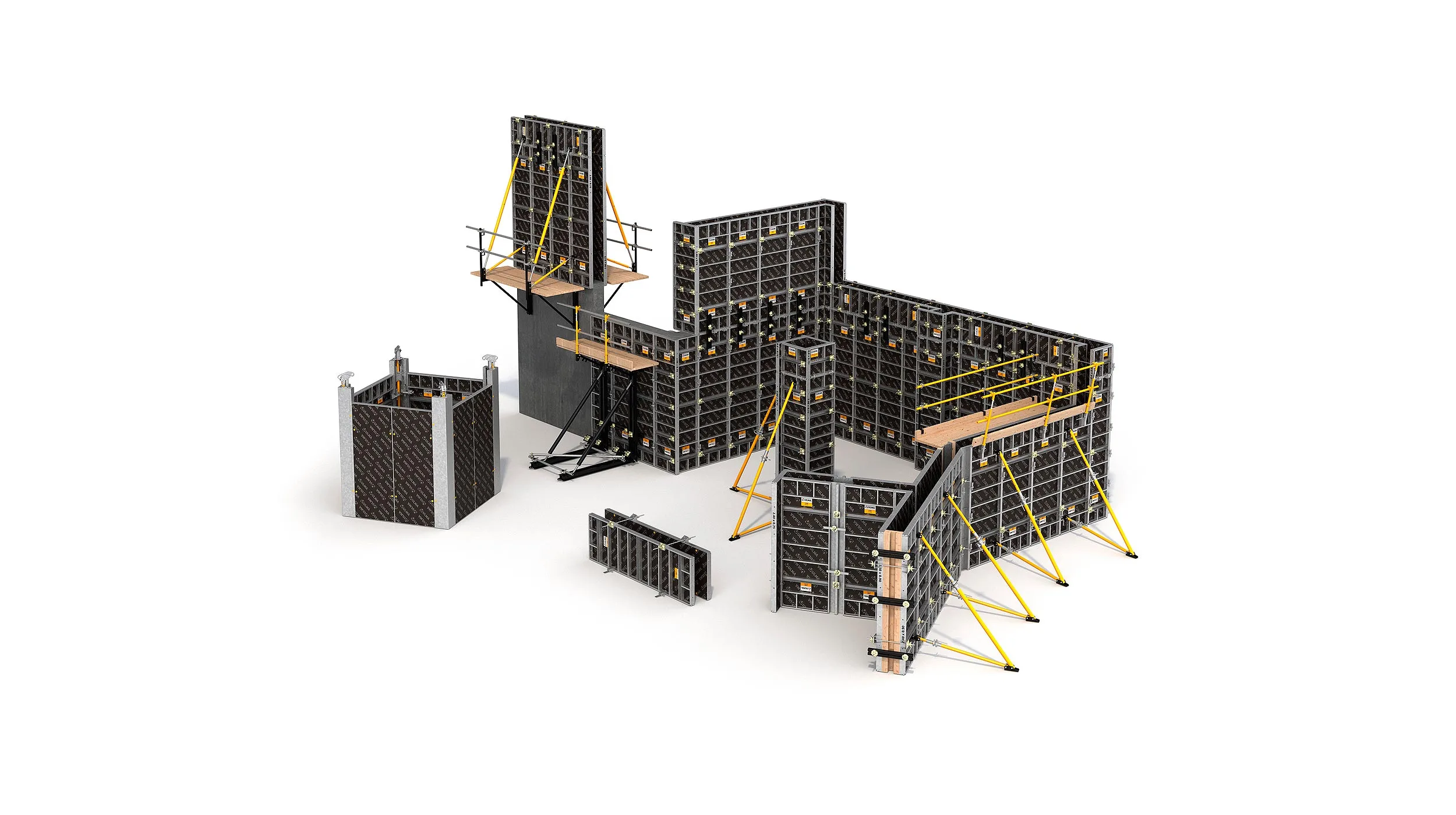
Features of the ULMA LGW formwork system:
- Higher load-bearing capacity. For wall configurations, the system can withstand a constant concrete pressure of up to 60 kN/m², and up to 80 kN/m² when forming columns. This makes LGW a stronger alternative to lightweight systems when a balance is needed between manual installation and higher loads.
- Manual or crane installation. The panels can be installed manually, or, if necessary, assembled into larger sections and moved by crane. This is convenient for projects where some of the work is done manually, but the pace of construction requires the sections to be rearranged quickly.
- A wide selection of panels. The system offers panels of various heights and widths, allowing you to construct walls, foundations, columns, corners, ends, and non-standard sections without unnecessarily complicating the installation process.
- Robust formwork construction. The panels feature a steel frame with a painted or galvanized finish, as well as a deck made of phenolic or composite panels, ensuring consistent quality of the concrete surface.
Where are ULMA LGW formwork systems used? Residential and commercial buildings, foundations, walls, columns, structures with complex geometries, and projects with limited crane access or combined installation methods.
ULMA ENKOFORM VMK / V-100 Beam-and-Transom Formwork (Enkoform)
ULMA ENKOFORM is a large-panel beam-and-girder formwork system comparable to PERI VARIO and Doka Top 50. It is used in situations where standard frame formwork cannot cope: complex architectural shapes, extremely high loads, or requirements for a flawless concrete finish.
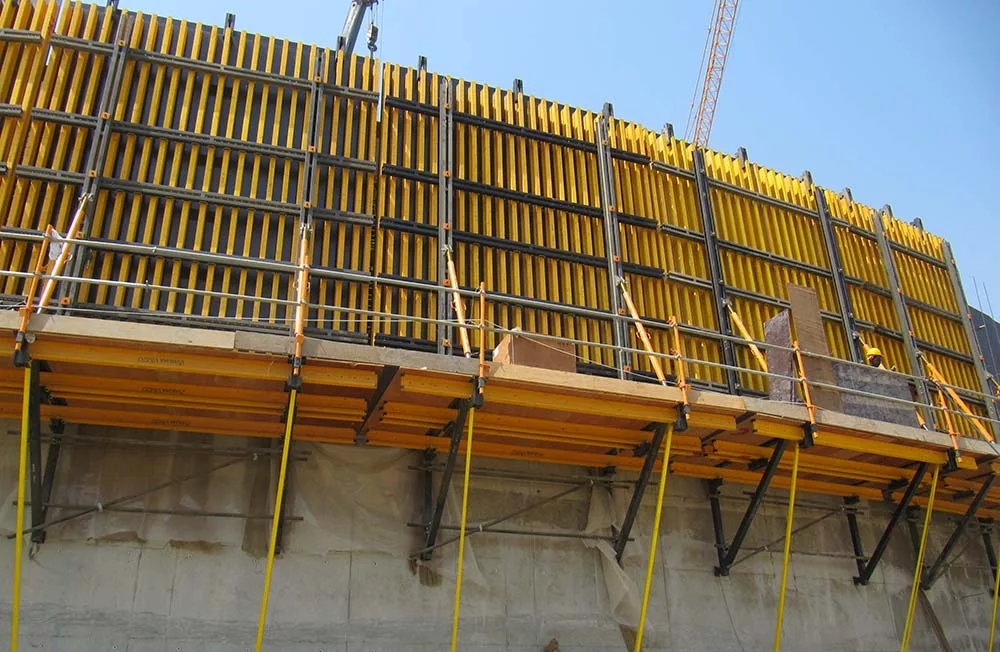
Features of the ULMA ENKOFORM formwork system:
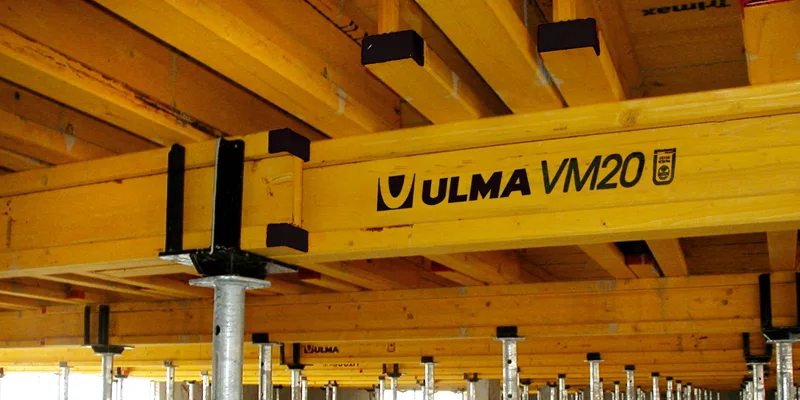
- The foundation is a VM 20 beam. The load-bearing element is a proprietary ULMA wooden I-beam, which works in conjunction with heavy-duty metal crossbeams.
- Adaptability to loads. The spacing of the beams and tie rods can be calculated on a case-by-case basis, allowing the system to withstand virtually any pressure when pouring massive structures.
- Perfect finish (art concrete). The system does not have a built-in metal frame. The decking is fastened from the back, which ensures there are no nail marks and allows for a clean, architect-designed joint pattern.
Where ULMA ENKOFORM formwork systems are used: bridge piers, tunnels, hydraulic structures, buildings with curved architecture, and structures featuring exposed decorative concrete.
ULMA CC-4 Modular Slab Formwork (ULMA CC-4)
ULMA CC-4 is an aluminum panel system for constructing floor slabs that competes with PERI SKYDECK. It is designed for maximum safety and high work efficiency in large open areas.
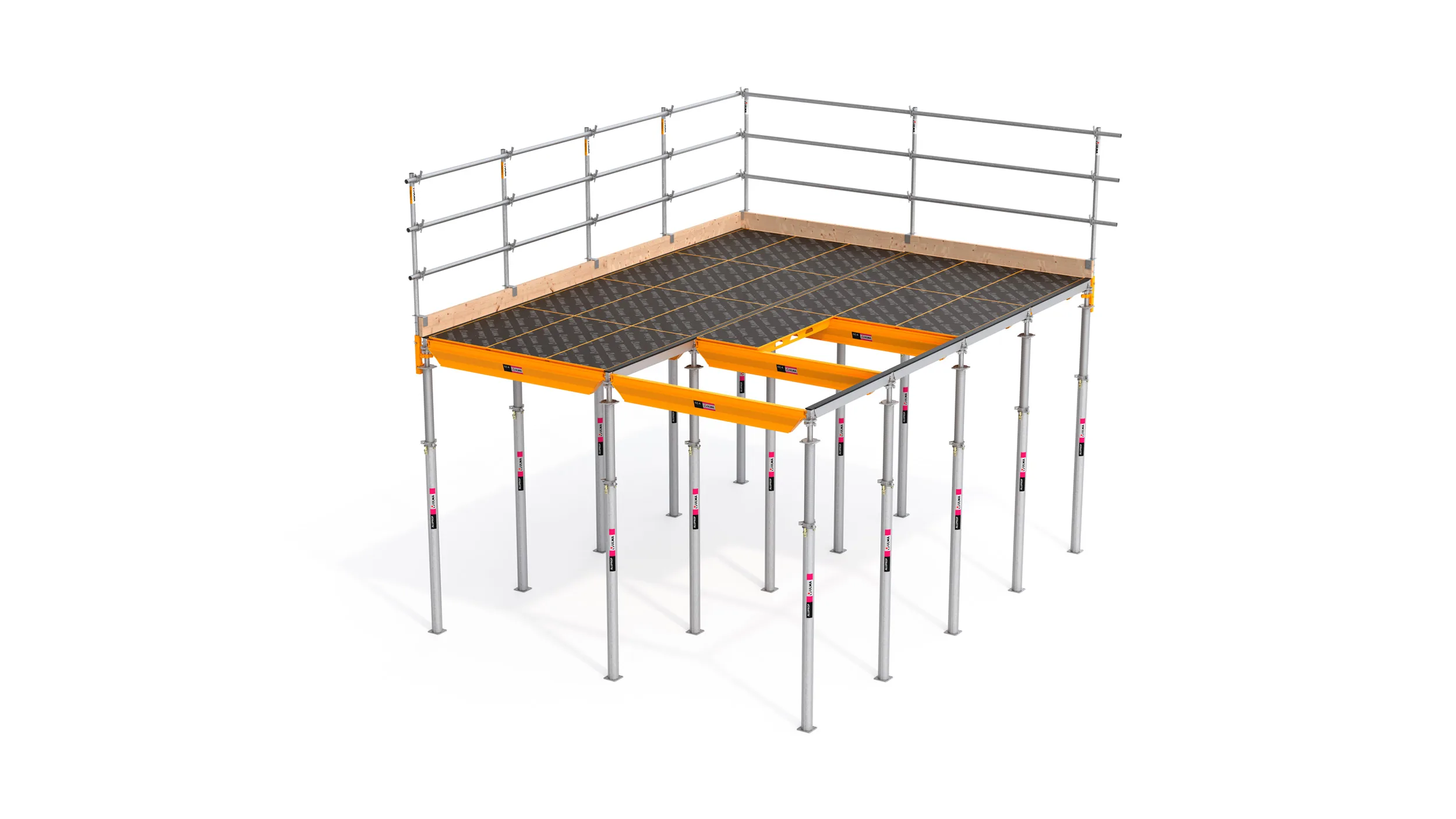
Features of the ULMA CC-4 formwork system:
- The Lightness of Aluminum. The panels have an aluminum frame, which makes them very lightweight, so installation is quick and requires minimal physical effort.
- Safe installation from below. The system is assembled from the floor: workers do not need to walk on exposed beams at height, which is critical for workplace safety.
- Early formwork removal (Drophead). Thanks to the well-designed drophead mechanism, the panels can be removed as early as the third day after pouring. The shoring props remain in place to support the concrete, while the formwork panels are moved to the next floor, saving a significant amount of equipment.
Where ULMA CC-4 slab formwork systems are used: large monolithic floor slabs in shopping centers, parking garages, office buildings, and high-rise residential complexes with standard floor plans.
ULMA ENKOFLEX (Enkoflex) Beam Slab Formwork
ULMA ENKOFLEX is a classic and highly versatile floor system based on timber beams, telescopic props, and plywood (similar to PERI MULTIFLEX / Doka Dokaflex).
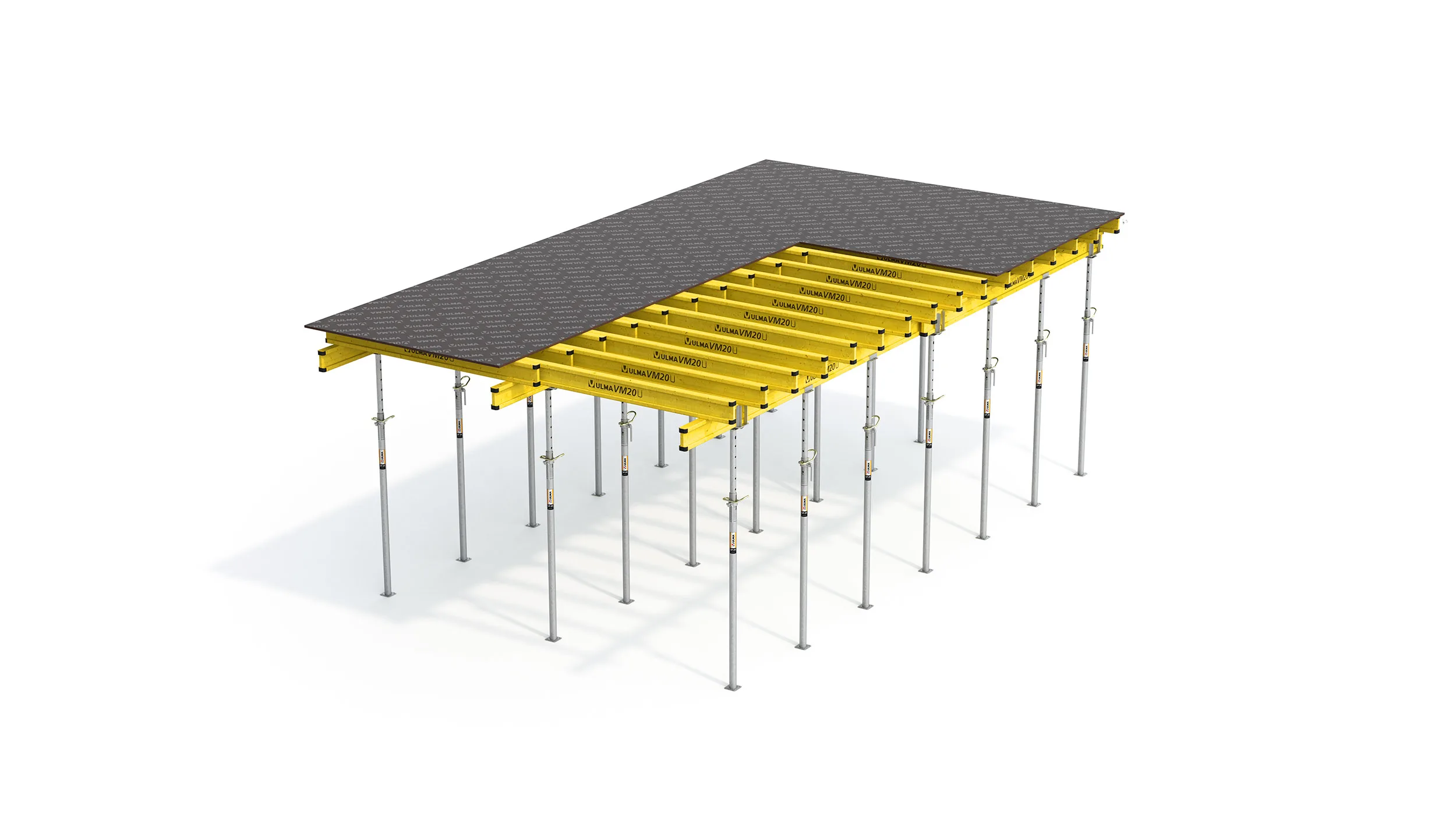
Features of the ULMA ENKOFLEX formwork system:
- Complete flexibility. Beams can be easily repositioned, overlapped, and cut to length, allowing you to work around columns and create bay windows, balconies, and sections with varying slab thicknesses.
- Cost-effectiveness. Precise calculation of the spacing between uprights and beams for a specific slab thickness allows for optimization of the amount of rented equipment.
- Free choice of decking. The system works with any film faced plywood, depending on your budget and the quality requirements for the concrete surface.
Where are ULMA ENKOFLEX slab formwork systems used: residential buildings with complex geometries, non-standard floor slabs, and structures with significant changes in elevation.
ULMA BRIO Modular Construction Scaffolding
The BRIO system is a spatial (wedge-type) scaffolding system that serves as both facade scaffolding and heavy-duty support towers (similar to PERI UP Flex or Doka Staxo).
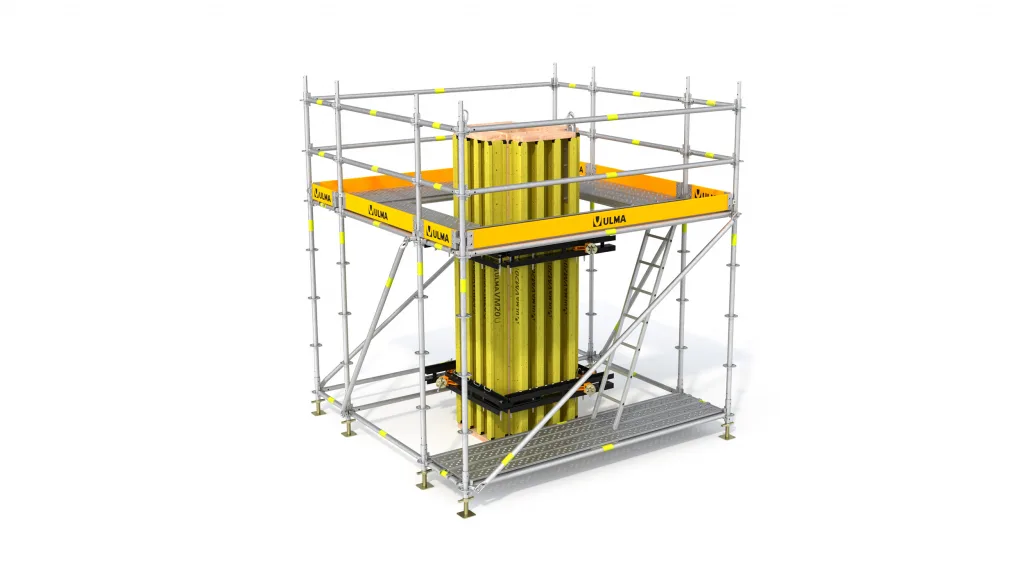
Features of the ULMA BRIO system:
- Node connection (socket). The components are connected using a special disc (socket) and wedges, which allows the crossbars to be secured at various angles and creates a rigid, three-dimensional structure of any shape.
- High load-bearing capacity. BRIO is widely used as a spatial support for pouring large floor slabs at great heights.
- Certified safety. The system features non-slip flooring, integrated stairs, and sturdy handrails, all of which comply with European safety standards.
Where ULMA BRIO systems are used: bridge construction (supporting bridge spans), industrial facilities, restoration of complex facades, and construction of temporary stairways.
ULMA CLR (Ulma CLR) Column formwork
ULMA CLR is a specialized steel column formwork system for the rapid construction of perfectly round columns (similar to Doka RS).
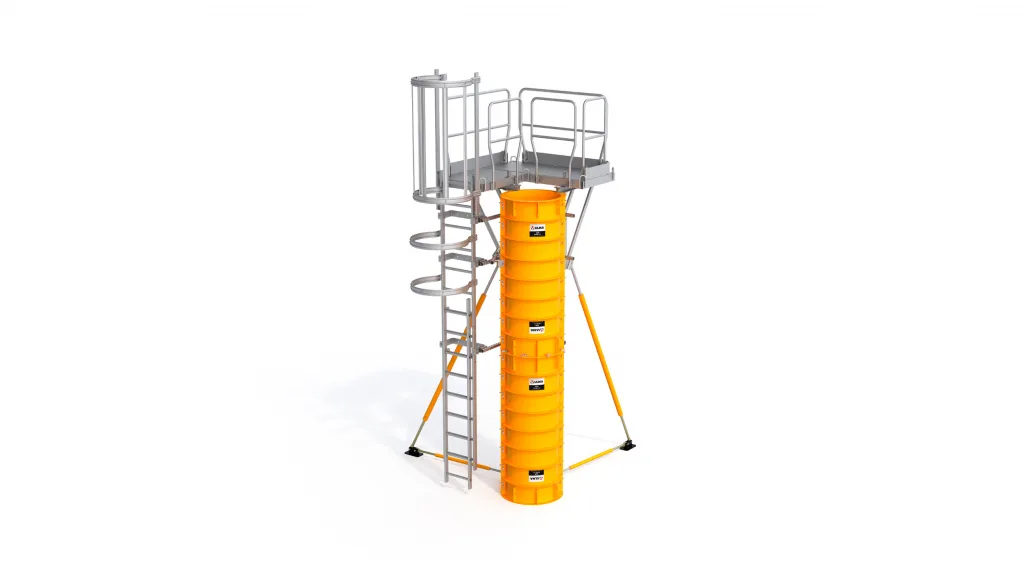
Features of the ULMA CLR formwork system:
- Perfect geometry. Two semicircular steel plates fit together precisely, forming a perfectly circular cross-section with no burrs at the seams.
- Strength up to 80 kN/m². Enables rapid concrete placement for columns of considerable height.
- Simple assembly. The panels are fastened with bolts or special quick-release fasteners, which minimizes the number of small parts that can get lost on a construction site.
Where ULMA CLR formwork systems are used: underground parking garages, lobbies, overpass supports, and any projects featuring exposed round columns.
ULMA LGR (Ulma LGR) Lightweight Column Formwork
ULMA LGR is a lightweight column system designed primarily for residential and commercial construction, where manual installation is a priority.
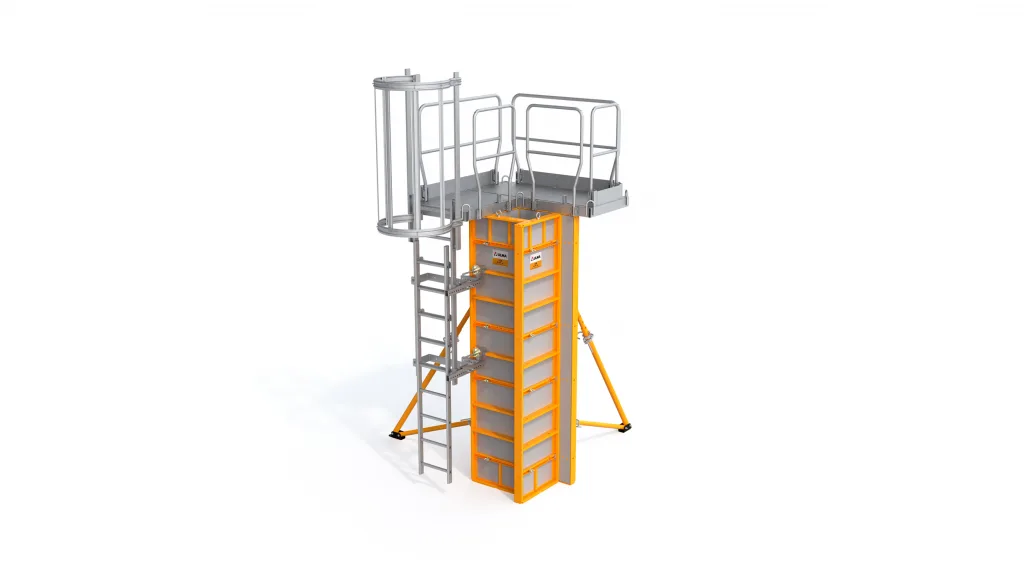
- Manual assembly. The weight of the components allows the columns to be assembled and disassembled by hand, freeing up the crane for other tasks on the job site.
- Precast deck. Often supplied with an ultra-strong plastic coating on the formwork, which ensures a long service life and high-quality concrete.
- Flexible sizing. The formwork design allows the column cross-section to be adjusted in 5-cm increments, making it easy to adapt to changes in the project.
Where ULMA LGR formwork systems are used: typical residential buildings, single-family homes, and sites with limited access for heavy equipment.
ULMA F-4 MAX (F-4 Max) Collapsible Column Formwork
The ULMA F-4 MAX is a high-tech hinged system designed for projects with tight schedules (similar to the PERI QUATTRO).
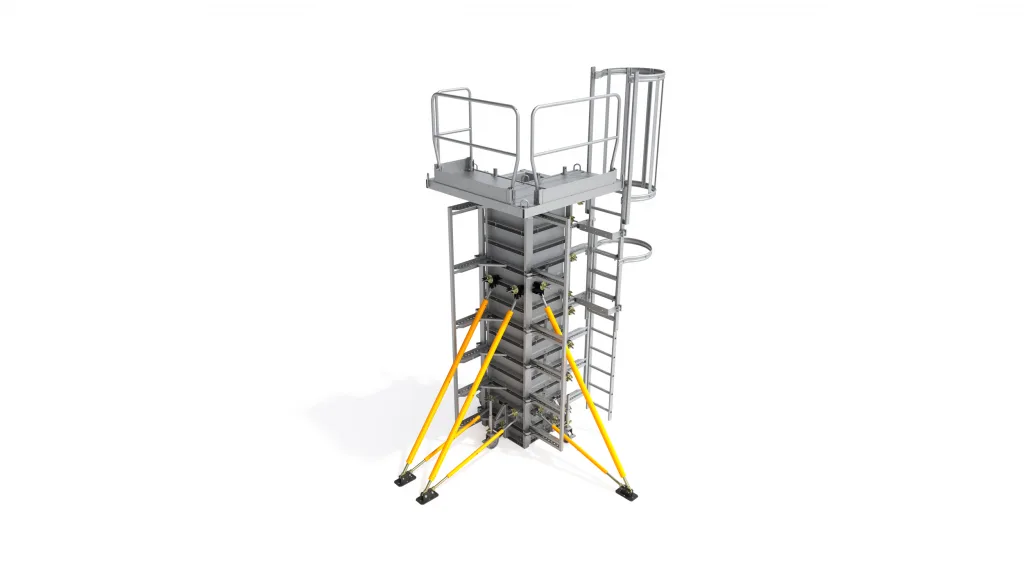
Features of the ULMA F-4 MAX formwork system:
- Hinge mechanism. The four panels are connected to each other by hinges. To dismantle the structure, there is no need to take it apart into individual parts—it simply “opens up” like a book.
- Installation as a single unit. The crane lifts the entire structure at once and moves it to the next location, which speeds up the work.
- Extreme loads. The system can withstand significant concrete pressure—up to 100 kN/m²—which allows for the rapid pouring of tall columns.
Where are ULMA F-4 MAX formwork systems used: large-scale industrial and infrastructure projects, high-rise construction projects with a large number of standard columns and a fast pace of work.
Conclusions
We are very familiar with how the equipment from European giants—Germany’s PERI, Austria’s Doka, and Spain’s ULMA—works. But experience shows that there is no such thing as “the one perfect formwork system”—there is only the system that best suits your blueprints, construction pace, and budget.
That is why we have assembled a rental fleet at Budhub that includes systems from various global manufacturers. We have solutions for any task: whether it’s pouring a strip foundation for a cottage or erecting tall columns and massive floor slabs.
Our specialists are always ready to help you select the optimal system for your specific project and fully equip the site with all the necessary equipment. We will perform precise engineering calculations to optimize the monolithic construction process on-site and ensure a seamless concrete pouring cycle.
Do you have any questions or need advice? Feel free to contact us—we’re always available:
+38 098 800 22 88