
What is formwork oil?
Formwork oil is a special fluid or mixture applied to the surface of the formwork before pouring concrete to prevent the concrete from sticking to the formwork.
The operating principle involves two mechanisms:
- Chemical: The active ingredients react with the alkaline components of fresh concrete, forming soaps that promote the separation process.
- Physical: The lubricant reduces the surface tension between the formwork and the concrete, creating a water-repellent effect.
It provides:
- easy dismantling of the structure;
- preservation of the concrete's geometry and surface quality;
- reduced wear and tear on formwork components;
- reduced time spent on cleaning after disassembly.
Depending on their composition, sealants can also provide protection (anti-corrosion) and improve the appearance of the concrete surface.
Key characteristics of formwork oil
Professional water-based formwork oils are used in formwork applications. They deliver consistent results, are easy to apply, are economical to use, and are safe for both the formwork and workers.
What types of formwork oils are there?
In practice, various types of lubricants are used, but it is important to understand that not all of them will produce the same results. The differences lie in their composition, consumption, ease of use, and the quality of the concrete after formwork removal.
Broadly speaking, they can be divided into three main groups:
Emulsol concentrates — Emulsol Extra, AGAT (C5, M4, P8) — (mid-range). These are specialized formulations that must be diluted with water before use.
Budhub does not use this type of anti-adhesive lubricant in its operations. We do not recommend using them in applications where surface quality, consistent results, and the longevity of the formwork are important.
Water-based lubricants—AGAT-S7, AGAT-B9—(high-tech). These lubricants are specifically designed for use with formwork and are typically water-based or hybrid.
At Budhub, we work exclusively with these lubricants and recommend them as the most effective solution in terms of quality and cost-effectiveness.
There are also premium-grade lubricants, such as AGAT-BIO or Shole DEVELOP BIO. “BIO” means that the product is environmentally safe, biodegradable, and made from plant-based or safe synthetic ingredients.
And while each brand uses its own unique chemical formulas, they are united by a shared focus on environmental sustainability, minimal material consumption, and maximum formwork protection.
Doka (Austria)—one of the world’s largest manufacturers of formwork—offers two flagship lines of lubricants designed for different applications:
- Doka-OptiX — for smooth formwork surfaces (steel, plastic). This is a liquid release agent in the form of an emulsion of vegetable oil derivatives. Special feature — readiness indicator: concrete placement can begin once the white color of the applied layer disappears. The release agent can be applied even in light rain and at temperatures down to -4°C, and its coverage on smooth surfaces is only 25 ml/m². Once applied, it remains active for up to 14 days.
- Doka-Trenn is a specialized product for absorbent formwork surfaces, particularly for wooden formwork panels.
PERI (Germany) offers the “Clean” line of lubricants, consisting of three products designed for different conditions and needs (general technical specifications of the line: operating range from -15°C to +80°C, high fire safety—the lubricant will not ignite even when the metal is heated above 120°C):
- PERI Clean is a versatile semi-synthetic lubricant. It is water-insoluble, contains no solvents, wax, or silicones, does not discolor concrete surfaces, and is 57% biodegradable within 28 days.
- PERI Bio Clean is an eco-friendly version free of solvents and mineral oils. It is readily biodegradable and certified with the "Blue Angel" label (Germany's highest environmental standard). The product also has water-repellent properties.
- PERI Plasto Clean is a mineral oil-based lubricant (solvent-free). Thanks to its hydrophilic properties, it reduces surface tension, penetrates deeply into the formwork surface, ensures good wetting, and reduces the porosity of the concrete.
Sika (Switzerland) offers Sika Release Oil, a versatile ready-to-use formwork oil suitable for all types of formwork (metal, wood, plywood, plastic) and all types of concrete pouring. The release agent features high adhesion to vertical formwork surfaces, self-leveling after spray application, non-flammable vapors, and less dust residue on the formwork after removal. Technical requirement from Sika: after application, it is important to allow for an evaporation time of approximately 20 minutes at +20°C before pouring concrete.
These lubricants are the best choice under the following conditions:
- when pouring fair-faced concrete
- when working in enclosed workshops without proper ventilation (it does not harm workers' health and has no strong odor)
- when the concrete needs to be painted or waterproofed immediately after formwork removal (bio-based sealants provide better adhesion for subsequent coatings). This is typically one of the most expensive options, but also one of the most technologically advanced.
The products of these global manufacturers fall into the luxury segment, but they are rarely used in Ukraine; yet it is their technologies that set the standard for quality across the entire market.
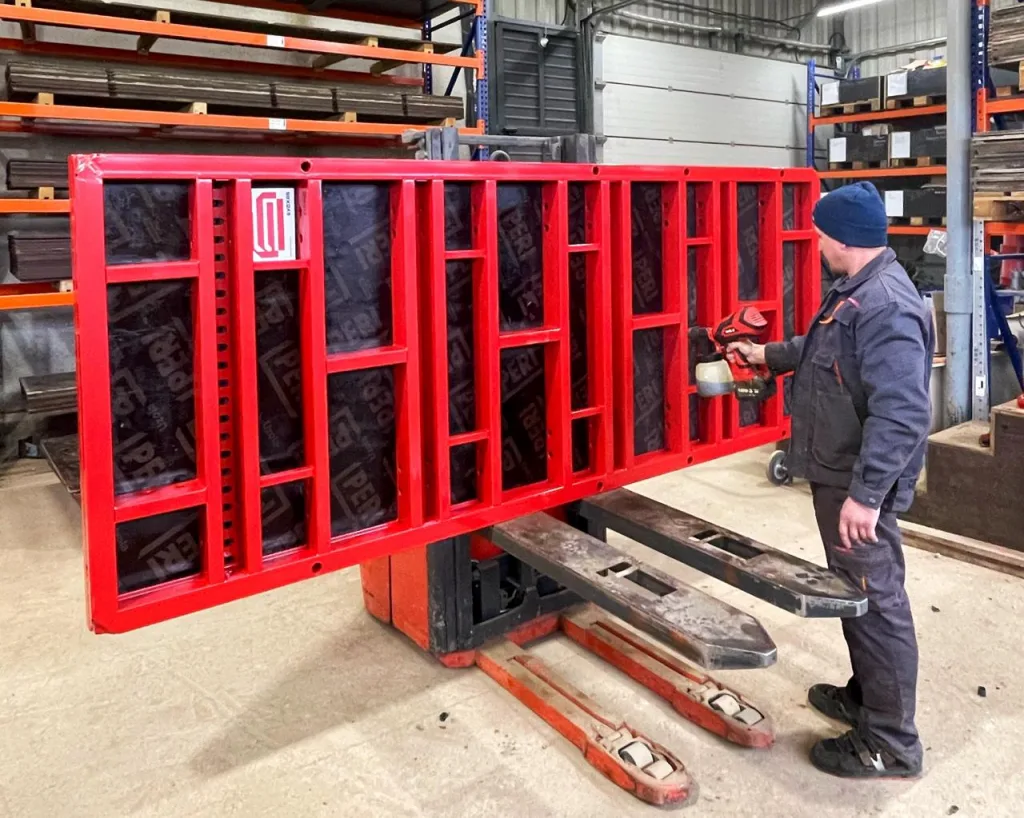
The process of applying mold release agent using a spray bottle
For ease of comparison, here are the key characteristics of different types of lubricants and their actual consumption based on the application method:
| Type of lubricant | Coverage per 1 L (roller) | Coverage per 1 L (Spray bottle) | Characteristics and Practical Features | Price per liter | Actual cost per square meter |
|---|---|---|---|---|---|
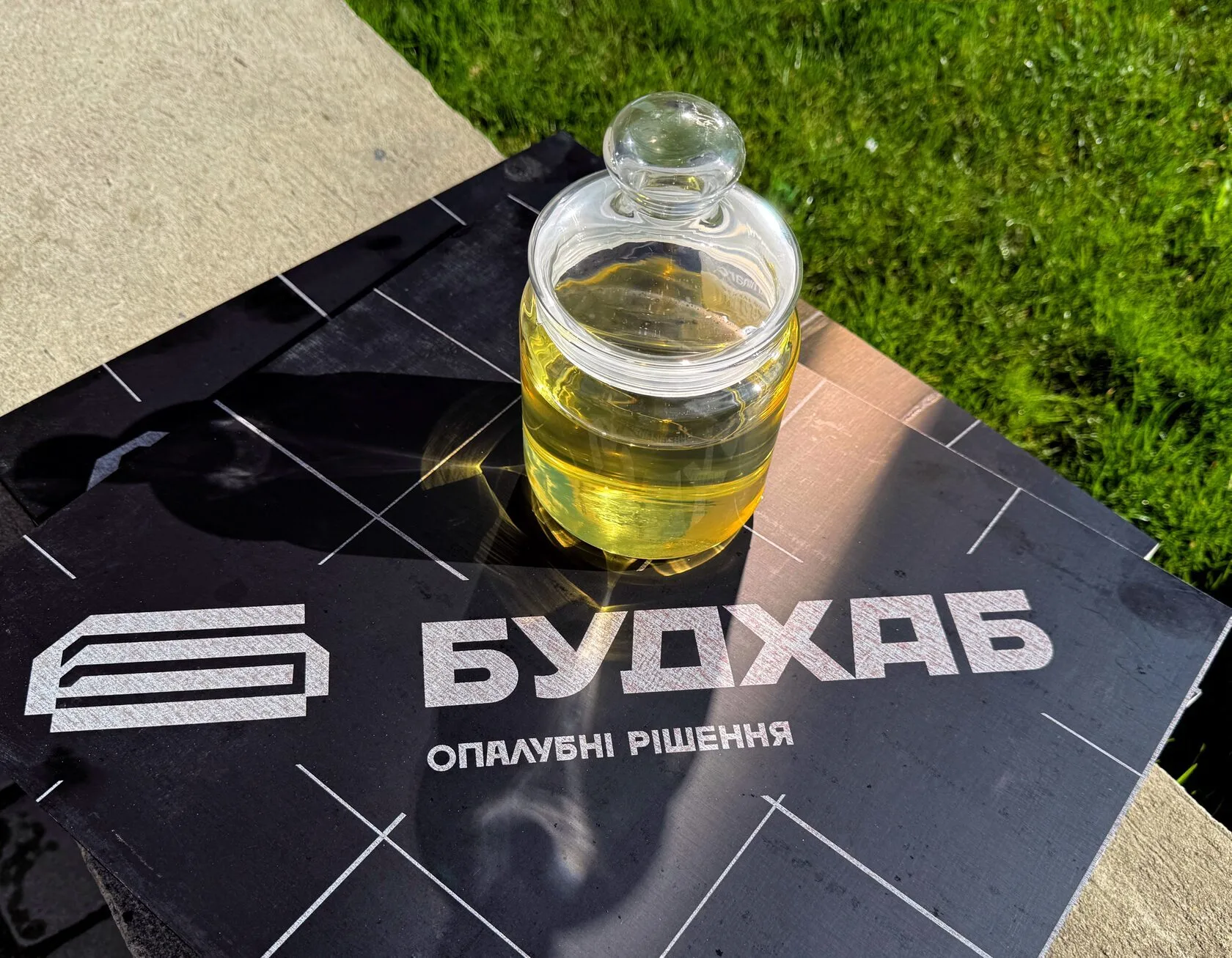
| High-quality (liquid, with a golden hue, high-tech) | 20–30 m² | 50–70 sq. m. | Forms a microfilm. Sprays easily into a fine mist. Maximizes material savings and saves workers’ time | 200–250 UAH | 2.86–5.00 UAH (spray bottle) 6.67–12.50 UAH (roller) |
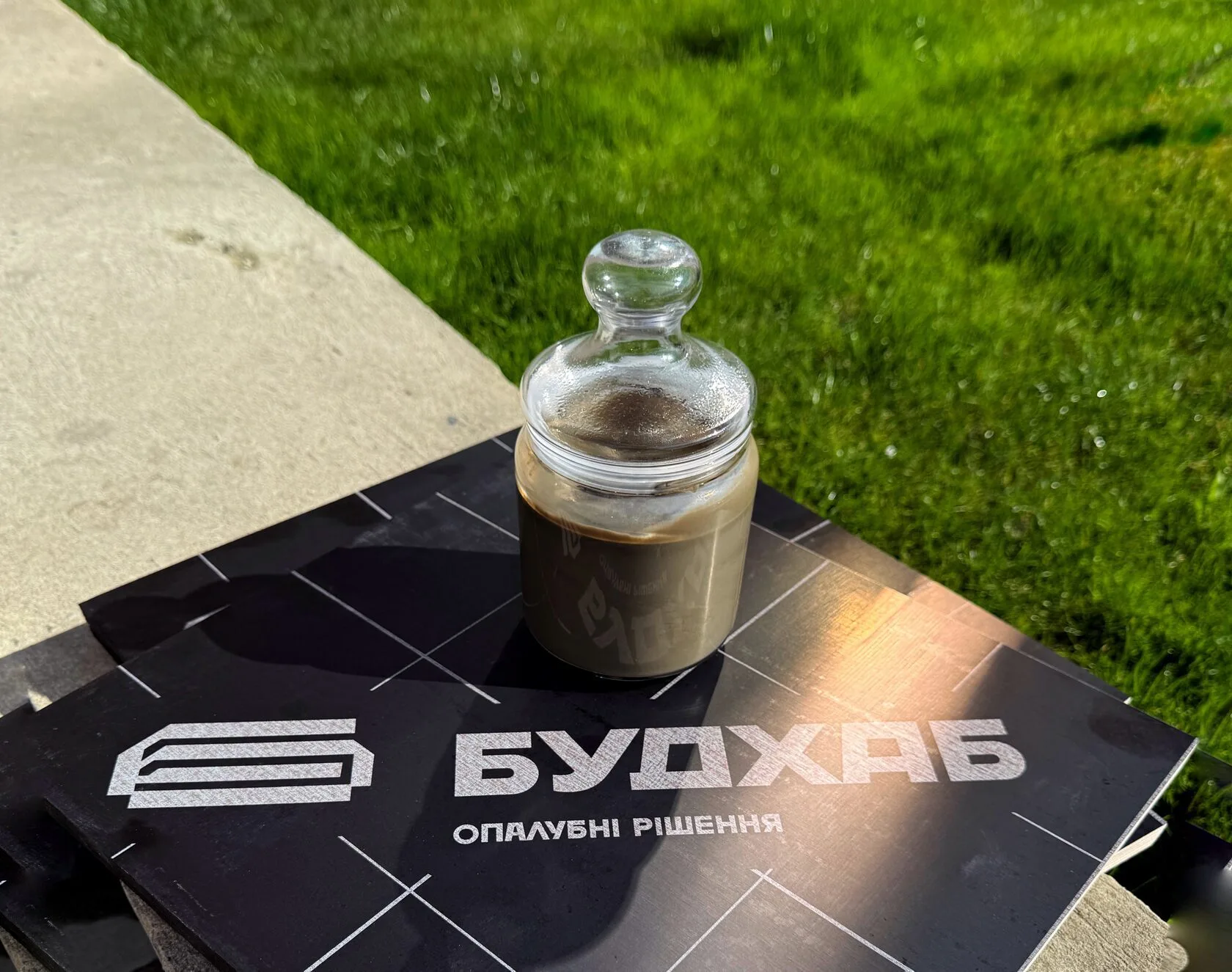
| Medium (standard, mineral) | 10–15 m² | 20–30 m² | Applies as a medium-thick coat. It offers the ideal balance for general use, but a more powerful sprayer may be needed for spraying. | 120–150 UAH | 4.00–7.50 UAH (spray bottle) 8.00–15.00 UAH (roller) |
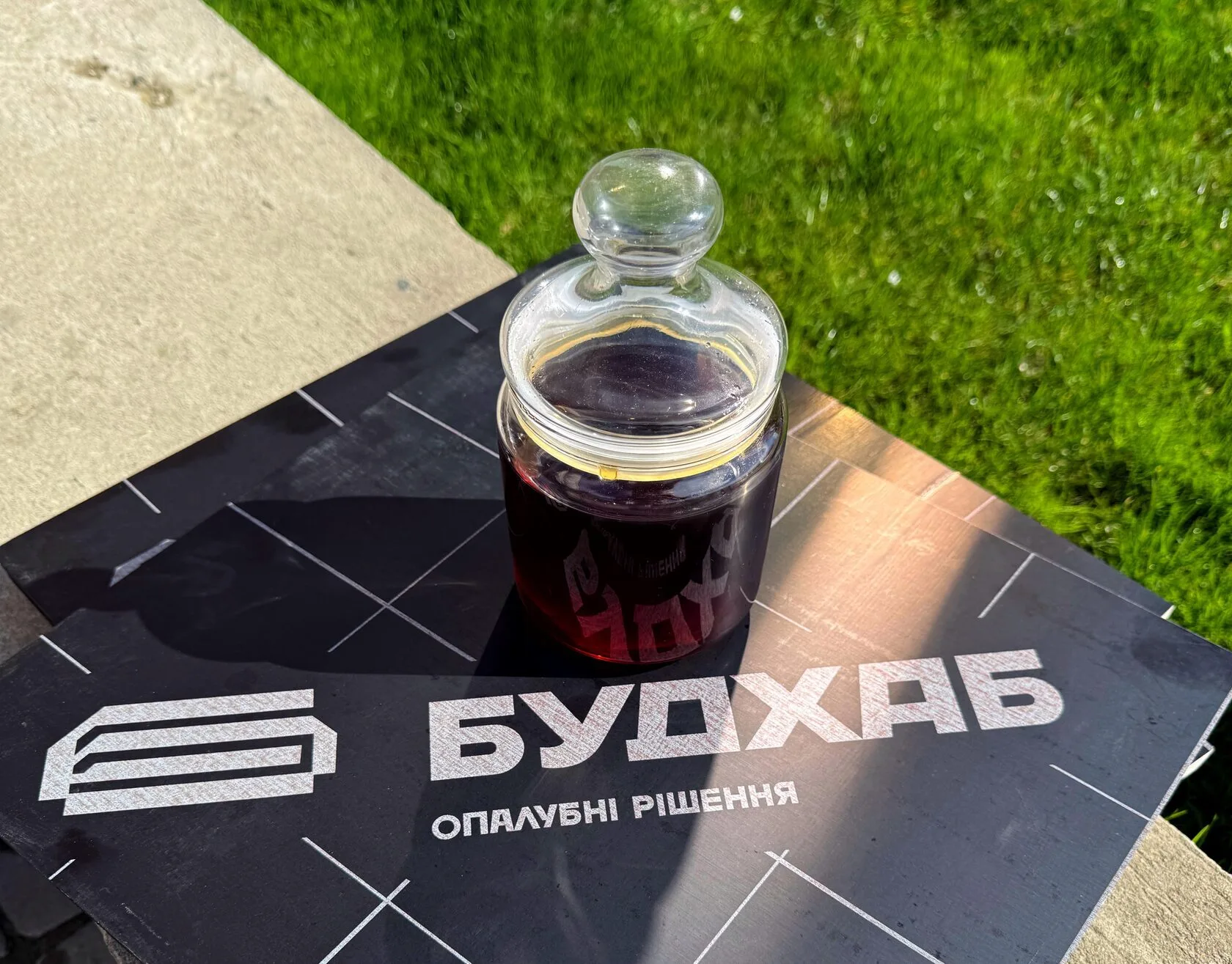
| Thick (high-viscosity, dark, inexpensive) | 7–10 m² | — (not suitable) | It forms a thick layer and is difficult to spread. It clogs spray nozzles, so it should only be applied with a roller. Highest coverage | 40–70 UAH | 4.00 – 10.00 UAH |
How does this work in practice?
To demonstrate why consistency is so important, we conducted a visual test and applied these same lubricants to a single sheet of plywood:

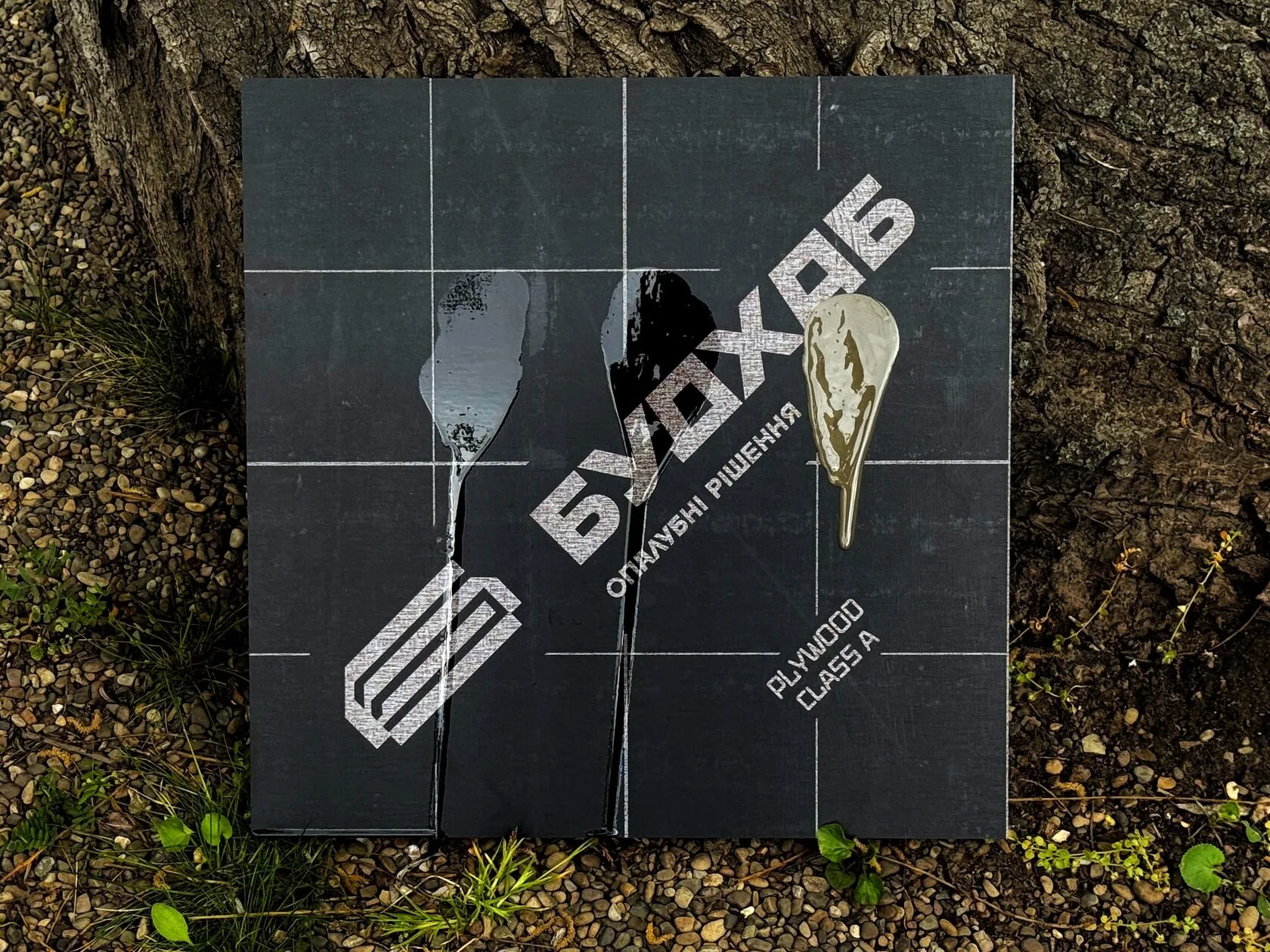
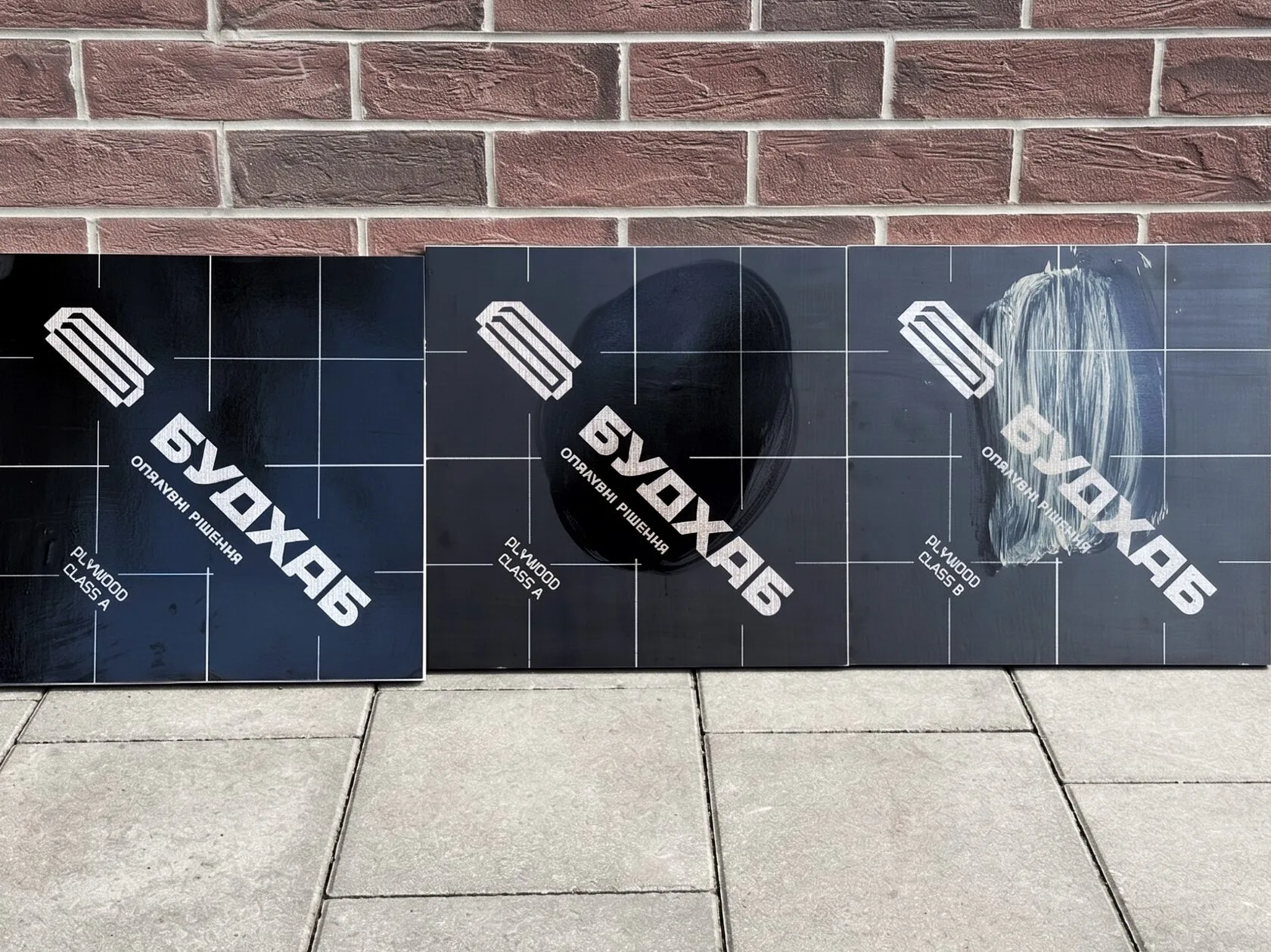
The difference is noticeable even during application: high-quality liquid lubricant (left) spreads easily into a thin microfilm, while the thicker one (right) forms a coarser, uneven layer.
What NOT to use as a substitute for formwork oil
Cheap oil substitutes—such as used motor oil or other petroleum products—are used primarily to save money. But such savings usually cause more problems than they solve.
- Stains on concrete. After the formwork is removed, dark, greasy marks remain that are difficult or impossible to remove.
- Finishing issues. The adhesion of materials to the concrete deteriorates—plaster, spackle, or paint may peel off.
- Insufficient formwork protection. Plywood wears out more quickly, losing its structural integrity and lifespan.
- High consumption. Due to their thick consistency, these materials are applied in a thick layer, usually with a roller, which increases consumption significantly.
- Uncomfortable working conditions. The strong odor and fumes are particularly noticeable in hot weather, which affects working conditions on site.
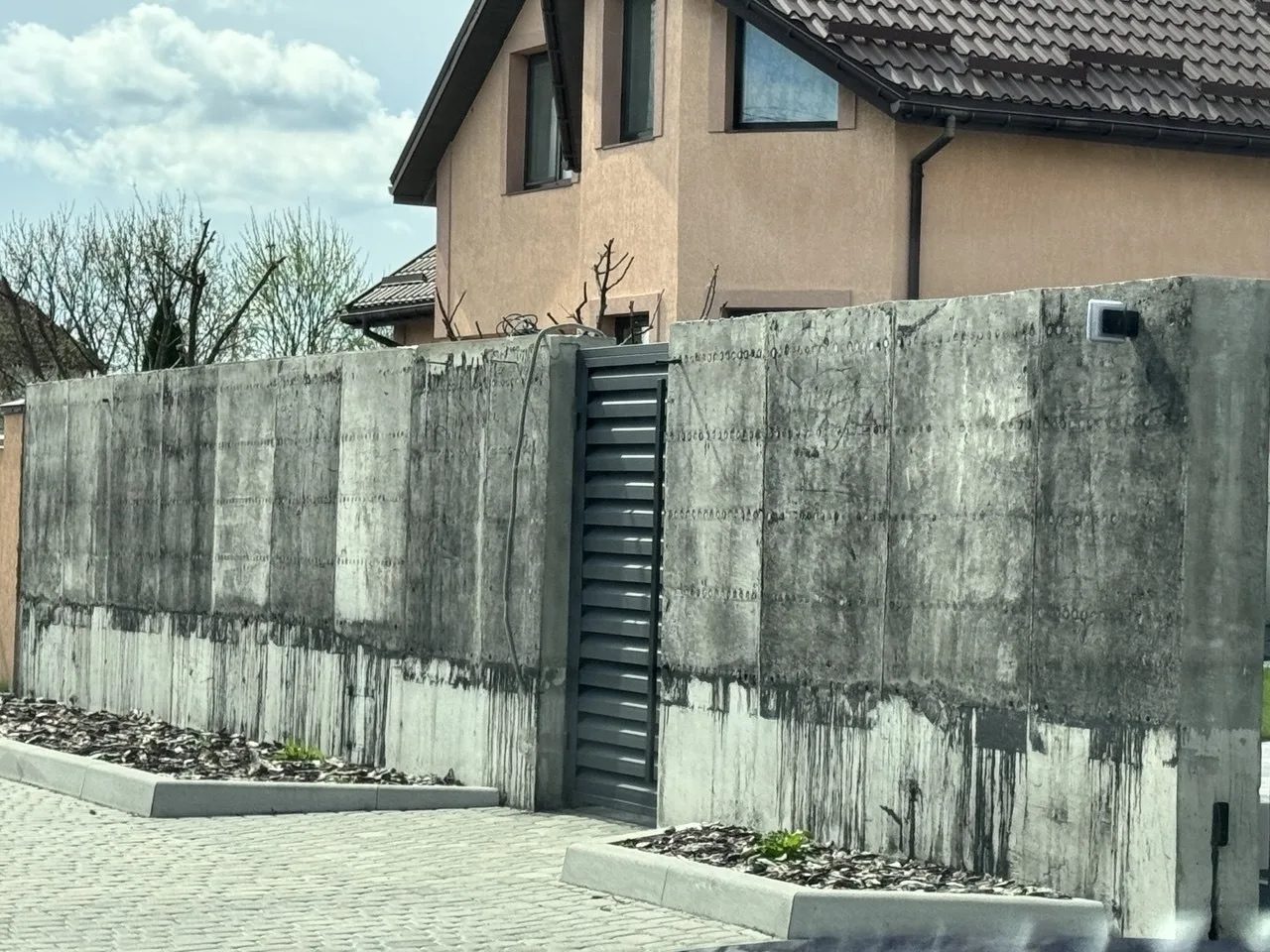


The result is poorer concrete quality, faster wear and tear on the formwork, and additional costs for repairs.
How and when to apply grease properly
For formwork oil to work effectively, it’s not just what you use that matters, but also how you use it.
It is important to note that using too much lubricant is just as harmful as using too little. A layer that is too thick can leave stains on the concrete and impair the surface quality. For formwork oil, the average application rate when spraying is about 1 liter per 30–50 m² of plywood. If the lubricated formwork remains idle for a long time without concrete pouring, the release agent layer should be reapplied before pouring to ensure a consistent release effect.
Based on our experience with formwork, we at Budhub have identified several guidelines:
- Apply only to a clean surface. Before application, the formwork must be cleaned of concrete residue, dust, and cement slurry.
- A thin, even layer. The lubricant should form a film, not a "layer." It is best to apply it with a spray bottle.
- Do not exceed the recommended amount. Too much lubricant is just as harmful as too little—it can cause stains on the concrete.
- Reapply during downtime. If the formwork has been idle for a long time, reapply the layer before pouring concrete.
For more information on preparing formwork and performing proper formwork cleaning before applying formwork oil, read our article: “Formwork Cleaning from A to Z: How to Extend the Life of Your Formwork,” and check out our channel:



Formwork oil is a product that determines the condition of the formwork system and the quality of the surface after the formwork is removed.
“Keep in mind that the grease on the formwork isn’t like the butter on a sandwich: a thick layer doesn’t improve the result—in fact, it can make it worse. A thin, even coating is best.”
We hope this guide will help you better navigate the selection and use of lubricants and make your formwork even more effective.
At Budhub, you can also purchase high-quality formwork oil, which we use in our own projects and recommend to our customers. Our specialists will select the right formulation based on the type of formwork, concrete pouring conditions, and scope of work, and will also advise you on the optimal application rate and method.
If you still have questions or need advice, please feel free to contact us—we’re always available: