Film faced plywood for formwork: key specifications
At Budhub, we work with projects of various sizes and types every day, so we know full well that some clients need new plywood, while others need used plywood, which we also offer for rent. Our equipment fleet includes both options, so we always select the right items to meet each customer’s specific needs.
In this article, we’ll share examples from our own experience to illustrate when each format is appropriate, and explain what actually determines the choice: the type of structure, the number of cycles, and surface quality requirements.
When should you choose new film faced plywood?
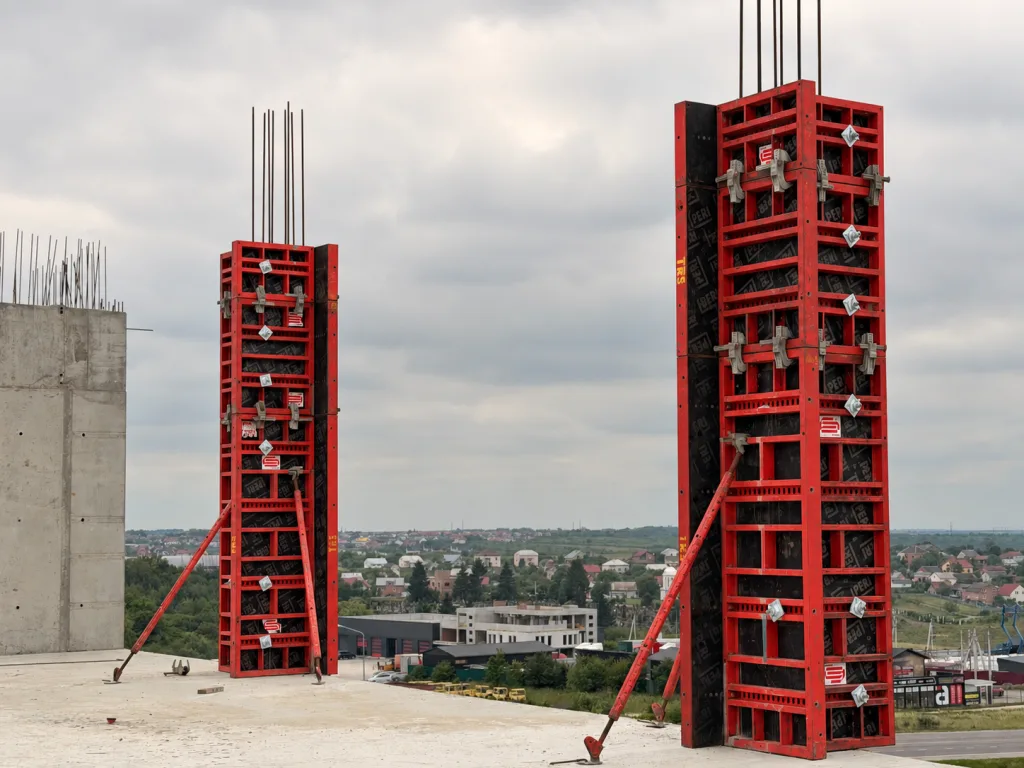
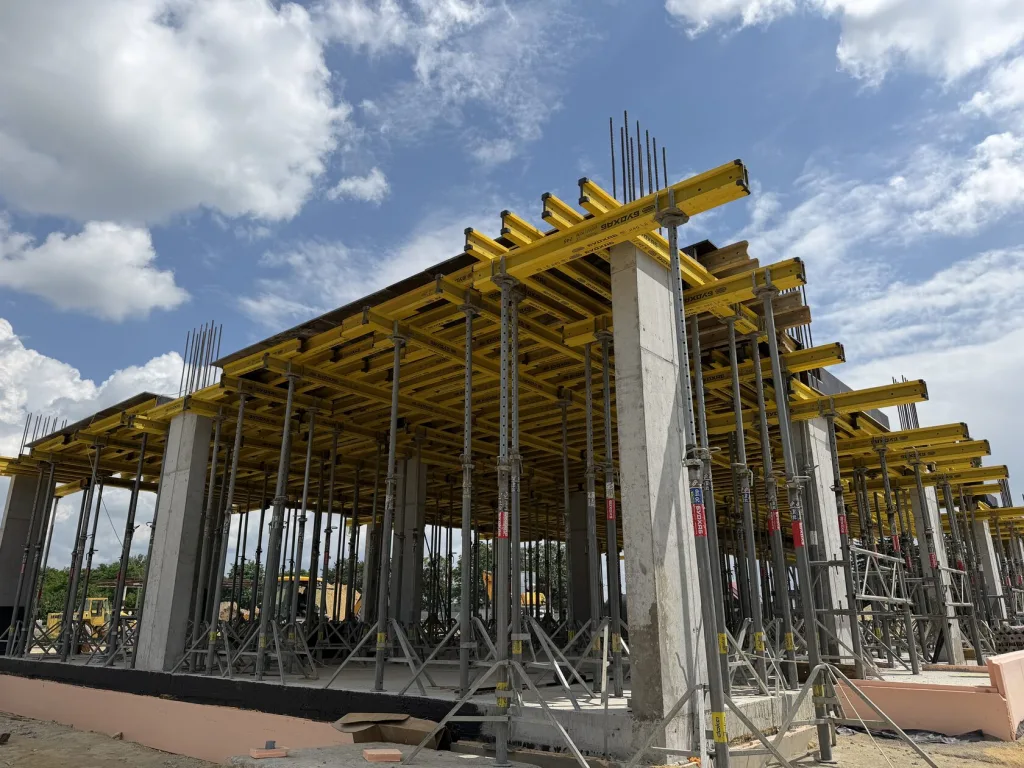
Mass housing construction. New plywood is best suited for projects featuring standard floor plans, repetitive structures, and a strict schedule. In such cases, pouring proceeds rhythmically, and the plywood set is used in a cycle: for example, one set for even-numbered floors, another for odd-numbered floors. If a building has 20–25 floors, the plywood set goes through 10–15 cycles without interruptions or long pauses. In this case, it makes the most sense to install new plywood right away to avoid having to address the issue of replacement at intermediate stages.
The Importance of Concrete’s Appearance. On exposed structures that aren’t covered with decorative materials, or in rooms with loft-style ceilings, the quality of the imprint is extremely important. New plywood fits tightly, prevents concrete slurry from seeping through, and ensures a smooth finish without ripples or stains. However, with plywood that has already been used for several pours, this is more difficult to achieve.
Projects in which concrete surfaces are intended for further finishing. One might think that used plywood would be a suitable choice; however, when it comes to projects where plaster or drywall is planned, the visual quality of the surface also matters. In hotels, public buildings, or comfort-class housing, geometric accuracy and material stability are often important, even if the surface will be finished. Therefore, in such projects, we generally recommend new plywood to avoid warping and defects that could affect the scope and cost of subsequent work.
Long service life. New plywood is also a good choice in situations where it is known that it will be in use for a long time—a year or a year and a half. This applies to projects where the workload is consistent and the intervals between pours are short. In such cases, plywood made from birch or composite wood (for example, ODEC or Latvian manufacturers) fully realizes its plywood lifespan and does not require constant replacement.
For more information on the types of plywood, its structure, cost, and technical specifications, please see our previous article, “Film faced plywood for formwork: How to Choose the Best Option for Your Project.”
New plywood is also a good choice for projects where construction is ongoing or takes place in phases—for example, when several building entrances or sections are built one after another. In such cases, the plywood is actively reused throughout the process, moving from one phase to the next. Therefore, it is important to have material with predictable specifications that does not require frequent inspections, repairs, or adjustments. This allows for maintaining a steady pace of work and avoiding time wasted on resolving technical issues.
When should you choose used film faced plywood?
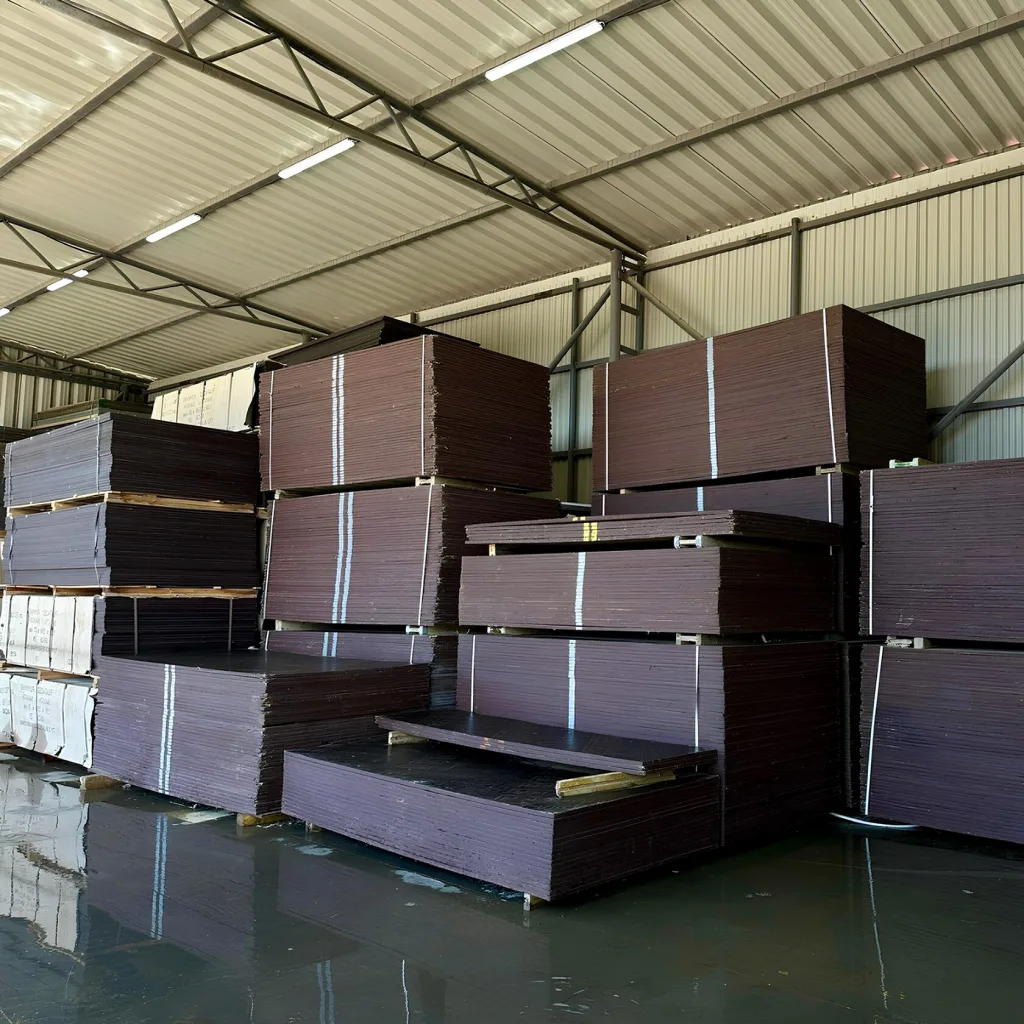
Projects with a small number of pours. Used plywood is material that has already been in use and therefore shows minor signs of wear. At the same time, its geometry, strength, and lamination remain at a level sufficient for technically sound concrete pouring. It is a rational choice for such projects or where the appearance of the concrete is not critical. It is most often used in private construction, for preparatory work, or for erecting auxiliary structures. When it comes to one or two stories, new material simply does not have time to realize its full potential.
The need for cutting or non-standard shapes. If the formwork requires a significant amount of trimming, for example, due to complex floor geometry or on staircases, it is advisable to use plywood that can be partially worn or trimmed without losing functionality.
A supplement to existing plywood. If you already have some plywood on hand, using used plywood is a convenient way to quickly make up for any shortfall. It is used to temporarily fill in gaps without having to replace the entire section with new material.
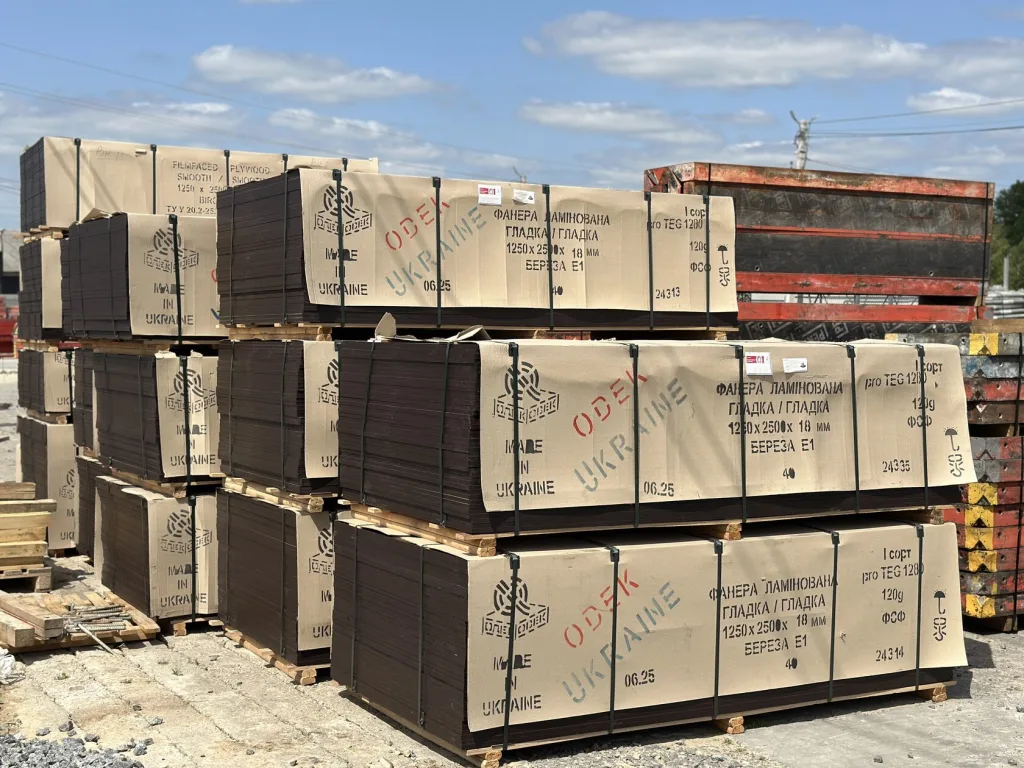
Buying and Renting New and Used Plywood: When Is Each Option the Best Choice?
You can not only buy formwork plywood but also rent it—both new and used. The choice of format depends not only on your budget but also on the duration of construction, the number of cycles, the type of structures, and your plans for future projects.
At Budhub, we offer both new and used plywood for rent, so you can choose the option that best suits your project’s needs. By regularly updating and inspecting our materials, we ensure consistent quality and predictable results.
Below, we’ll explore the situations in which each option makes sense. Here is a comparison chart to help you understand when it’s best to buy or rent new or used plywood for different types of projects.
| Format | When to choose | Advantages | Disadvantages |
|---|---|---|---|
| Buy new plywood | Large-scale or long-term projects where plywood will be used for a year or more | Full control over resources, predictable costs | High initial investment |
| Rent new plywood | Short but demanding projects with high standards for the quality of the concrete finish | High-quality material without major capital investment | The need to return by the specified deadline |
| Buy used plywood | To replenish our stock of make-up plywood or small-scale projects | Low cost when plywood is needed for secondary tasks | May have minor defects; not suitable for critical structures |
| Rent used plywood | For small or one-time projects where cost savings are a priority and there is no need for future projects | Lowest costs, flexibility, and no obligations after the work is completed | Limited service life, possible signs of wear |
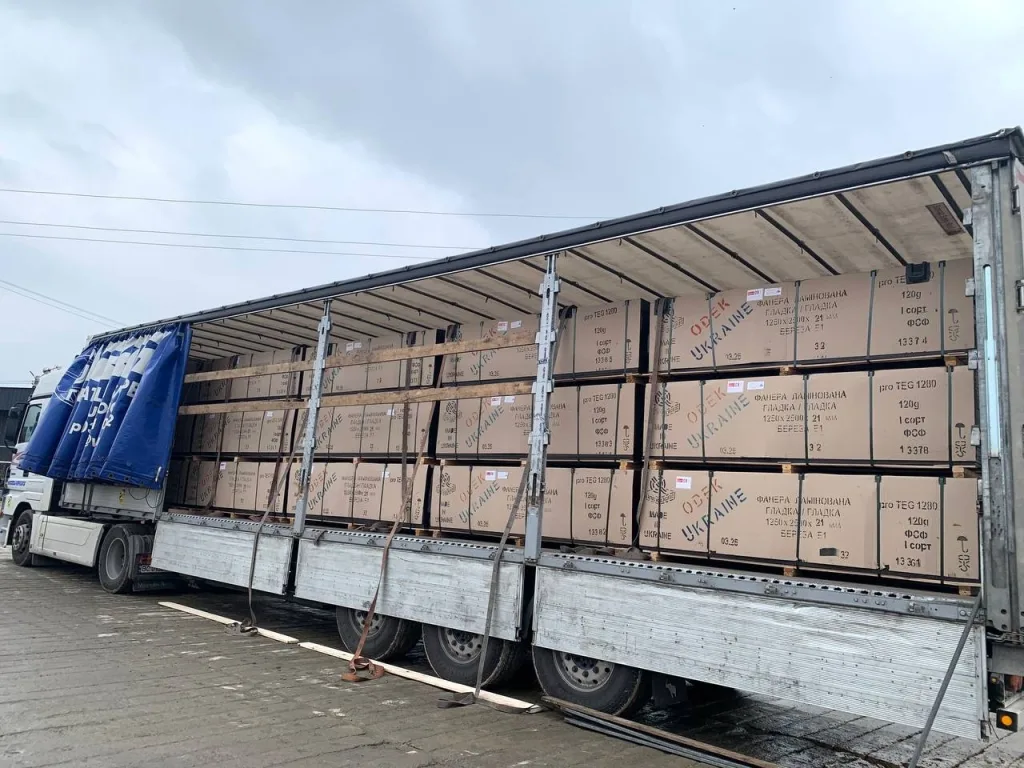
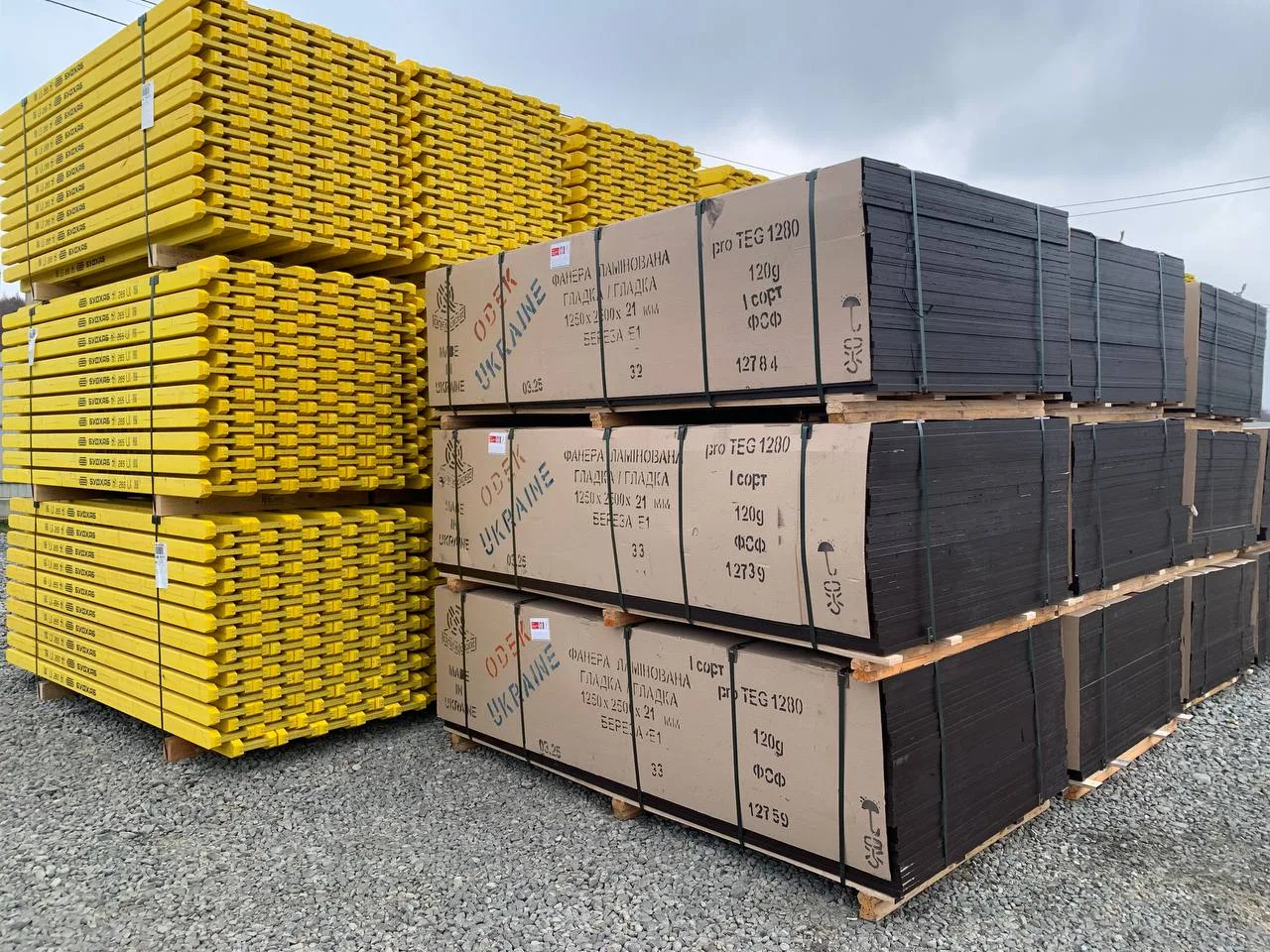
The film faced plywood is ready for shipment
Choosing plywood isn’t just a matter of price. It all depends on the type of structure you’re building, how many pours you plan to do, and what results you expect from the concrete surface.
New plywood is the right choice when quality, precision, and long-term, defect-free performance are essential. Used plywood is an excellent option for auxiliary or temporary structures, especially when on a tight budget.
If you’re unsure and don’t know what’s best for your project, it’s best to consult with us before placing an order. At Budhub, we’ll find a solution tailored to your needs: from selling and renting various types of plywood to recommendations on how to reuse it.
+38 098 800 22 88