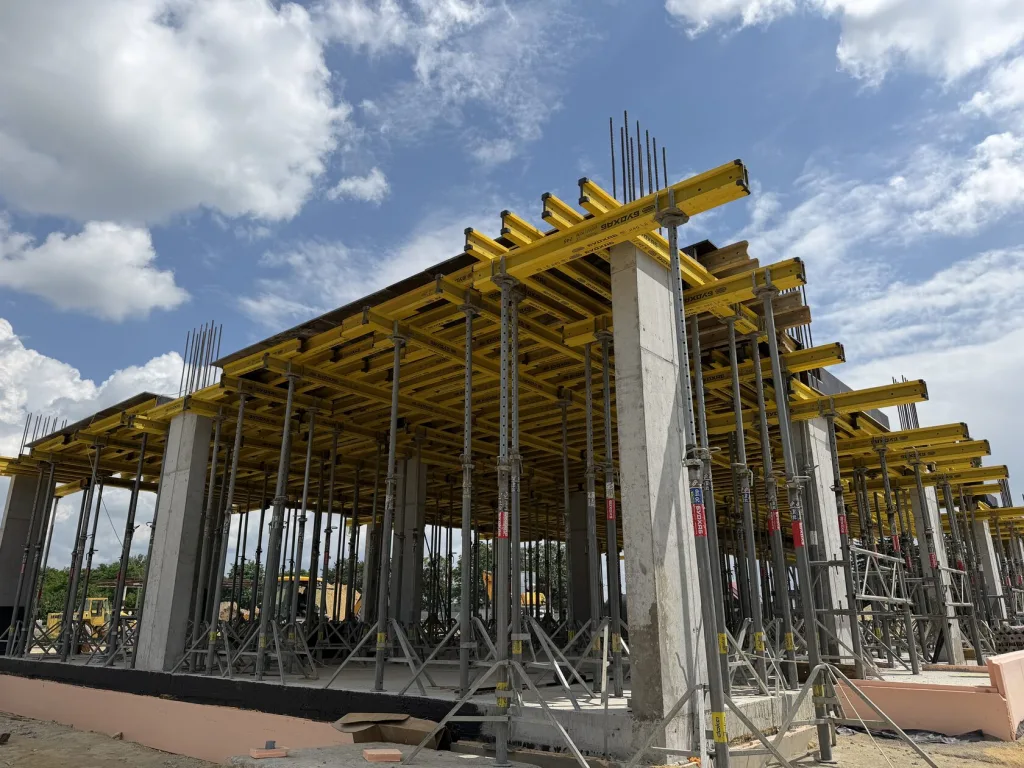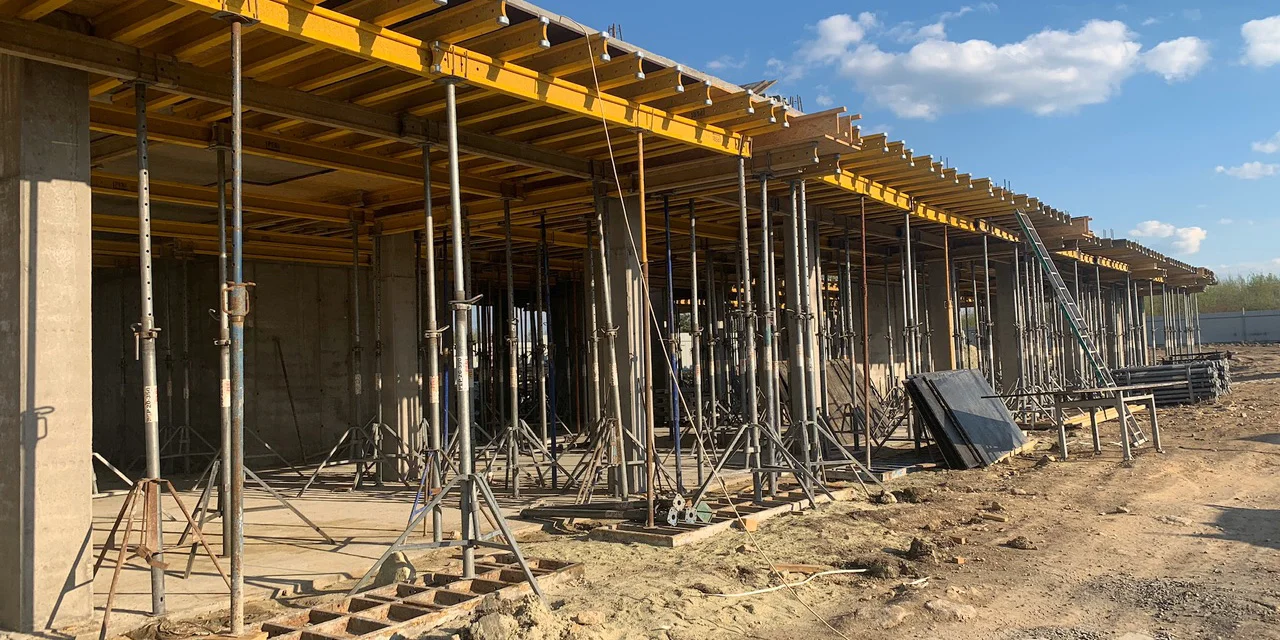
Today, there is a wide variety of formwork props available on the market. They are all categorized based on three characteristics: maximum load capacity, surface finish, and prop height.
Selecting the load class for floor joists
Based on the load the rack can support in its highest position, categories A–E or 10, 15, 20 kN (1, 1.5, 2 tons) are designated.
The most common types on the market are classic Class D slab props, which can support loads of 20 kN. These props are recommended for pouring floor slabs with a thickness of up to 20 cm. Class D slab props can also be used for floor slabs 25–30 cm thick, provided the required number of props and the load per prop are calculated in advance.
Class E columns are reinforced columns capable of withstanding loads of up to 30 kN (3 tons). There are not many reinforced slab props on the market. They are used in combination with double the number of beams only for special structures with very thick floor slabs—50–100 cm. For example, for silos or foundation slabs.
Class A props are a lightweight version of standard props. They can support loads of up to 10 kN or 1 ton. In terms of price, they are about half the cost of standard props—both for rent and for purchase; however, using lightweight props is only practical for pouring slabs up to 20 cm thick, such as in cottage construction, small structures, balconies, and cantilevers.
Choosing a coating for formwork props
Based on their finish, the racks are available in galvanized or painted versions.
Galvanized formwork props are more expensive but the most reliable. Under the right operating conditions, they can last up to 36 years. The main manufacturers of galvanized formwork props are Doka, Peri, and Ulma. Galvanized formwork props are the best choice if you are renting formwork or if you already have experience working with concrete.
Painted props are cheaper than galvanized ones. They can withstand the same loads (10, 20, and 30 kN), but they are less reliable because they are more prone to damage and have a significantly shorter service life (about 5 years). Builders choose these props for initial work with monolithic structures and when entering the monolithic construction market for their initial purchase of formwork equipment. The main manufacturers of painted props in Ukraine are the “Variant” factory and the “Pavlogradspezmash” plant.
There are virtually no Ukrainian-made galvanized props available. The “Variant” factory offers a line of galvanized props, but due to their high price and the superior quality of products from manufacturers such as Doka, Peri, and Ulma, they are rarely found on the market.
Choosing the height of the posts
All props range in length from 1.5 to 5.5 meters, in 0.5-meter increments. The numerical value indicates the maximum height of the prop when fully extended; for example, a 3.5-meter prop can also be used for pouring lower floor slabs. The required height of the props is determined based on the height of the floor slab.
So, when choosing racks, you need to understand the technical requirements: the height and thickness of the floor slab are the two main criteria for selecting the load class and rack height, as well as whether you plan to rent or purchase the equipment.
Looking for formwork props?
We’ll help you choose the best option for your project, calculate the number of racks you need, and, if necessary, arrange for delivery, returns, cleaning, and repairs.
Budhub offers formwork rental and sale of horizontal and vertical formwork, film faced plywood, and consumables. We carry equipment from manufacturers such as Peri, Doka, Ulma, Variant, Hunnebeck, Lana, and others.
For a free consultation, please call
+38 098 800 22 88.