Film faced moisture-resistant plywood is one of the key materials in monolithic construction. Not only the speed and ease of installation, but also the final outcome of the construction project depend on its quality, proper selection, and use.
We are launching a series of articles on film faced plywood for formwork, and in the first one we will focus on the technical specifications; we will examine which plywood is used as the base layer and which is used for trimming; We’ll explore the pros and cons of different manufacturers, as well as when it’s better to buy film faced plywood and when it’s better to rent it.
Film faced plywood for formwork: key specifications
Film faced plywood for formwork is a composite material in the form of layered glued wood, consisting of veneer sheets bonded together and covered with a protective film (laminate) on both sides. It is this film and adhesive that give the construction plywood its unique properties: increased moisture resistance, durability against mechanical damage, and the ability to be reused multiple times in construction processes.
It’s important to understand that not all plywood is the same: it can vary in terms of technical specifications, raw materials, country of origin, and finish quality. To choose the best option for your specific project, we recommend considering a number of factors, which we’ll discuss in more detail below.
Formwork plywood
can be made from various types of wood. Depending on the wood species, the material has different densities, strengths, and service lives.
Among the most popular, we can highlight the following:
- birch — has a high density of 650–700 kg/m³ and can withstand up to 35 cycles of use
- composite (e.g., birch-alder) — the top layer is made of birch, while the core is filled with less expensive wood species; it has an average density of 460–540 kg/m³ and can withstand up to 20 cycles
- Poplar plywood is lighter and more affordable, but has a lower density (500–550 kg/m³); it can withstand up to 12 cycles
Thickness
: The standard thickness of formwork plywood ranges from 9 to 21 mm, but the 18 mm and 21 mm options are the most popular, so at Budhub we mainly use those.
Standard plywood sheet sizes for formwork are
1250×2500 mm, although other sizes are also available, such as 1220×2440 mm. Larger sizes reduce the number of joints in structures, which significantly improves the quality of concrete surfaces.
Solid and filler plywood: key differences and application characteristics
Based on their intended use, plywood can be divided into two types: standard plywood and so-called “edging plywood.” The main difference between them lies in their intended use and material quality.
Standard plywood
- is used to create the main deck area for pouring concrete
- It is made from high-quality, durable materials, primarily birch or composite plywood (birch-alder)
- has high stiffness to prevent it from sagging under the weight of the concrete mix
- It is highly durable and suitable for repeated use
- has flat ends that ensure a tight joint to prevent cement slurry from leaking
Its primary function is to ensure a level surface for the concrete and minimize the cost of finishing.
Filler plywood
- Used for trimming, fitting, and installing formwork in non-standard areas
- is often thinner or of lower quality
- can be an affordable option for single-use
We use filler plywood for auxiliary formwork components (sealant joints, connection areas, non-standard shapes); in areas where the sheet can be cut and adjusted to non-standard dimensions; and in cases where it is necessary to minimize waste when working with standard plywood.
We recommend that our customers select the main plywood and the filler plywood in such a way that they are also visually distinguishable (for example, by having different labels or markings). This will make it easier for construction workers to identify the plywood during installation and minimize the risk of the more expensive main plywood being cut up as a cheaper consumable.
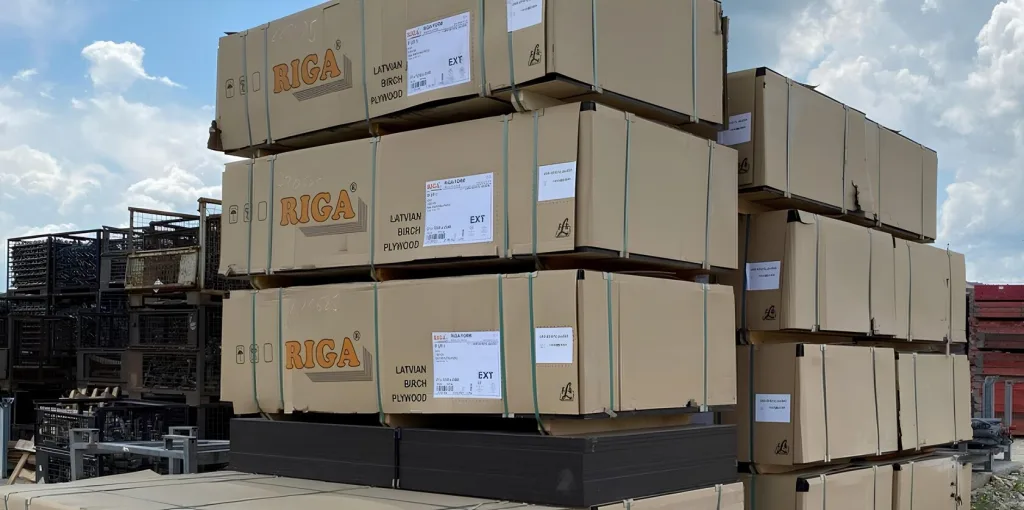
The most popular plywood manufacturers on the Ukrainian market: Latvia, Ukraine, China
Among the main suppliers of film faced plywood on our market today, the following stand out: Ukraine, Latvia, and China. So, let’s take a look at the pros and cons of each.
Latvian plywood is the most expensive segment on the market and is popular due to its quality and durability. The primary material used in production is birch.
Due to its dense gluing, it has high resistance to mechanical damage and lasts for many more cycles of use compared to other manufacturers—up to 35 cycles. That is why we often use Latvian film faced plywood in our rental fleet.
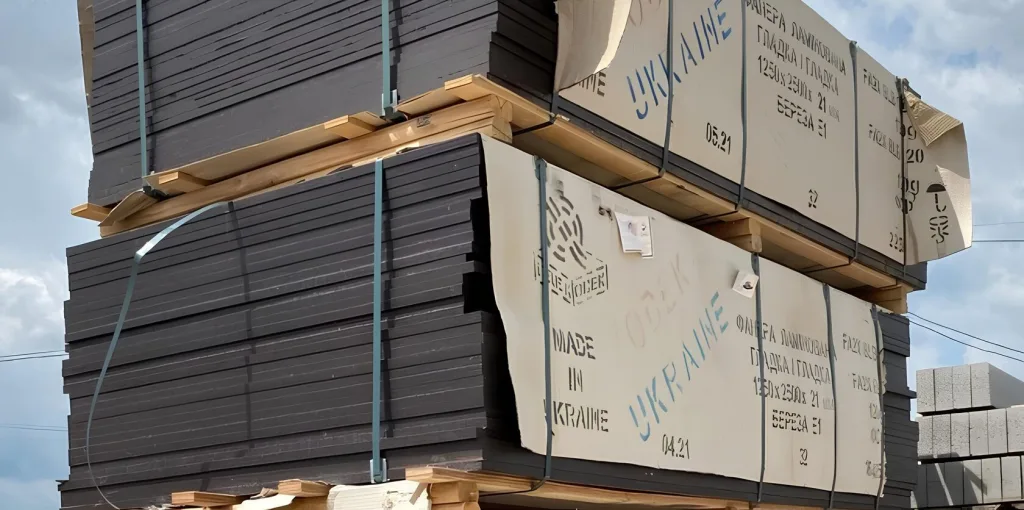
Ukrainian plywood is primarily made from a combination of materials (birch and alder). It is a good alternative to Latvian plywood, as it is cheaper and more readily available on our market, while also offering high quality and durability. It can withstand up to 25 cycles.
Most popular manufacturers:
- Odek (Rivne Oblast)
- Whitewood (Zhytomyr)
- WoodStick (Khmelnytskyi)
We recommend choosing Ukrainian plywood or Latvian plywood for construction projects with high technical requirements, for long-term projects, and when the quality of the monolithic work is critical.
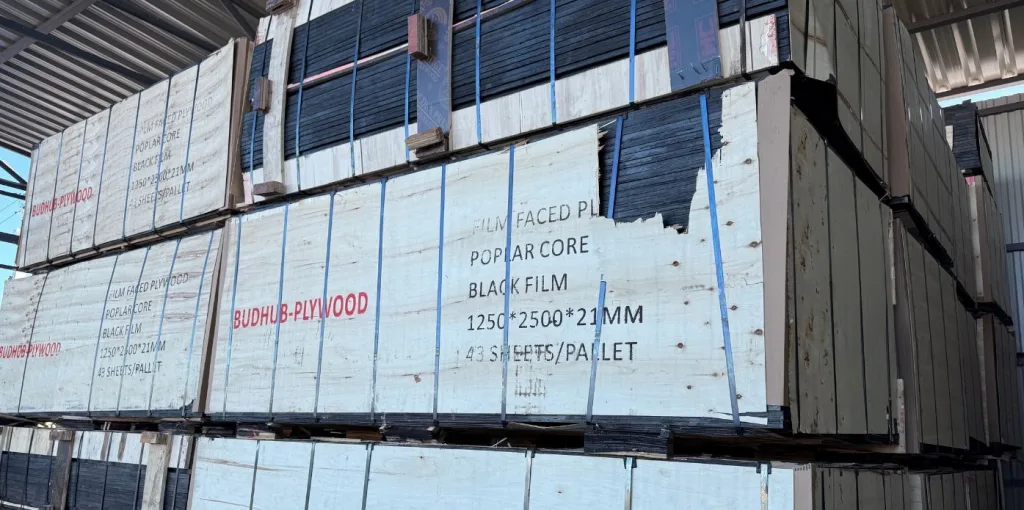
Chinese plywood is the most affordable option on our market. It is used for short-term projects or in projects with low technical requirements, as well as frequently as filler plywood. The primary material used in its production is poplar.
We can broadly classify this plywood into several grades based on material quality, which, in turn, significantly affects the characteristics of the final product:
- Grade 1 — poplar plywood made from solid veneer sheets; undergoes two pressings during manufacturing (withstands up to 10–12 rotations)
- Grade 2 — poplar plywood, also made from solid veneer sheets; undergoes 1 pressing during forming (6–9 revolutions)
- Recycled* — plywood made from recycled materials (1–2 solid veneer sheets on the top and bottom, with the core consisting of strips of used plywood, as well as nails, wood, and concrete debris). Chinese recycled plywood may be used for shoring, earthwork for concrete pouring, and foundation forming.
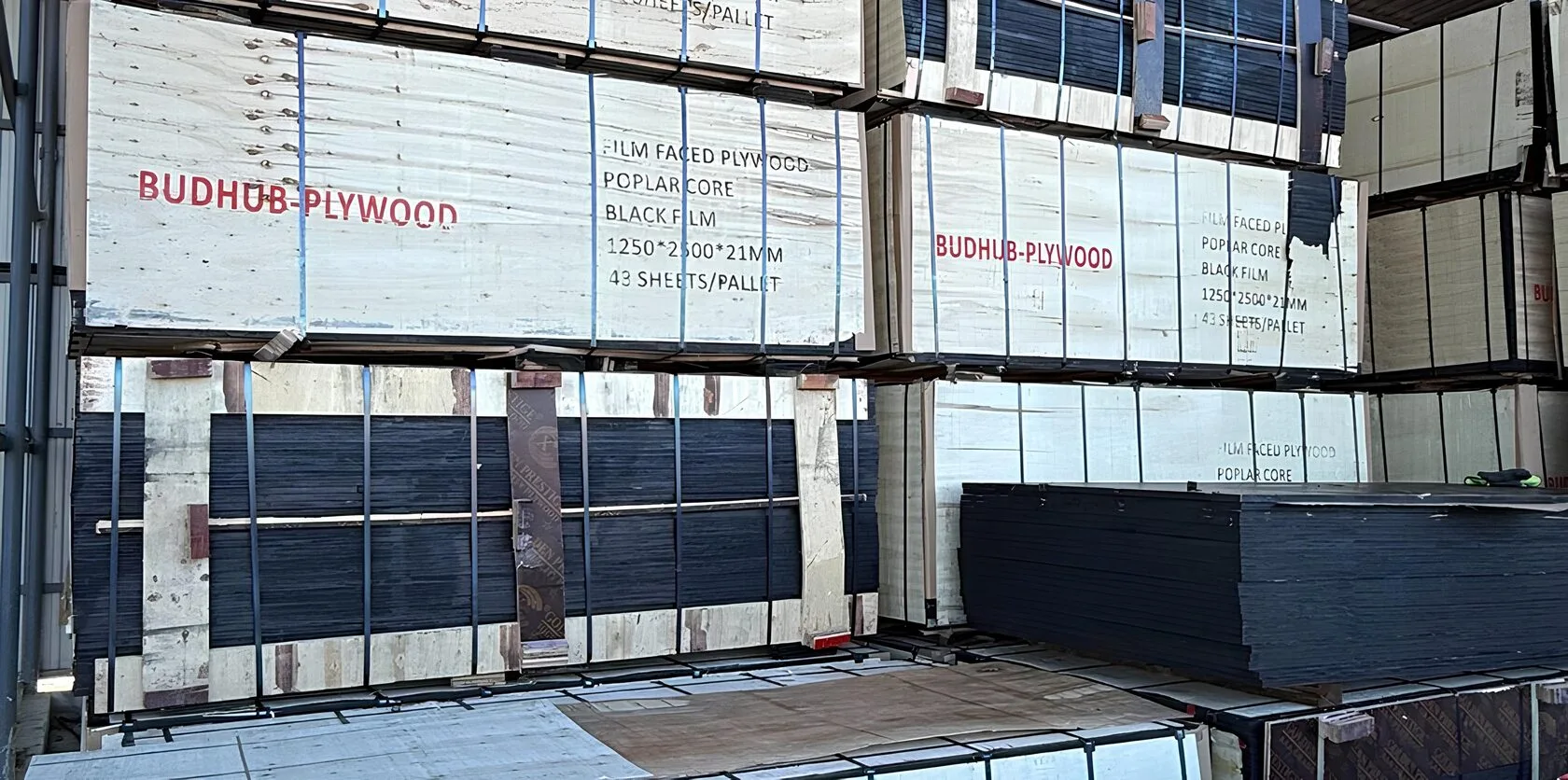
Please note that the Ukrainian market offers many options from various Chinese manufacturers across different price ranges. To protect yourself from low-quality plywood and the deceptive practices of unscrupulous manufacturers, we recommend always measuring the height of the plywood stack. That is, if a high-quality sheet of plywood is 21 mm thick and a standard stack contains 43 sheets, the height of the stack should be at least 90 cm.
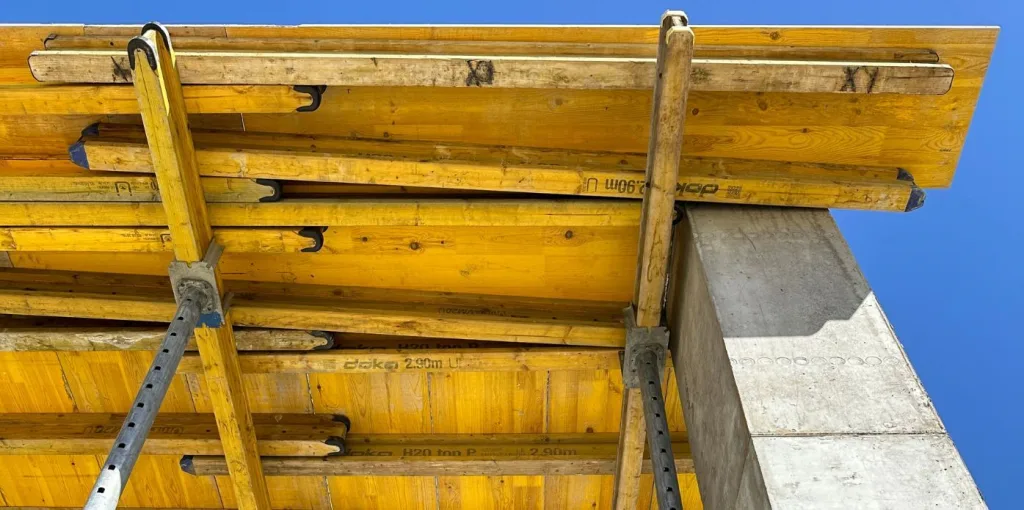
In addition to film faced plywood, three-layer boards are also used for deck installation in monolithic construction. This board consists of three layers of wood (each 7 mm thick), glued together lengthwise and crosswise to achieve the required thickness of 21 mm, and features a water-resistant melamine resin coating. Additionally, the formwork board may optionally have protective end caps, which can extend its service life.
In terms of quality and price, we would rank decking boards on par with Ukrainian plywood. With proper use and maintenance, they can withstand up to 15–20 cycles of use.
If you’ve decided to go with three-ply decking, keep in mind that each decking board has different load-bearing capacities in the longitudinal and transverse directions, depending on how it’s installed. Therefore, the board should be laid in only one direction—with the long side perpendicular to the secondary beams. This should be taken into account when installing the deck, especially for industrial facilities with floor slab thicknesses of 30, 40, or 50 cm, where its use may be risky. Also, the board’s surface is not laminated, only treated with an anti-corrosion agent; therefore, due to the lack of lamination, the concrete surface will have a certain texture rather than being perfectly smooth.
Should I buy or rent film faced plywood?
We have already reviewed the main characteristics, intended uses, as well as the pros and cons of plywood from various manufacturers. But when is it better to rent, and when is it more cost-effective to buy plywood for column formwork?
Renting film faced plywood is a good option if you have a short-term project—that is, if you only need the plywood for one or a few pouring cycles.
For example:
a) pouring the foundation for a small structure (a private home, a garage);
b) one-time concrete work;
c) erecting temporary structures.
Another significant advantage is that renting film faced plywood allows you to significantly reduce initial formwork costs and, for example, allocate funds to other stages of construction. So, if you are a company that works with fixed budgets; a contractor who handles small-scale projects and doesn’t want to tie up funds in building materials; or a young company that doesn’t yet have its own formwork fleet, we recommend that you consider renting plywood.
It’s also important to remember that once the concrete work is complete, you’ll need a place to store the plywood. So, if your project is located in a densely built-up urban area where there is no space to store materials, or if it is a temporary construction site without its own storage facilities, or if you are a contractor working in different regions and do not want to spend money on material Logistics, — in such cases, renting plywood for formwork will be much more convenient and affordable.
Important! For rental, we provide only high-quality birch or composite plywood that can withstand many cycles of use.
When is the best time to buy plywood?
- Provided it is used regularly. If you have many projects, frequently work on monolithic construction, and have a constant need for film faced plywood, then this purchase makes sense, as formwork plywood can withstand dozens of concrete pouring cycles. For example, if you run a large construction company that works with monolithic structures on a regular basis, your projects last several years and involve repeated use of formwork, or if you are a developer building residential complexes in phases and have the ability to reuse materials—it is in these cases that we recommend our clients purchase film faced plywood.
- In cases involving the construction of non-standard structures (such as curved walls or large spans); or projects that require plywood in non-standard sizes. When a project requires plywood in special sizes or with non-standard specifications, renting it may simply be unavailable or financially unfeasible.
- When constructing large monolithic structures with extended construction phases.
For example, if it is an industrial facility involving several phases of monolithic construction, or the construction of residential complexes where each new phase requires a large amount of formwork, or during the phased construction of infrastructure projects (bridges, tunnels). In other words, in cases where monolithic construction work lasts for years, purchasing the formwork allows for significant savings compared to long-term rental.
Ultimately, the decision between renting and buying film faced plywood depends on the timeline, budget, and scope of your construction project.
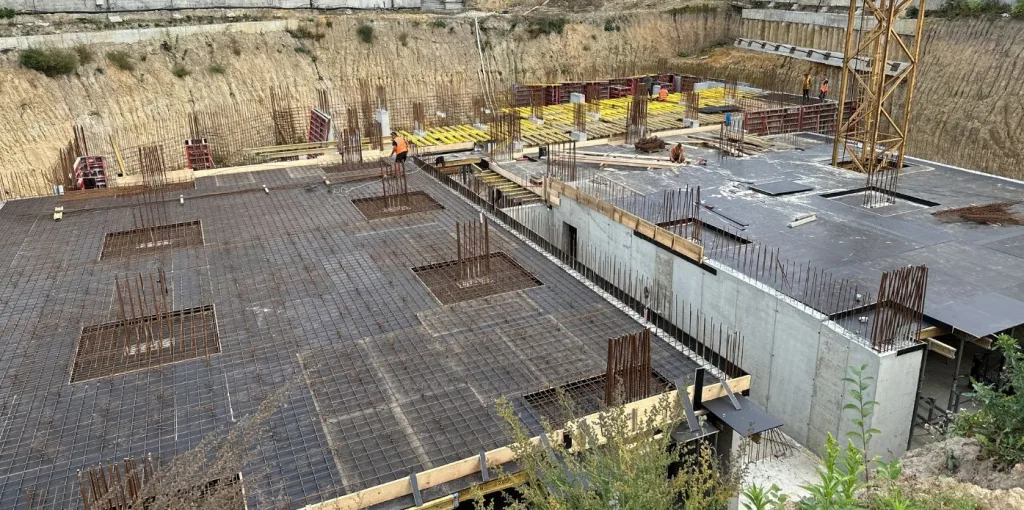
At Budhub, you can buy or rent new and used film faced plywood from all leading manufacturers at competitive prices.
We hope you found this article helpful and that choosing plywood for formwork will be a little easier for you in the future. In our upcoming articles, we’ll address even more questions that concern our customers: when it’s best to choose new plywood versus used plywood, how to extend the lifespan of plywood, and how to avoid making a mistake when selecting Chinese plywood—so don’t miss out.
If you have any further questions, please call us at:
+38 098 800 22 88