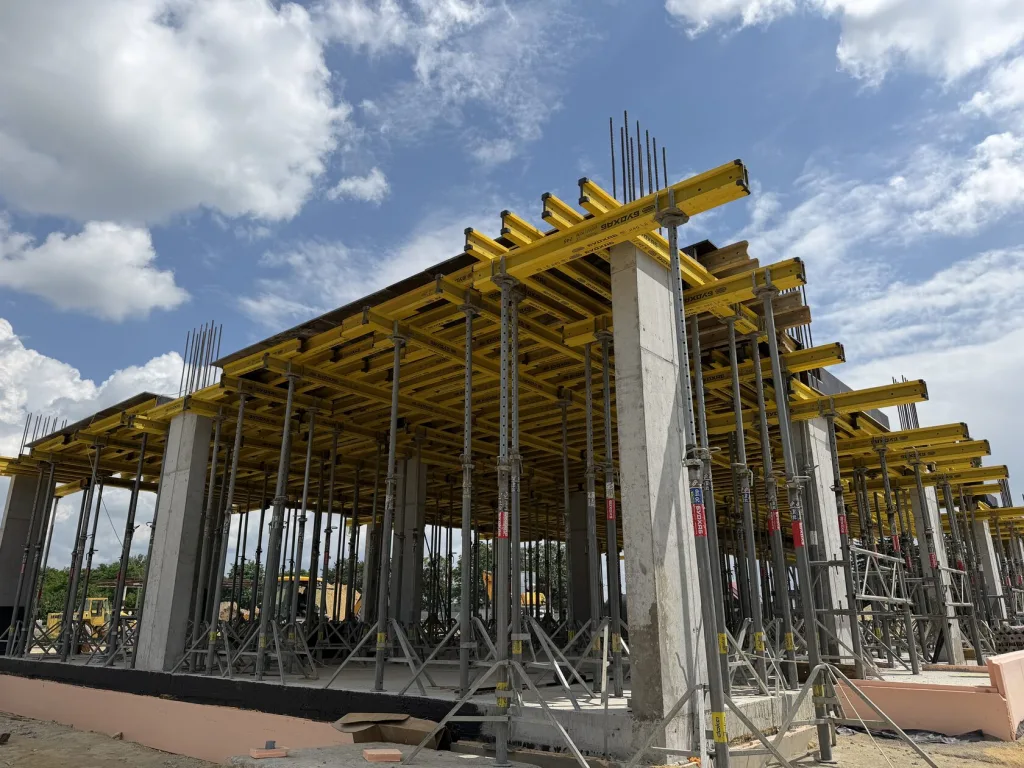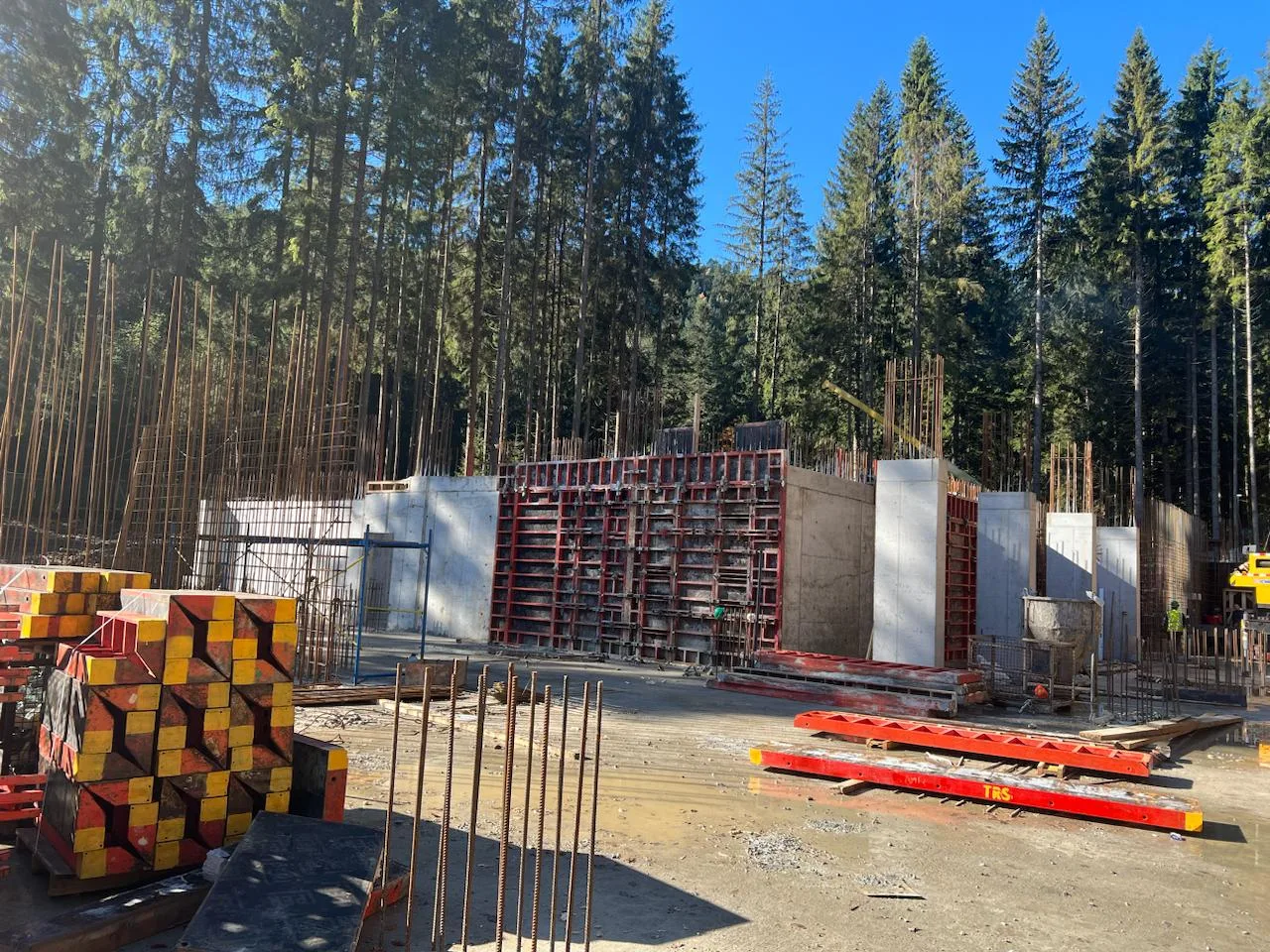
Formwork is a temporary structure used to give concrete and reinforced concrete structures their shape and required dimensions. Examples include walls, foundations, columns, and floor slabs. Such structures are only needed for a limited period of time.
In this article, we will look at several main types of column formwork and pilaster formwork: plastic formwork, lightweight steel formwork, and heavy-duty professional formwork; as well as their main advantages and disadvantages.
Plastic column formwork
Plastic column formwork consists of individual sections 60 cm high. It is lightweight and allows for the erection and pouring of columns up to 5–5.50 m high. The sections are universal in size; using this formwork, columns up to 50 or 60 cm wide can be erected.
One drawback is that plastic formwork is not very common on the market, which means that the choice is limited to just a few suppliers. The only advantage is the formwork’s weight; it can be installed in places where it is impossible to use, for example, a crane, or on small-scale cottage construction projects.
Plastic formwork for columns is assembled without the use of hammers, as it can be easily damaged. When pouring columns, it is important to maintain a consistent pouring rate for the concrete mix. The plastic may not be able to withstand the dynamic loads of the concrete and may sag. Additionally, the plastic sometimes deforms when the concrete mix is compacted with a vibrator.
Another drawback of plastic formwork is that the temperature must be monitored. When the ambient temperature is high or when exposed to direct sunlight in the summer, the plastic becomes more flexible and may experience slight deformation and sagging during concrete pouring.
Lightweight steel formwork for columns
The next type of column formwork is a lightweight metal system. It can withstand concrete loads of up to 80 kN/m² and allows for the manual assembly and installation of columns up to 3 meters high, without the need for a crane or other equipment. Heavy construction equipment is required only during the concrete pour.
It makes sense to choose a lightweight system for single-story structures if you do not regularly use heavy construction equipment or machinery for formwork assembly and formwork stripping.
Heavy-duty formwork series for column formwork
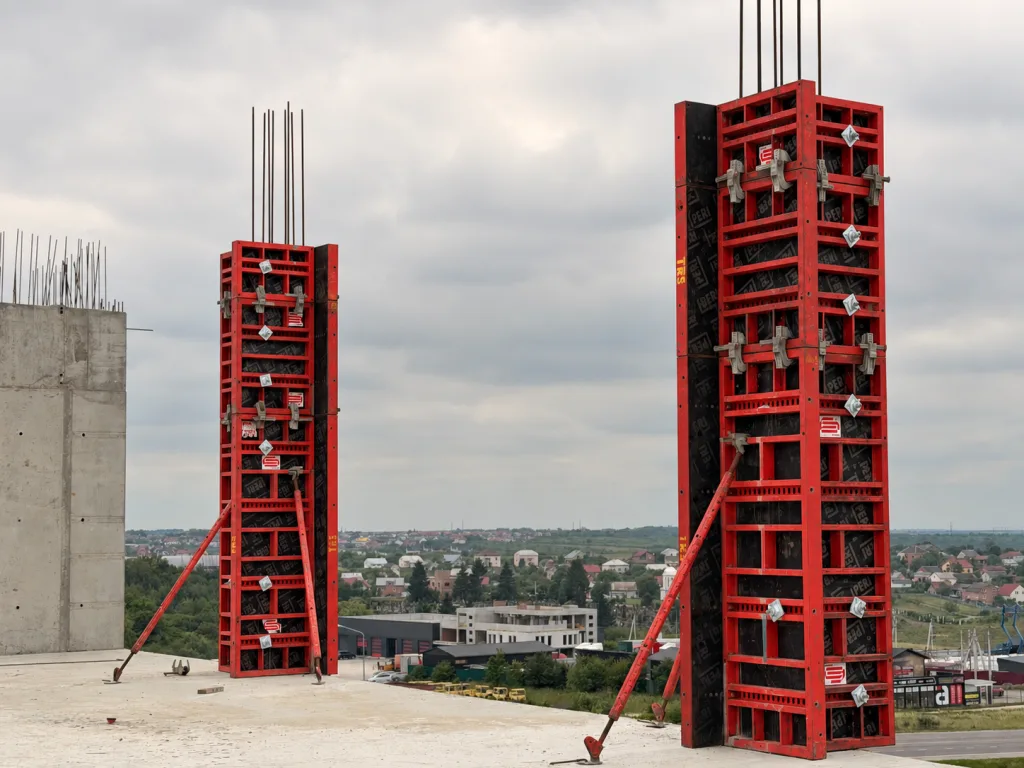
The most common systems on the market are heavy-duty professional metal systems such as Peri Trio and Doka Framax. The main components of a heavy-duty column formwork system are universal panels that are connected to one another via interlocking joints. These sturdy metal panels can withstand loads of up to 100 kN/m².
Formwork assembly is performed exclusively using heavy construction equipment. The use of this equipment significantly reduces the time required for formwork assembly and stripping. For example, you can pour columns during the warm season using a heavy-duty professional system within a single day, including formwork assembly, installation, and formwork stripping. Optimizing pour time is critically important in the construction of large-scale projects, making the heavy-duty formwork series indispensable for use in professional construction.
Do you need column formwork?
Budhub offers rental and sale of lightweight steel formwork and heavy-duty professional column formwork. The minimum rental period for formwork is 5 days. If needed, we can help you calculate the optimal number of sets and arrange logistics, formwork cleaning, and repairs. For consultation, please call +380 98 800 22 88.